
UN Agency Warns Global Temperatures are Set to Breach Safe Thresholds, Highlighting Risks
The United Nations Environment Programme (UNEP) has warned that global temperatures are set to exceed 1.5 degrees Celsius above pre-industrial levels. Such a condition risks exacerbating extreme weather and increasing threats to health, food, water, ecosystems, and the economy.
UNEP issued this warning in its latest report, titled ‘Limiting Overshoot’. The report suggests that an ‘overshoot, peak, and decline’ pathway—exceeding the threshold, reaching a peak, and then lowering temperatures—remains the best available option to limit the magnitude and duration of warming above 1.5 degrees Celsius in accordance with the Paris Agreement.
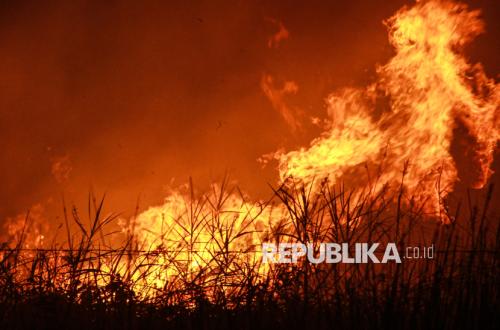
UN Secretary-General António Guterres stated that various extreme weather events demonstrate the increasingly real impacts of climate change. “Scorching heatwaves, raging wildfires, and deadly floods this summer are warnings of what is to come. We must make the rise above 1.5 degrees as small and as short as possible. This requires a leap in ambition,” Guterres said, as quoted from a UNEP press release on Wednesday.
According to UNEP, this pathway requires the immediate and sustained reduction of greenhouse gas emissions, including methane. Temperatures could then be lowered by achieving long-term net-negative emissions, with carbon dioxide removal (CDR) serving as one of the key components.
CDR is the process of removing carbon dioxide from the atmosphere and storing it, for instance, through reforestation. Simultaneously, adaptation is necessary to reduce the vulnerability of societies, communities, and economies to the impacts of climate change.
However, the capacity for adaptation has limits, and irreversible impacts may occur if the peak temperature is not successfully suppressed. “There is no good outcome if we remain above 1.5 degrees Celsius. Worldwide, extreme heatwaves have proven that climate impacts will arrive faster, hit harder, and last longer—claiming more lives and causing deeper disruptions,” said UNEP Executive Director Inger Andersen.
“Now is the time to double our climate action efforts. We can and must stay on the right track by cutting greenhouse gas emissions, strengthening resilience and adaptation, and ensuring the rise above 1.5 degrees Celsius is as small and as short as possible,” she added.
UNEP noted that even the most optimistic scenario still results in a peak temperature increase of approximately 1.8 degrees Celsius above pre-industrial levels, while most other scenarios forecast higher peaks.
Every additional fraction of a degree and every year spent above 1.5 degrees Celsius will increase the risk of extreme weather, ecosystem loss, and threats to small island nations and coastal cities. The impacts also extend to human health, food security, water supplies, infrastructure, and the economy.
The risk of hitting irreversible tipping points also increases with the magnitude and duration of high-temperature periods. These risks include the instability of ice sheets, the degradation of the Amazon rainforest, and the disruption of the Atlantic Meridional Overturning Circulation (AMOC), a critical ocean current system for regulating climate.
UNEP assesses that the transition from fossil fuels to renewable energy can reduce emissions while simultaneously improving air quality and health, lowering energy costs, and expanding electricity access. The speed of action will determine how high temperatures peak, how long they persist, and how quickly they can be brought back down.
UNEP also emphasised that net zero is not the end goal, but rather a milestone towards net-negative emissions. CDR is required as a supplement to, not a replacement for, the sustained reduction of greenhouse gas emissions.
However, CDR can only contribute to returning temperatures below 1.5 degrees Celsius if the peak warming remains well below 2 degrees Celsius and all remaining emissions are successfully reduced.
UNEP stated that delays in action will almost certainly lead to significant irreversible losses and permanent changes in conditions. Many communities may be forced to relocate or change their livelihoods.
Australian Minister for Climate Change and Energy, and COP31 Negotiation President Chris Bowen, stated that every fraction of a degree of warming above 1.5 degrees will increase climate impacts, with Pacific nations at the forefront. “Every fraction of a degree of warming above 1.5 degrees results in increasingly greater and more severe climate impacts, with Pacific families on the front lines,” said Bowen.
According to him, the recent energy crisis serves as a reminder to the world of the importance of reducing dependence on fossil fuels and accelerating the transition to renewable energy. “COP31 is an opportunity to turn ambition into action, with Türkiye, Australia, and the Pacific presenting a practical and solution-oriented COP,” he said.
COP31 President Murat Kurum added that every fraction of a degree of warming and every year in an overshoot condition will increase climate risks and the potential for irreversible loss. “COP31 must turn this urgency into concrete action. We need to accelerate global electrification, reduce methane emissions from waste, strengthen urban climate resilience, and enhance the resilience of marine and coastal ecosystems,” he said.
He added that mitigation and adaptation must proceed simultaneously. “The choices we make today will determine how high temperatures peak, how long they stay there, and how safely we can return to 1.5 degrees Celsius,” said Kurum.