
UMY's Strategy to Address Imbalance in New Student Intake Between Public and Private Universities
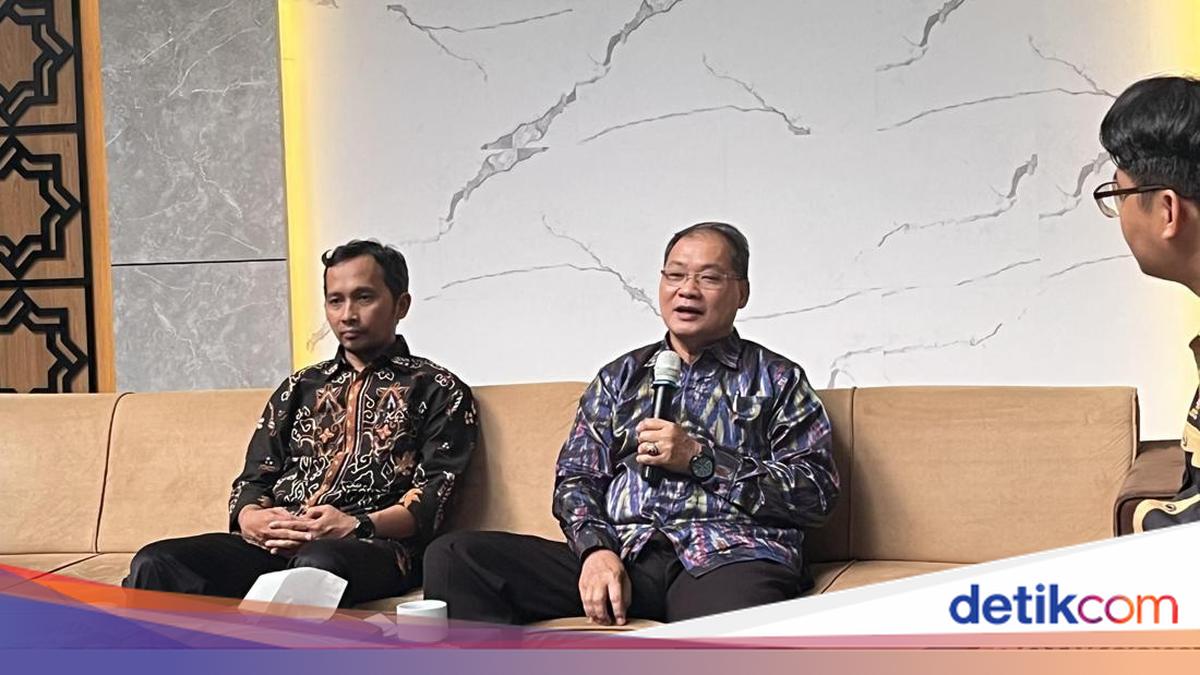
Rector of Universitas Muhammadiyah Yogyakarta (UMY), Prof Dr Achmad Nurmandi MSc, explained the significant rise in new student numbers at PTN BH and PTN BLU. This phenomenon has impacted Private Higher Education Institutions (PTS), creating structural imbalances in the national higher education ecosystem.
“The increase in student numbers at PTN BH (Public Legal Entity) and PTN BLU (Public Service Agency) over the last four years amounts to 1.4 million students, according to our calculations. They absorbed what was previously only 8,000, becoming 12,000 and so on,” said Prof Achmad during a press conference at the AR Fachruddin A UMY building on Wednesday (22/4/2026).
According to Prof Achmad, instead of competing at the national level, PTN should engage in global contests. He regrets that PTN are instead increasing S1 (undergraduate) intakes rather than S2 or S3 to strengthen research.
“They would be better off competing at the global level. If competing globally, they certainly wouldn’t take in many S1 students. They should take in more S2 or S3 students to strengthen research impact on global competitiveness,” he said.
The UMY Rector for the 2024-2028 term also highlighted the ‘competition’ between PTN and PTS in South Korea and Taiwan, which have higher education markets similar to Indonesia. In both Asian countries, Achmad noted, the system is fairer.
“So they give equal space to PTN and PTS. There’s no difference,” said Achmad.
In response to this situation, UMY claims to have followed up with the government. UMY Secretary, Dr Bachtiar Tri Kurniawan, hopes that Indonesia’s executive and legislative officials will soon take concrete steps for the Indonesian education ecosystem.
“This is a shared concern. Private Higher Education Institutions are experiencing a major impact related to new student admissions. Not only Muhammadiyah higher education institutions, but those managed by other institutions, mass organisations, and foundations are also affected,” said Bachtiar at the same event.
Bachtiar did not deny the effect of declining applicant numbers at UMY over the last three years. He said the numbers of applicants, those accepted, and those re-registering have continuously decreased.
“We don’t deny it, we are indeed experiencing a decline. It decreases every year. Registrations, acceptances, and re-registrations (the numbers are declining),” explained Bachtiar.
In response to this situation, UMY claims to have followed up with the government. Bachtiar hopes that Indonesia’s executive and legislative officials will soon take concrete steps for the Indonesian education ecosystem.
“Hopefully, the executive branch is on the same frequency as the legislative to create an equitable education ecosystem that complements and strengthens each other,” he said.
UMY Implements Instalment Tuition Fee Payments
Another step taken by UMY is to implement a policy of per-term tuition fee payments for its students. Director of Public Communications at UMY, Dr Ratih Herningtyas, admitted that this policy has had an impact.
“This somewhat reduces concerns that studying at UMY is expensive. Because there is indeed a considerable impact from the aspect that registrations consider upfront payments,” she explained.
This policy enables UMY students to pay half the fees at the beginning of the semester. The remainder can be settled after the mid-semester exams, so as not to burden the economic aspect of the nation’s next generation.
UMY Opens New Programmes to Address Saturation of Conventional Study Programmes
Another strategy pursued by UMY to attract new students is to introduce new study programmes. In addition to following the evolving needs of society, this policy also aims to eliminate the saturation of conventional programmes.
“We have innovations to increase public demand and facilitate access to education on contemporary matters. We are opening new programmes, for example, AI, Digital Business, and Sports programmes,” explained Bachtiar.
The UMY Secretary hopes that opening new programmes can provide the public with alternative study choices that better meet needs. Considering the rapid development of digital technology in recent years, which requires new expertise.
In addition to undergraduate levels, UMY is also opening several programmes at the master’s level, from Master of Information Technology, Master of Mechanical Engineering, to Master of Pharmacy. For the doctoral level, UMY has obtained permission for a Law programme.
The university, established at the end of the 20th century, is also preparing to open specialist programmes to meet Indonesia’s doctor needs. UMY Rector, Prof Dr Achmad Nurmandi MSc, explained that they will open 12 specialist educations, one of which is for paediatric dentistry.
“We are opening 12 specialist educations to support the need for specialist doctors across Indonesia, which is short by 47,000 doctors. Primarily in Kalimantan, Sulawesi, Papua, NTT, NTB, even Sumatra,” said Prof Achmad.