
UMY Students Diversify Cultural Tourism in Sambirejo, Sleman
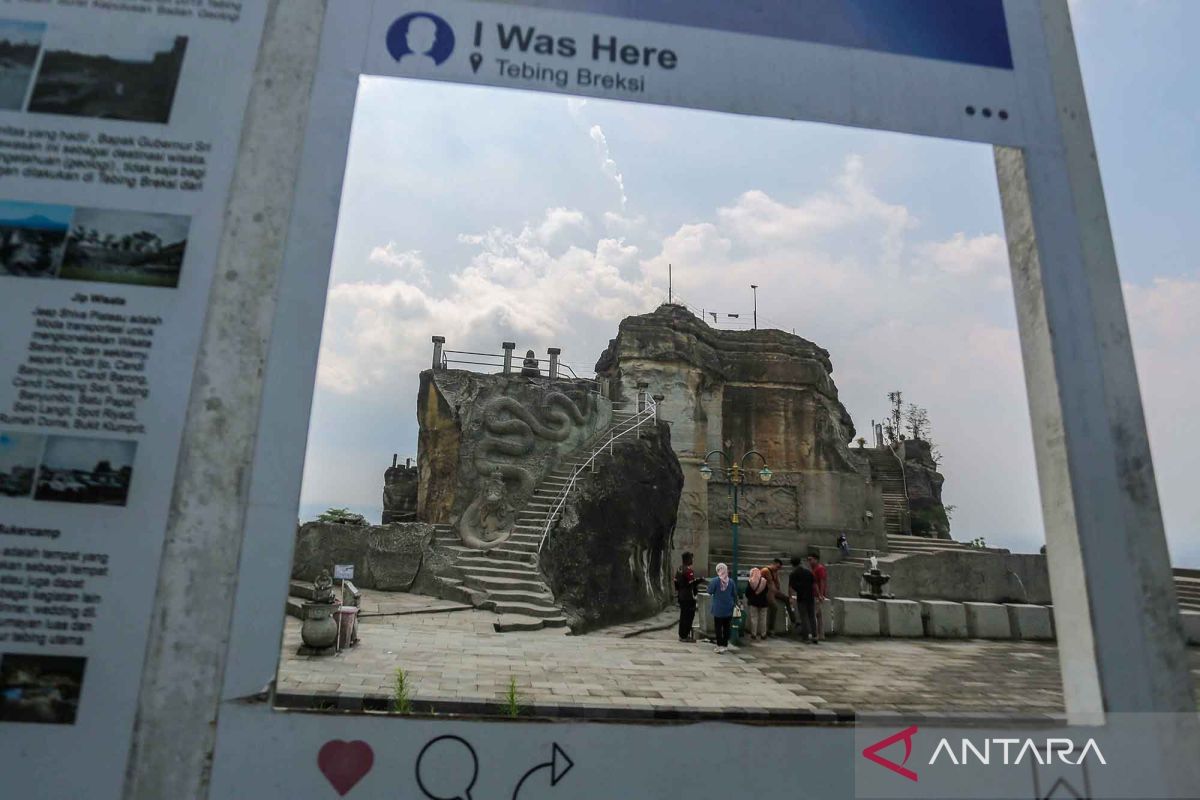
Sleman (ANTARA) - A team of English Language Education students from Universitas Muhammadiyah Yogyakarta (UMY) is developing four cultural tourism diversification programmes in Sambirejo Village, Sleman Regency, Special Region of Yogyakarta, aimed at increasing the duration of tourist visits to the Tebing Breksi area.
“We do not simply want to create events, but rather attempt to develop several alternative tourist attractions that can enrich the visitor experience in Sambirejo,” said Reva Audya Harianto, Chairperson of the EDSA PBI UMY Student Organisation Capacity Strengthening Programme (PPK Ormawa), in a written statement in Sleman on Thursday.
He stated that the four main programmes include the Sambirejo Cultural Lab, Sambirejo Guide Academy, Sambirejo Temple Trail, and the Narasimha Sunset Show.
Reva explained that the Sambirejo Temple Trail is a 7.3-kilometre historical exploration route passing through Banyunibo Temple, Barong Temple, the Ganesha Statue, and Spot Riyadi, starting and ending at Tebing Breksi. This programme is being developed in collaboration with the Jogja International Heritage Walk.
Meanwhile, the Narasimha Sunset Show is a theatrical performance held at Tebing Breksi towards sunset. The performance is inspired by the discovery of the Narasimha statue at Bukit Ijo in 1975, combining drama, dance, music, and visual storytelling.
“This art performance involves a collaboration of residents from Sanggar Turonggo Mudo and Sanggar Unggah-Ungguh Sambirejo,” he said.
Reva noted that enthusiasm from both the local community and tourists for these programmes has been very high. The quotas for the ‘Camping Kalcer’ and Sambirejo Temple Trail programmes were fully booked in less than an hour after publication, while the Narasimha Sunset Show attracted hundreds of spectators.
The development of this tourism is being carried out based on collaboration with the Sambirejo Village Government, the managers of Tebing Breksi and Watu Payung, the Community Information Group (KIM), and local youth.
“Community involvement is actually one of the most important parts of this programme. In fact, the KIM serves as a co-implementer alongside the students for the Sambirejo Temple Trail programme,” he said.
He expressed hope that all these tourist attractions can continue to operate independently and sustainably by local residents even after the students’ programme period has ended.
“Currently, the Sambirejo Temple Trail is being prepared to become a commercial walking tour package managed directly by KIM Sambirejo, in line with the programme slogan ‘Gumregah Budayane, Sumunar Wisatane’ (revitalising culture and illuminating tourism),” he said.