
UMY Lecturer: Smart Village Requires More Than Just Digital Technology
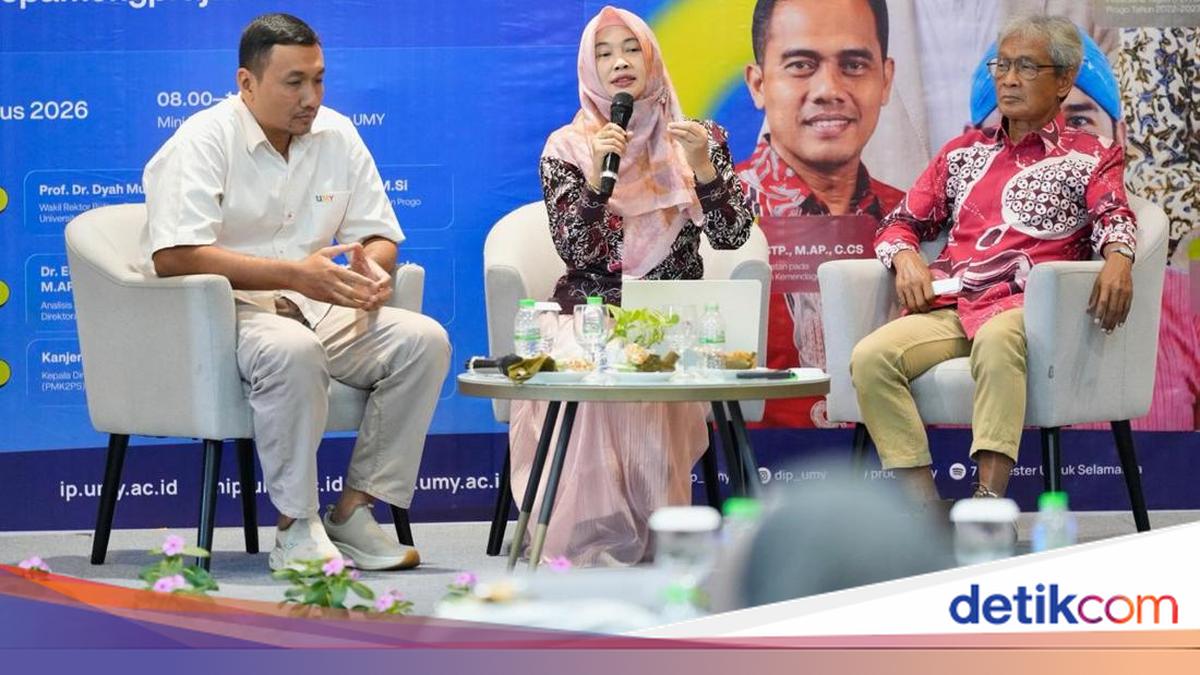
A lecturer from Universitas Muhammadiyah Yogyakarta (UMY) has emphasised that building a ‘Smart Village’ requires more than just introducing digital technology into the government environment. According to Prof. Dr. Dyah Mutiarin, M.Si., the transformation demands a foundation of visionary leadership, adaptive governance, and the ability to measure tangible benefits for the wider community. “Smart Village starts from smart leadership, strengthened by smart governance, and measured through public value,” she stated in a written release on Wednesday (12/8/2026).
Speaking during a Smart Village Workshop and Focus Group Discussion (FGD) themed “Leadership and Village Governance Towards Smart Village and Strengthening the Indonesian Pamong Praja Profession” at the UMY Student Dormitory, Dyah explained that village governments are at the forefront of responding to public service expectations in the digital era. She noted that applications or information systems will not automatically produce a competent government without institutional capacity.
Dyah, who also serves as the Chairperson of the Indonesian Government Studies Programme Association (KAPSIPI), outlined that a smart village ecosystem must simultaneously build four elements: people, institutions, technology, and ecosystem. She stressed that village heads must be able to read changes, make data-based decisions, and orchestrate citizen collaboration. “Technology does not automatically result in a smart village; it requires vision, coordination, integrity, data literacy, and the ability to mobilise collaboration,” she said.
She further encouraged village governance transformation towards digital government and platform governance, adhering to principles of transparency, participation, accountability, and privacy protection. Dyah asserted that the key is for technology to strengthen public value, not merely increase the number of applications. She proposed seven strategic steps, including establishing a local vision, redesigning services, and building a one-data system.
Several villages in the Special Region of Yogyakarta have already demonstrated successful digitalisation practices. Panggungharjo Village has developed service and data management innovations, while Sriharjo Village utilises technology for tourism village marketing. Other areas like Tirtomartani, Banyuraden, and Nglanggeran have also succeeded in leveraging technology for budget transparency and ecotourism support. Dyah concluded that the success of this transformation should be measured by public value, such as service speed, public satisfaction, and economic improvement, rather than the number of applications created. She called for the creation of an agile public administration system through a disruptive mindset to adapt to the changing environment, proposing a concept of One Village, One Data, One Dashboard to integrate all services.