
UMY Highlights Global Sustainability Rankings, Expands Solar Power and Scholarships
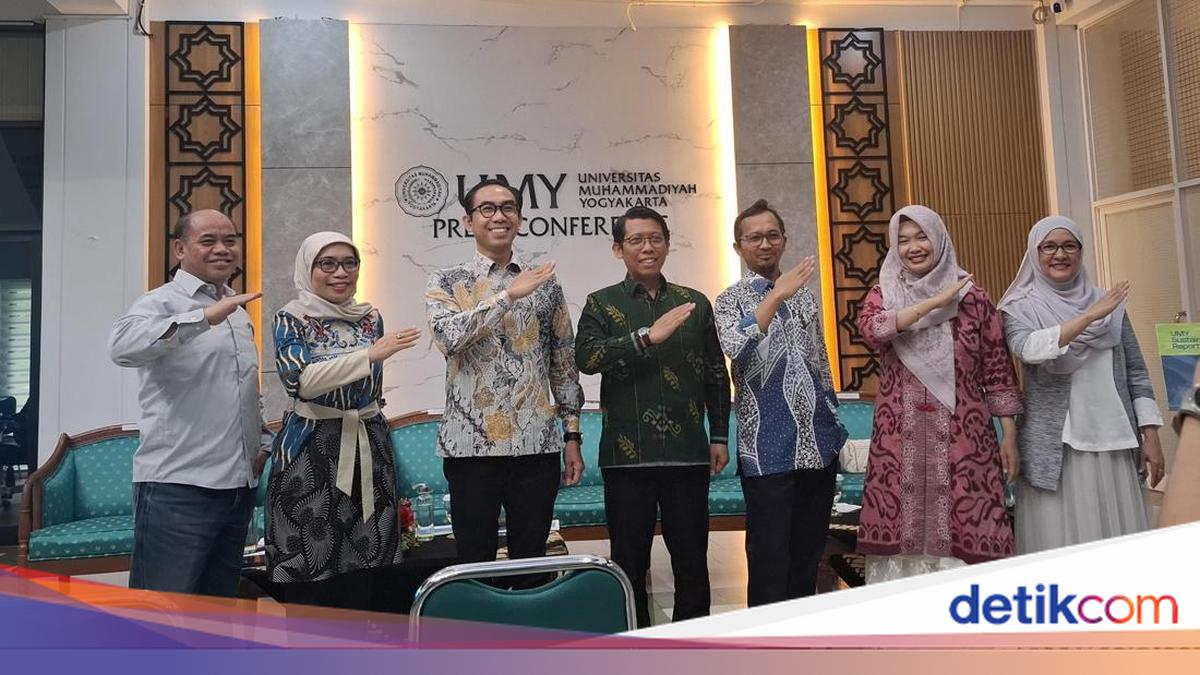
Universitas Muhammadiyah Yogyakarta (UMY) has outlined its achievements in global sustainability rankings. Alongside strengthening its international reputation, the university said it was pursuing sustainability through the development of a green campus, broader access to education and greater student contributions to society.
“We believe that in achieving the Sustainable Development Goals in line with universities’ duties under the Tri Dharma, we cannot do it alone. The more partners we work with, the wider the contribution we can make and the greater the benefits people can experience,” UMY Vice-Rector for Quality, Reputation and Partnerships Slamet Riyadi said at a press conference at the UMY campus in Bantul on Wednesday (28 October 2026).
UMY is ranked 133rd globally and 12th nationally in UI GreenMetric. In the Times Higher Education (THE) Impact Rankings, it is placed in the 601–800 band globally and 15th nationally. In the QS Sustainability Rankings, it ranks in the 1,071–1,080 band globally and 16th nationally.
Slamet said these achievements were the result of collaboration with various parties. UMY has partnerships with universities as well as business, industrial and employment-sector partners. He said external rankings were one measure of universities’ contributions to sustainable development.
“These rankings are evidence of an external institution’s assessment of UMY’s contribution to, and participation in, the achievement of the Sustainable Development Goals,” he said.
UMY develops a green campus
UMY Secretary Bachtiar Dwi Kurniawan said sustainability efforts were also being implemented through the development of a green campus. These include promoting renewable energy, using water more efficiently and managing the campus environment.
UMY has installed around 48 solar panels. The number is expected to increase in the next budget year to expand the use of solar energy on campus.
“About 48 solar panels have now been installed, and in the next budget year we will make a more radical transformation so that more panels can be added to replace the energy currently used at UMY,” Bachtiar said.
In addition to solar power, Bachtiar said UMY plans to build public electric-vehicle charging stations on the northern and southern parts of the campus, including the UMY Mall area. The facilities are intended to support the use of electric vehicles by lecturers, staff and students.
“As we transform our electricity use, in addition to solar panels we will build charging stations on campus, so that lecturers, staff and students who use electric vehicles do not run out of power or have to worry about their batteries going flat,” he said.
“We are also improving water efficiency, and several buildings already use recycled water. We provide 210 bicycles at locations across the campus and will add more as the campus expands to the north and south. We are also improving pedestrian routes, including widening paths obstructed by tree roots,” he added.
UMY runs several waste-management programmes, including for hazardous and biomedical waste. The campus is also promoting a campaign to reduce plastic waste under the slogan “no plastic, no panic”.
“We manage waste, including hazardous and biomedical waste. We are also campaigning for ‘no plastic, no panic’ through to 2050,” Bachtiar said.
Expanding access to education and student service
UMY Vice-Rector for Student Affairs, Alumni, and Al-Islam and Muhammadiyah Affairs Faris Al-Fadhat said sustainability was not only about the environment and institutional reputation, but also access to education and students’ contributions to society.
UMY offered 40 scholarship schemes in 2025, funded through both internal and external sources. Faris said around 19.4 per cent of UMY students faced economic hardship, while about 30 per cent were the first in their families to pursue higher education.
“UMY provides access to good-quality education, while also pursuing goals that contribute to sustainability. For example, in 2025 we prepared 40 scholarship schemes, funded internally and externally, which have supported a large number of young people,” Faris said.
He said widening access to education could give students opportunities to improve their families’ quality of life and contribute to society.
“One way we are preparing for, or addressing, that challenge is by ensuring students take an active part in activities and achieve success. Last year, we recorded a total of 659 academic and non-academic achievements,” he said.
“These indicators show that students are active and achieving. But beyond that, UMY wants those achievements to be transformed into real impact. We do not only look at whether they succeed; we also want to see how their achievements build character,” he said.
Faris said expanding access to quality education and developing character were challenges universities needed to address. He pointed to the limited access many Indonesians have to higher education, including among secondary-school graduates who do not continue to university.
“UMY will prepare students and graduates who have strong academic knowledge, but who also have a foundation in Islam and Muhammadiyah values, so that they can benefit as many people as possible,” he said.
Source: jawawa.id (https://jawawa.id/newsitem/umy-highlights-global-sustainability-rankings-expands-solar-power-and-scholarships-1793184680)
Originally published by detikJogja (https://www.detik.com/jogja/jogja-kerta/d-8728132/umy-ungkap-capaian-pemeringkatan-global-genjot-energi-surya-hingga-beasiswa), translated from Indonesian