
UMY Governance Expert’s Assessment of Two Years of Prabowo-Gibran
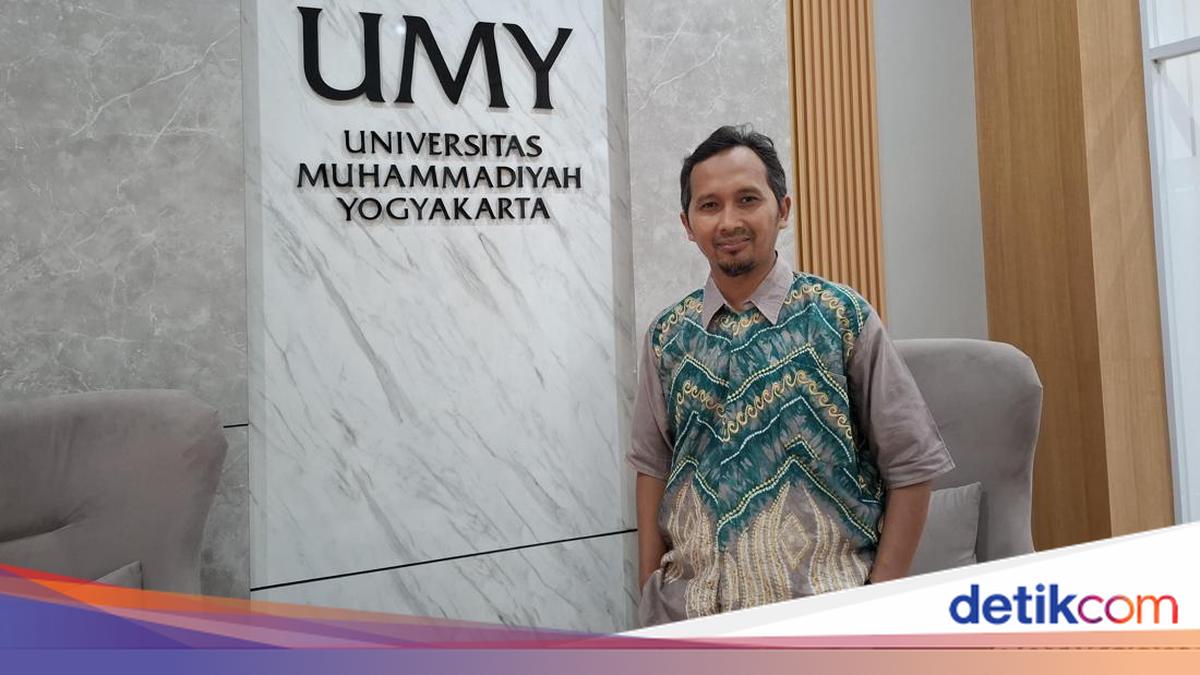
The second anniversary of President Prabowo Subianto and Vice-President Gibran Rakabuming Raka’s administration is an opportunity to assess the implementation of the government’s priority programmes. Dr Bachtiar Dwi Kurniawan, a lecturer in the Government Studies programme at Universitas Muhammadiyah Yogyakarta (UMY), said several programmes have worthwhile objectives but still face problems in governance and implementation.
“First, the Indonesian public has placed very high hopes in Prabowo as president,” Bachtiar said during an interview at UMY’s campus in Bantul on Tuesday (20 October 2026).
“The public has high expectations and hopes for an Indonesia that can truly become what Prabowo promised: a great Indonesia, an Asian tiger, food sovereignty, and a government that stands with the people, among other things,” he added.
Bachtiar said several of Prabowo’s programmes, including the Free Nutritious Meals (MBG) initiative, could help promote more evenly distributed economic growth. The programme could involve a range of groups, from farmers and livestock breeders to micro, small and medium-sized enterprises (MSMEs).
“A mass programme such as free nutritious meals is populist. I see Prabowo wanting a programme capable of mobilising the country’s economy so its benefits can be distributed and enjoyed by all Indonesians,” he said.
He said MBG’s budget could stimulate the local economy through food supply chains and the involvement of various businesses. However, he said that potential needed to be matched by effective implementation.
“The hundreds of trillions of rupiah in state budget funds for MBG could benefit Indonesians, from farmers supplying the food chain with vegetables, fruit, meat, eggs and rice, from upstream to downstream. This would be absorbed on a massive scale across Indonesia. It is good for stimulating the economy on a broad scale and creating jobs,” he explained.
Nevertheless, Bachtiar highlighted implementation problems that he said were undermining the government’s original objectives. Poor communication about MBG, coupled with implementers who failed to act responsibly and focused on short-term profits, could damage a programme intended to improve public welfare.
“But the profit-seeking motives of people involved in Prabowo’s idealistic programmes at various points, or implementers who are not trustworthy and engage in corruption, are a problem that disrupts his programmes. Good programmes that are badly implemented and riddled with irregularities lead to public distrust,” he said.
Governance of state-owned enterprises and the Cabinet
Beyond MBG, Bachtiar said downstream processing policies and the consolidation of state-owned enterprise (SOE) assets could strengthen the management of national resources. In his view, downstream processing can add value to Indonesia’s natural wealth by processing it before export.
“Downstream processing is good. We have abundant natural resources. The government does not want to export them directly; they should be processed first. There is a downstreaming programme, with smelters that began under the previous government, and this is being continued and strengthened,” he said.
Bachtiar also said consolidating SOE assets through Danantara could improve the management of state-owned resources. He stressed, however, that it was important to ensure the returns from managing those assets benefited the public as fully as possible.
“If it supports strategic programmes for public welfare, that could also be good,” he said.
He questioned how SOE profits were being used if the proceeds were continually reinvested without delivering clear benefits to the state and the public.
“If state-owned enterprises’ money is reinvested and the profits are taken and reinvested again, what does the government get? The state owns SOEs, so why should their profits not be used by the state to carry out government programmes?” he said.
“When will the state, the government or the public enjoy the returns from SOEs?” he added.
Bachtiar said governance was the main issue to address if government programmes and policies were to meet their objectives. The president’s vision, he said, needed to be translated effectively by officials responsible for implementation.
“If the intentions are good, governance really needs to be improved so that the programmes genuinely serve public welfare,” he said.
Bachtiar also criticised what he considered to be the oversized Cabinet under Prabowo. A bloated bureaucracy, he said, could complicate coordination between institutions and slow the implementation of government programmes.
“Bureaucratic theory says a good bureaucracy has a lean structure and broad functions. The Cabinet should be streamlined, while still performing its functions to the fullest,” he explained.
He said an excessively large Cabinet could also mean the government spent more time on internal coordination than on delivering programmes.
“The government could end up busy and exhausted with coordination, synchronisation and harmonisation, rather than putting its energy into implementing programmes,” he said.
Bachtiar stressed that good intentions behind programmes must be accompanied by sound procedures and governance to ensure accountable implementation.
“Our country cannot be governed on good intentions alone. The process, procedures and governance must also be good,” he concluded.
Source: jawawa.id (https://jawawa.id/newsitem/umy-governance-experts-assessment-of-two-years-of-prabowo-gibran-1792576237)
Originally published by detikJogja (https://www.detik.com/jogja/jogja-kerta/d-8717557/catatan-2-tahun-prabowo-gibran-dari-pakar-pemerintahan-umy), translated from Indonesian