
UMY Expert: Series of Natural Disasters Must Serve as a Momentum for Environmental Management Evaluation
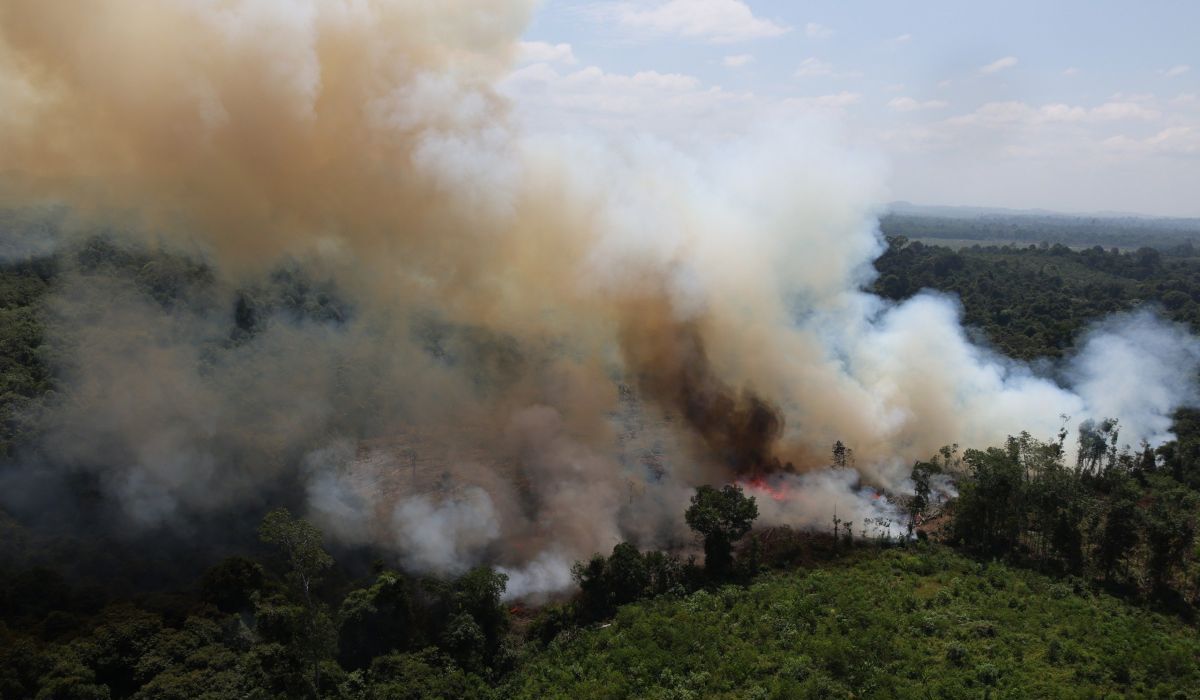
The National Disaster Management Agency (BNPB) has reported that ,1730 natural disaster incidents have struck Indonesia from the beginning of the year until 7 September 2026. The high frequency of these disasters has prompted calls from academics for the government and the public to conduct a total evaluation of environmental management practices.
According to BNPB data, the distribution of disasters is dominated by forest and land fires (627 incidents), followed by 543 floods, 324 extreme weather events, 105 landslides, 101 droughts, and 14 incidents of tidal waves and abrasion. In the geological sector, 13 earthquakes and three volcanic eruptions were recorded.
Professor Muchammad Ichsan, a Professor of Islamic Law at Universitas Muhammadiyah Yogyakarta (UMY), explained that Indonesia’s disaster vulnerability is indeed influenced by geographical and geological factors. However, he provided a critical note from an ecological perspective.
“Not all disasters are caused by human activity, but environmental degradation can increase threats, exposure, and the vulnerability of the community,” said Prof. Ichsson. He emphasised that disasters must serve as serious material for evaluation in disaster management, ranging from the pre-disaster stage, emergency response, to post-disaster recovery.
He also urged the government to take firm action against parties that damage the environment. “The government must act decisively. We must not allow entire regencies or provinces to become victims due to the actions of a few,” he asserted.
Disaster issues were also highlighted from a socio-political perspective. UGM sociologist Arie Sujito assessed that disaster issues are often marginalised by the speculations of political elites. According to him, neglecting the fate of the people creates opportunities for oligarchic groups to exploit disaster management budgets.
“Awareness of disaster management should serve as a compass for the public when choosing leaders,” said Arie during a public discussion at the UGM University Club on Tuesday (15/9). He emphasised that political parties that ignore disaster mitigation issues are essentially “burying themselves” by losing relevance to the basic needs of the community.
In line with this, Didik Krisdiyanto, an expert from the Centre for Natural Disaster Studies at UIN Sunan Kalijaga, assessed that the main obstacle to disaster management in Indonesia is not a lack of technology or data, but rather a lack of political will.
“We know which areas are prone to floods, landslides, and earthquakes. The data exists. But mitigation policies are not functioning. Budgets are cut, spatial planning is violated, and political parties never make it a priority issue,” revealed Didik.
Didik emphasised that the role of political parties should not stop at charitable actions, such as distributing basic food supplies during emergencies. Political parties are required to oversee disaster budgets structurally, fight for mitigation legislation, and ensure that spatial planning policies are implemented consistently for long-term disaster risk reduction.
Source: jawawa.id (https://jawawa.id/newsitem/umy-expert-series-of-natural-disasters-must-serve-as-a-momentum-for-environmental-management-evaluation-1789648149)
Originally published by Media Indonesia (https://mediaindonesia.com/humaniora/934525/pakar-umy-rentetan-bencana-alam-harus-jadi-momentum-evaluasi-pengelolaan-lingkungan), translated from Indonesian