
UMY Expert: AI Mastery Now a Determinant of World Geopolitics
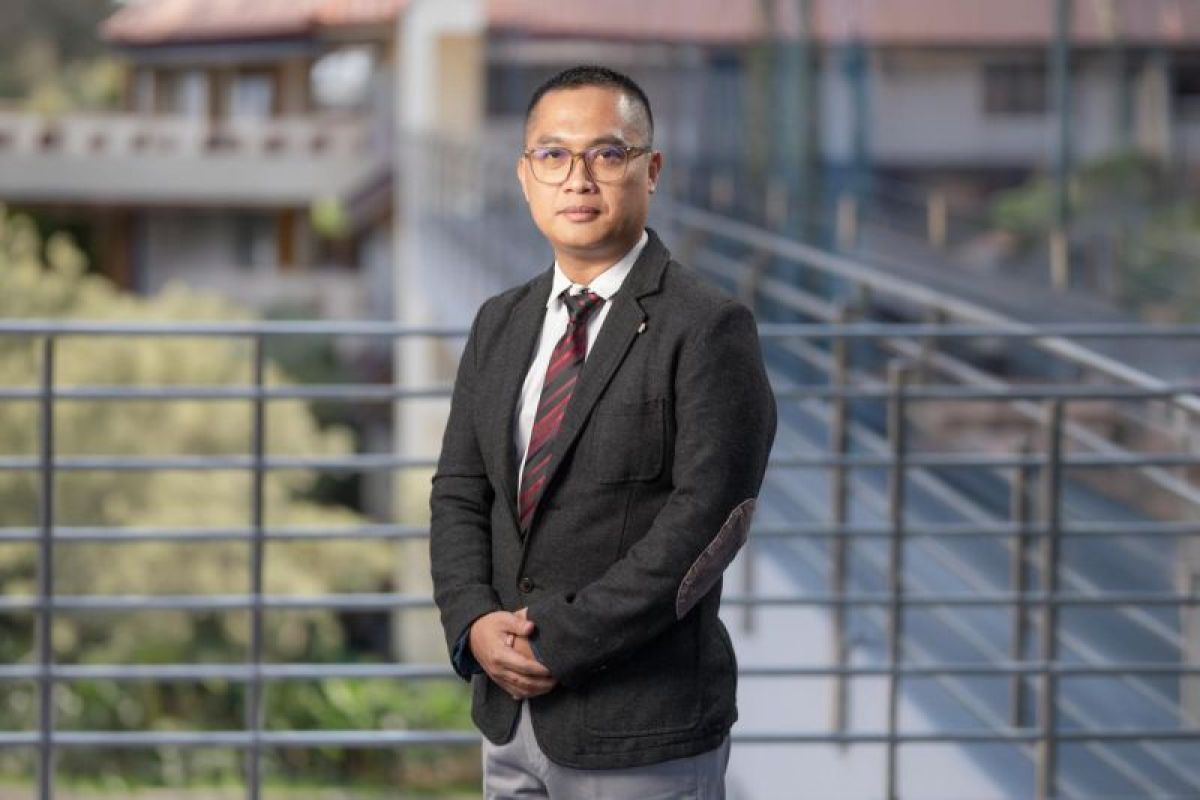
Arie Kusuma Paksi, an International Political Economy expert from Universitas Muhammadiyah Yogyakarta (UMY), stated that mastery of artificial intelligence (AI) technology is no longer merely a productivity tool but has become a strategic asset determining the balance of world geopolitical power. The lecturer from UMY’s International Relations Study Programme explained that amidst rising global rivalry, AI is now contested by various countries due to its ability to determine economic, military, and cyber security dominance. “AI is a dual-use technology. A country that can master AI will gain economic advantages as well as strategic superiority in the military and intelligence fields. AI is now beginning to be treated like oil or nuclear technology in the past, namely as a strategic asset that must be controlled by the state,” Arie said in Yogyakarta on Monday. According to him, this shift is the reason why the rivalry between the United States and China is no longer centred on trade wars but has shifted to a competition for technological mastery. The core of this rivalry, Arie stated, lies in access to high-tech semiconductor chips, which serve as the “brain” for modern AI development. The United States continues to tighten export restrictions on advanced chips to China, including pushing for limitations on the sale of chip manufacturing equipment. “The pressure from the United States could actually backfire. When access to chips is restricted, China is increasingly driven to build its own chip industry, which in the long term could accelerate their technological independence,” he said. Furthermore, Arie stated that AI mastery has the potential to reshape the global power map. Countries with access to large amounts of data, high-capacity computing infrastructure, and superior human resources will gain a competitive advantage that continues to grow with technological advancements. “The advantage in AI is cumulative. The more data, computing capacity, and researchers a country has, the greater its opportunity to stay ahead of other countries,” he said. According to Arie, the struggle for global influence is no longer solely based on the control of natural resources but has shifted towards the mastery of digital infrastructure. He said that semiconductor chip factories, data centres, and undersea internet cable networks have become strategic assets that determine a country’s bargaining position on the international stage. “We are seeing the world fragment into technology blocs. This rivalry turns issues that were previously purely business into national security issues, making international trade cooperation increasingly complex,” he said. According to him, Indonesia does not yet have a semiconductor industry or AI research capacity capable of competing at the global level. However, the government has drafted a national AI development roadmap along with various policies for AI utilisation to support priority programmes for the 2026–2029 period. The government is targeting AI’s contribution to the national Gross Domestic Product (GDP) to reach 12 per cent, or equivalent to USD366 billion, by 2030. However, Arie reminded that this target is still a plan that must be realised through concrete implementation. “That is still a target in planning documents. Its success must be measured by implementation and actual data achieved, not just by the targets set,” he said. To ensure Indonesia does not fall behind, Arie assessed that concrete strategies are needed, namely strengthening data governance regulations, providing research incentives, and expanding national innovation funding. In the field of human resources, Arie stressed the importance of collaboration between universities and industry, as well as increasing the number of national AI talents. “We suggest Indonesia focus on solutions for local needs such as agriculture, health, and disaster mitigation, while accelerating investment in data centres and clean energy as the foundation for a sustainable AI ecosystem,” he said.