
UMY develops BSF maggot technology to process campus organic waste
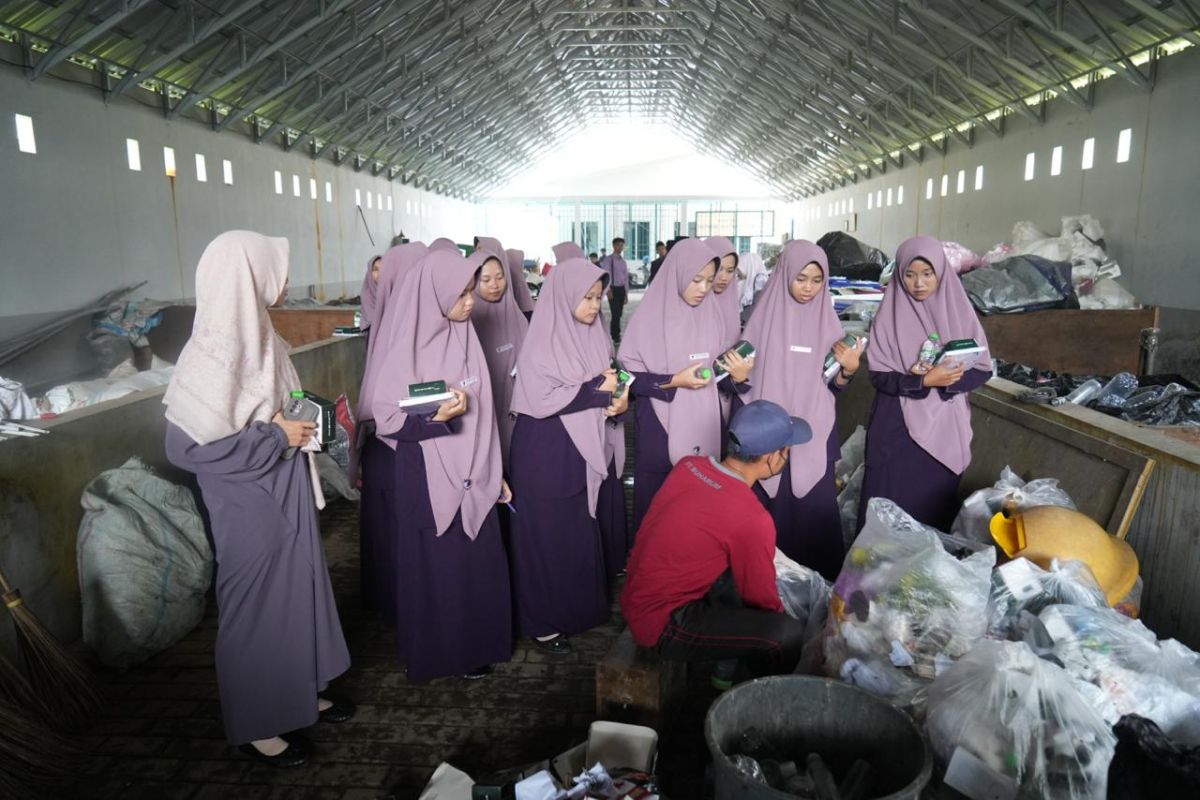
Universitas Muhammadiyah Yogyakarta (UMY) is developing an integrated organic waste processing innovation utilising Black Soldier Fly (BSF) or maggots as an effective solution for decomposing food waste on campus. Head of UMY’s Sustainable Infrastructure Sub-directorate Ferriawan Yudhanto stated in Yogyakarta on Thursday that wet organic waste from campus canteens and business units has posed a distinct challenge. The use of BSF maggots is considered the most appropriate approach to address this problem biologically and innovatively. ‘Wet organic waste is the most difficult type of waste to manage. Therefore, we are developing processing using BSF maggots. Eventually, all food leftovers from canteens and various business units within the campus will be processed into maggot feed,’ said Ferriawan. In addition to maggot utilisation, UMY also consistently processes dry organic waste such as leaves and plant trimmings into compost. The resulting compost is then reused to support greening and vegetation maintenance across the entire campus area. ‘Sorting must start with ourselves. By separating wet and dry organic waste at the source, we can handle each waste characteristic according to the appropriate processing method. Leaf waste is processed into compost, while food waste is managed through BSF maggots,’ he said. ‘We want to demonstrate that universities have a role as agents of change. What we implement on campus does not stop here, but can be adapted by the community to create a cleaner and more sustainable environment,’ he added. As part of a broader green campus development, UMY also continues to enforce single-use plastic restrictions in canteens, utilise solar energy, and plan the operation of electric shuttle buses to reduce carbon emissions within the university environment.