
Umrah Travel Scandals Will Continue to Recur
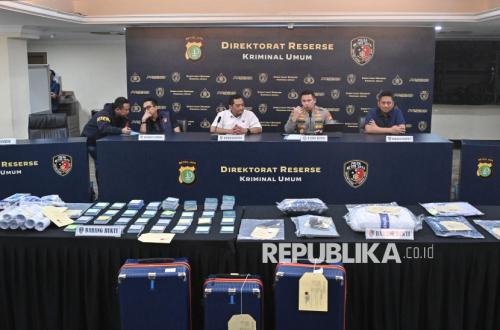
After a pause for the hajj season, the 1448 Hijriah umrah season opens again on 11 June 2026. Saudi Arabian authorities, via the Nusuk platform, have been processing umrah visas since 10 June 2026. This momentum comes amid extraordinary growth in the number of umrah pilgrims worldwide, including from Indonesia. However, behind the great enthusiasm of Muslims in Indonesia, an old, recurring problem has emerged. Hanania Travel (PT Hasanah Tama Internasional) has allegedly caused losses to pilgrims amounting to around Rp60 billion, dragging in thousands of victims. The company’s directors have been named as suspects for alleged fraud, embezzlement, and money laundering.
The explanation given in every umrah travel scandal is almost a cliché. The problem occurs because of the perpetrator’s greed, weak supervision, or the public being lured by low prices. Of course, this explanation is not entirely wrong. But it clearly does not touch the root of the actual problem. That is why such cases happen repeatedly. The faithful seem to be allowed to fall into the same hole over and over again. The Hanania case bears a pattern similar to various previous scandals, including First Travel and Abu Tours. The main problem in Indonesia’s umrah industry lies in the characteristics of its business model, which is prone to misappropriation.
Unlike ordinary travel agencies, umrah organisers often receive payment from pilgrims long before departure. Payments are made months or even years in advance. This means the company controls large amounts of public funds with an obligation to provide services in the future. This characteristic makes the umrah business akin to an institution that manages public funds. The funds received are not revenue that immediately belongs to the company. They represent a liability that must be fulfilled at a specific time. The funds are a trust that must be safeguarded until the service is actually provided. Problems arise when pilgrim funds are used for other needs beyond the obligation of departure. Some use these funds to pay for daily operations, open new branches, conduct massive promotions, buy assets, expand, or cover old obligations. Unfortunately, some even use them for a hedonistic lifestyle and showing off.
Consequently, the cost of sending pilgrims is no longer supported by the funds they have deposited, but relies on the inflow of funds from new pilgrims. The business model thus becomes highly risky. The company’s sustainability no longer depends on service quality or operational efficiency, but on its ability to continue getting new registrants. As long as new funds flow, the problem is not yet visible. Some pilgrims do manage to depart. On the other hand, supervision often fails to detect problems early on. Regulators mostly assess administrative aspects, licensing, the number of branches, or document compliance. The most important question is often overlooked: are the funds needed to send all the pilgrims truly available? An illusion is then created that the company is in a healthy condition. Moreover, the office buildings appear majestic, the advertisements are bona fide, influencers are appointed as company ambassadors, and social media content further reinforces the image manipulation. The actual liquidity condition is never known to the public.
But when growth slows, costs rise, or operational disruptions occur, the fragile financial structure begins to unravel. Suddenly, the number of victims has reached thousands. Failure is a certainty. It is clear that without a separation between pilgrim funds and company operational funds, organisational failure in managing public funds becomes almost a certainty. The operational costs of the company should come from the owner’s capital, business profits, or legitimate financing. Therefore, there needs to be a core capital requirement and a capital adequacy ratio for umrah bureaus, and this must be publicly announced. Transparency is an important instrument in preventing public losses.
Umrah industry reform must begin with a change in perspective on pilgrim funds. In accounting terms, pilgrim funds should be recorded as a liability until the departure is actually carried out. The supervisory paradigm also needs to shift from merely licensing and administration towards liquidity oversight and fund adequacy. This is actually common in sectors that manage public money. The next step is to mandate the segregation of pilgrim funds through a special escrow account that cannot be freely used for company operational needs. Funds can only be disbursed for payment of tickets, hotels, visas, transport, and service components directly related to the pilgrims’ departure. The bank must receive adequate supporting documents for the disbursement of these funds, not solely the director’s signature. The government also needs to build a system for periodically assessing the health of umrah organisers. Every company must report the number of pilgrims yet to depart.