
Umrah as a Diplomacy of Civilisation
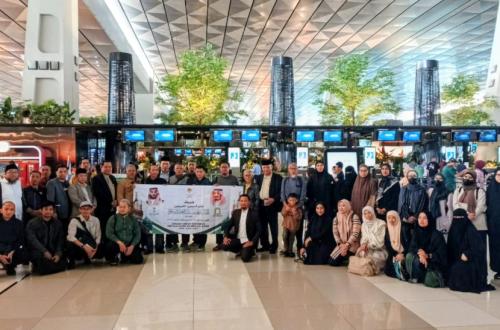
From 8 to 20 July 2026, I joined a delegation of around 40 Indonesians honoured to be guests of the Khadimul Haramain asy-Syarifain programme, invited by King Salman bin Abdulaziz Al Saud to perform umrah. This programme is not merely a facility for worship; it is an official policy of the Kingdom of Saudi Arabia carrying religious, humanitarian and international diplomatic dimensions alike.
Through the Ministry of Islamic Affairs, Dawah and Guidance, the Kingdom of Saudi Arabia periodically invites ulama, academics, teachers, community figures and Muslim community leaders from various countries to perform umrah with all costs borne by the government. This year, 1,000 participants from various countries were invited in four waves.
The first wave came from 16 Asian countries, including Indonesia, Japan, Taiwan, South Korea, the Philippines, Malaysia, Thailand, Vietnam, Cambodia, Singapore, China, Mongolia, Hong Kong, Myanmar, Laos and Timor-Leste. The participants did not only perform umrah; they also took part in dialogue, visits to Islamic historical sites, and various programmes to strengthen Islamic insight and the brotherhood of the ummah.
Public diplomacy
This programme demonstrates that service to the guests of Allah has developed into an instrument of public diplomacy and soft power diplomacy for Saudi Arabia. Through spiritual experience, hospitality and dialogue, the Kingdom builds closer relations with Muslim communities worldwide, including Muslim communities living as minorities in various countries.
The composition of participants conveys an interesting message. Indonesia attended as the country with the largest Muslim population in the world. Yet the participation of guests from Japan, Taiwan, South Korea, the Philippines and other countries with relatively small Muslim populations shows that Saudi diplomacy reaches all Muslim communities without distinguishing majority from minority status. The intended message is clear: Islam is a universal religion, upholds brotherhood, and is a blessing for all the world.
In the context of international relations, such an approach holds strategic value. When the world faces conflict, rising Islamophobia and geopolitical polarisation, diplomacy based on religious service becomes an effective medium for building mutual understanding, strengthening civil society networks, and presenting a peaceful and moderate face of Islam.
Saudi Vision 2030
The programme is also aligned with Saudi Vision 2030, initiated by Crown Prince Mohammed bin Salman. Beyond economic transformation, Vision 2030 places service to hajj and umrah pilgrims as a national priority through improved service quality, infrastructure modernisation, digitalisation, and the strengthening of Saudi Arabia’s position as the service hub of the Islamic world. Therefore, the hajj and umrah invitation programme cannot be understood merely as a ceremonial religious activity, but also as part of a strategy to reinforce Saudi Arabia’s international relations and moral leadership in the Muslim world.
For Indonesia, this programme carries great significance. As the largest Muslim country, Indonesia possesses considerable capital to strengthen cooperation with Saudi Arabia, not only in hajj and umrah organisation but also in education, sharia economics, research, health, human resource development and humanitarian diplomacy. Relations between the two countries must continue to be directed towards a strategic partnership that benefits Muslims and international society.
Meanwhile, countries with minority Muslim communities also have an important role. They can become bridges of interfaith dialogue, strengthen tolerance, broaden educational and cultural cooperation, and demonstrate that Islamic values can live in harmony within plural societies.
Ultimately, King Salman’s umrah invitation programme teaches that worship carries not only a spiritual dimension but also social and diplomatic power. From the Holy Land emerges a message of brotherhood, cooperation and peace that crosses national borders. Amid a world still beset by conflict and uncertainty, such spiritual diplomacy deserves appreciation and continued development as one endeavour to build a more peaceful, just and mutually respectful civilisation.
Source: jawawa.id (https://jawawa.id/newsitem/umrah-as-a-diplomacy-of-civilisation-1783839076)
Originally published by Republika (https://analisis.republika.co.id/berita/ti1rij393/umrah-sebagai-diplomasi-peradaban), translated from Indonesian