
UMPR Researchers Push for Strengthening Economy Through Digital Transactions
Palangka Raya (ANTARA) - A research team from the Faculty of Business and Informatics at Universitas Muhammadiyah Palangkaraya (UMPR) is encouraging the strengthening of the economy based on digital transactions through the formulation of policy recommendations focused on the sustainability of digital payment usage in Indonesia.
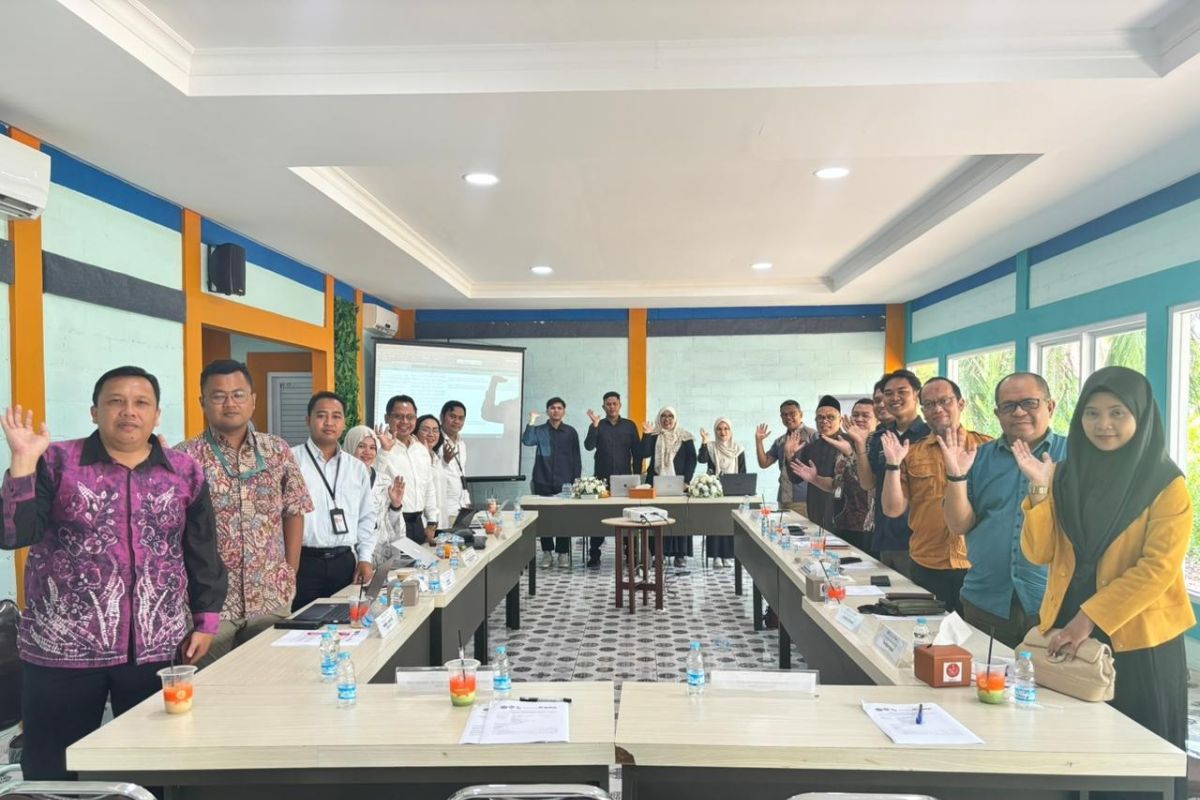
The Head of the UMPR Research Team, Setio Ardy Nuswantoro, stated in Palangka Raya on Thursday that this effort was carried out through a Focus Group Discussion (FGD) to draft a policy brief titled “From Adoption to Retention: Strategies to Strengthen the Sustainability of Digital Payment Usage in Indonesia.”
“The challenge in the digital payment ecosystem is no longer just inviting the public to try the services, but how to build consistent and sustainable usage so that it can have an impact on economic growth,” he said during the FGD, which involved regulators, banks, local government, academics, business players, and digital payment service users.
He explained that the FGD was a follow-up to a study titled “Construction of a User Retention Model: A Synthesis Approach of UTAUT2 and ECM to Explain the Determinants of Post-Adoption Digital Payment Sustainability,” funded by the Regular Fundamental Research Grant of the Directorate General of Higher Education, Science, and Technology’s BIMA programme.
According to Setio, the research successfully mapped various factors influencing digital payment user loyalty. The findings were then discussed with various stakeholders to formulate applicable policy recommendations that support the strengthening of the digital economic ecosystem.
Based on the research results and input from the FGD participants, the research team formulated five policy agendas: making user retention a success indicator for digital payments, strengthening public digital transaction habits, ensuring alignment between service promises and user experience, increasing the economic value of services and their supporting ecosystems, and expanding cross-regional collaboration in digital literacy, consumer protection, and strengthening digital MSMEs.
Setio expressed hope that the resulting policy recommendations could serve as input for the government, regulators, and industry in strengthening a sustainable digital payment ecosystem while driving national digital economic growth through the consistent increase of non-cash transaction usage.
The forum was attended by representatives from Bank Indonesia, the Financial Services Authority (OJK) of Central Kalimantan Province, the Palangka Raya City Trade, Cooperatives, SMEs, and Industry Office, the Human Resources Development Agency of the Ministry of Communication and Digital, banks, academics, business players, and digital payment service users.
During the discussion, Bank Indonesia reported that the number of QRIS users and merchants continues to increase, with transaction volumes reaching approximately 8 to 12 million transactions per month. According to Bank Indonesia, building public habits of using digital payments in daily activities is one of the key strategies to ensure the sustainability of non-cash transactions.
Meanwhile, the Palangka Raya City Trade, Cooperatives, SMEs, and Industry Office noted that challenges remain, including a low level of understanding of digital payment systems among some MSMEs and limited internet access. Therefore, regulatory strengthening is deemed necessary to ensure more optimal policy implementation.
The Human Resources Development Agency of the Ministry of Communication and Digital also emphasised the importance of rebuilding user trust through a rapid complaint-handling mechanism following negative experiences in digital transactions.
From the business perspective, the Founder of Eltibiz Palangka Raya revealed that 54 percent of his business transactions already use digital payments. However, some consumers, particularly from Generation X, still prefer cash transactions due to habit and trust factors.