
UMKM Operators Speak of Struggles as Rupiah Weakens, Contrary to Prabowo's Address
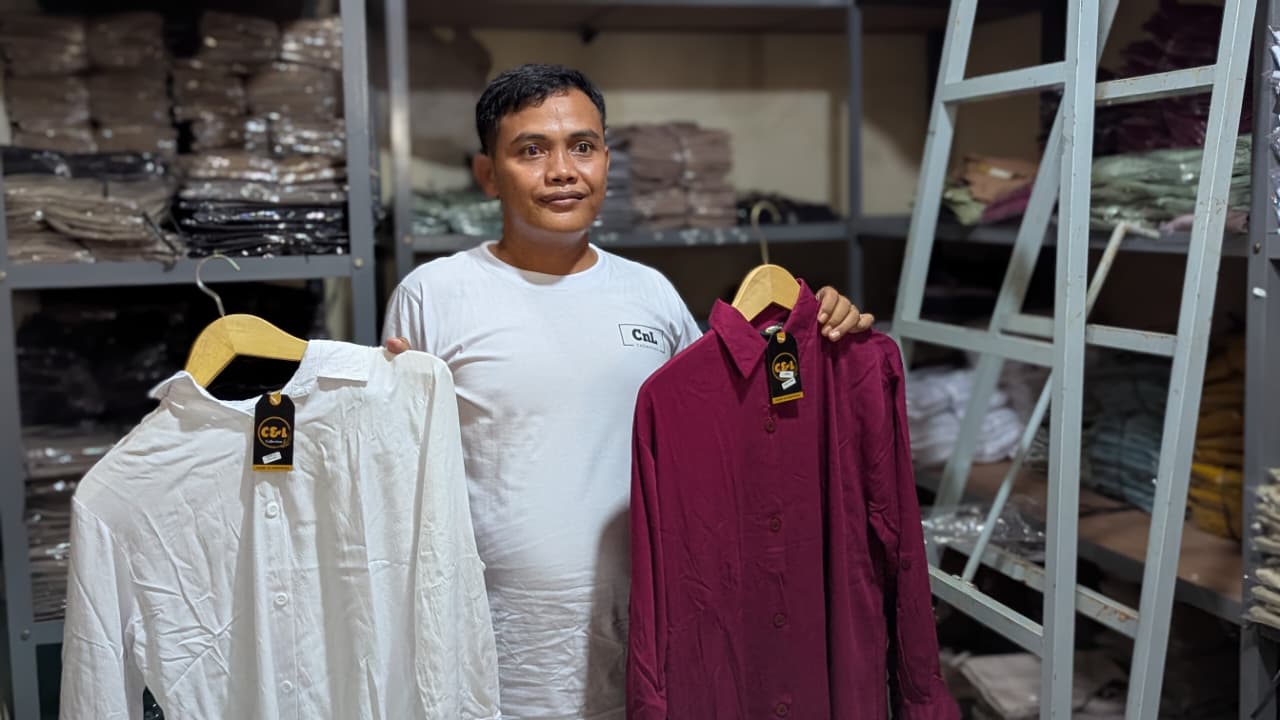
An article from Pekalongan, Central Java, reports that micro, small, and medium enterprises (UMKM) are dismayed by President Prabowo’s speech asserting that rural communities are not directly affected by the rupiah’s depreciation. M. David Ainul Ridho, 33, who runs a women’s fashion business in Getas Village, Wonopringgo District, Pekalongan, says the statements do not reflect the reality he faces. Although he does not handle dollars himself, his costs have risen as the price of inputs—fabrics, plastics, fasteners—has increased in line with the dollar’s movement and the weak rupiah. “If you say rural people are not affected by dollars, that is clear we are affected. I run the business in a village, production is in the village, all our workers are village residents. But the prices of cloth, plastics, fasteners, everything have gone up,” David said on Tuesday (19/05). He notes that the dollar’s rise does not hit people directly in foreign exchange transactions, but its impact cascades into raw material prices and driving up production costs for UMKM. As a women’s fashion entrepreneur, David relies heavily on textiles and production accessories whose prices swing with market conditions. “Now the challenge is tough. Material costs are rising, production costs are rising, but consumer purchasing power is falling. If we raise prices too much, customers will flee,” he said. David’s journey began from scratch when he was still an employee. The second of seven siblings, he initially learned marketing on his own while trying to sell products via Facebook. With around Rp40 million in capital, he started a home-based women’s fashion business in 2015. A year later, when Shopee began to thrive in Indonesia, he recognized a major opportunity in online commerce. David set up a shop account and began selling women’s clothing—blouses, long tunics, and skirts—both online and offline. ‘In the beginning I learned by myself. No mentor. Everything was self-taught. Before going independent I had worked as a labourer in a garment workshop for a boss,’ he explained. The business grew gradually. Orders came from across Indonesia, and according to him, the biggest buyers even came from outside Java and as far as Papua. Now his operation has about 18 active product lines, with three best-sellers. Prices are relatively affordable: women’s tops around Rp65,000, bottoms around Rp70,000, and long tunics around Rp86,000, before discounts. Ironically, the COVID-19 pandemic proved a golden period for David’s business. While many traditional businesses declined, his online sales surged. Before the pandemic, shipments averaged 20–30 receipts or transactions per day; between 2019 and 2021, this rose to around 3,000 per day. ‘During the pandemic, online shopping stayed high. Traffic was very high, and my orders increased dramatically.’ David says the Shopee platform has helped his business with financial transparency and daily cash flow, while marketplace campaigns and promotions significantly boosted sales. ‘If you join certain campaigns, traffic can double from typical levels.’ From the business, David gradually improved his family’s life. He once was just an employee but now has managed to send his parents on a Hajj pilgrimage, and he married in 2023 after his business matured. His business is no longer a personal venture: around 80 local residents depend on its operations, some working on sewing, pattern cutting, buttoning, and packaging. When sales fall, David worries not only about profit but also the livelihoods of his workers. ‘Current conditions are no longer about making big profits. Staying afloat is enough,’ he said softly. David adds that the greatest challenge for UMKM today is staying alive in a fast-changing market. Unstable sales traffic means continued adaptation, and he says he himself has fallen for Rp167 million in a customer payment. Nevertheless, the decline in purchasing power is making business harder than a few years ago. David hopes the government better understands the real conditions faced by rural entrepreneurs, for village UMKM do not mean immunity to global economic fluctuations. We do not hold dollars, but the goods we buy rise in price because of the dollar, so we still bear the impact,’ he concluded, noting that despite the challenges, he will persist.