
UMJ strengthens cooperative so Sambas fishermen enjoy added value
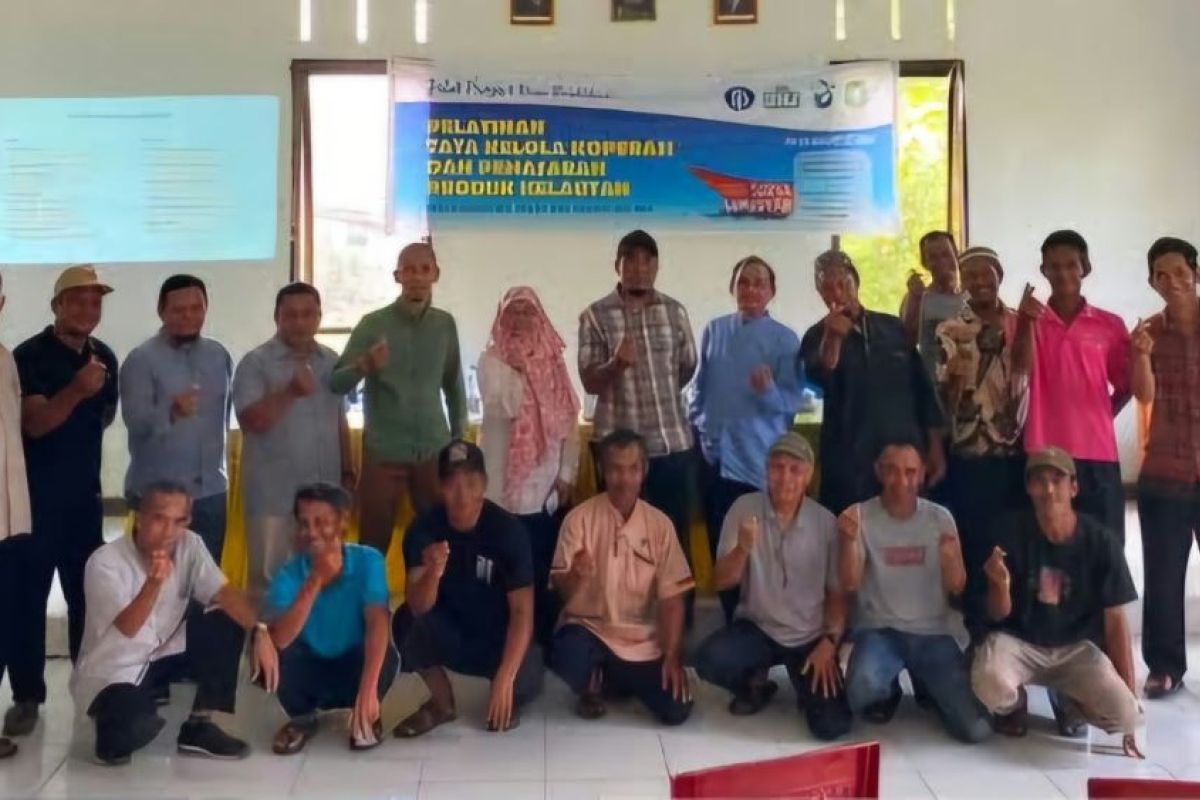
The Centre for Border and Coastal Studies at Universitas Muhammadiyah Jakarta (PSPP UMJ) is strengthening cooperative governance to shorten the distribution chain for marine products so that more added value can be enjoyed by fishermen in Sambas Regency, West Kalimantan.
PSPP UMJ Chair Endang Rudiatin said that improving fishermen’s welfare is determined not only by the volume of catch, but also by the cooperative’s ability to manage the supply chain and seize market opportunities.
“The main key to improving fishermen’s welfare lies not only in the volume of catch, but in how the cooperative is able to manage the supply chain and capture market opportunities for processed derivative products,” she said.
The effort was carried out through training themed “Cooperative Governance and Marketing of Marine Products” for the management and members of the Surya Samudera Coastal Cooperative in Sebubus Village, Paloh District, Sambas Regency, on 22–24 August 2026.
The training is the final stage of the Berdikari Village pilot project, a collaboration between PSPP UMJ and the Department of Islamic Economics and Finance (DEKS) of Bank Indonesia.
The training materials covered policy and the potential of Sambas marine products from the Fisheries, Livestock and Animal Health Agency of Sambas Regency, as well as the legalisation and operationalisation of cooperatives from the Cooperatives, SMEs, Industry and Trade Agency of Sambas Regency.
Participants also received briefings on business and product licensing for the general market.
Endang said that with professional and integrated governance, the Surya Samudera Coastal Cooperative can shorten the long distribution chain so that the added value of marine products, including leading commodities such as lobster and jellyfish, can be felt directly by fishing communities.
“Through the development of fishing cooperatives, we hope to encourage digitalisation of the value chain, independence in sharia capital, and standardisation of fishery product quality including the halal process, so that local fishermen are able to penetrate wider markets,” she said.
Endang expressed hope that collaboration between regional governments, both provincial and district, and PSPP UMJ can improve the economy of communities in Paloh District.
Meanwhile, Chair of the Surya Samudera Coastal Cooperative Halimin said the cooperative will immediately coordinate and open member recruitment for fishermen in Paloh District, including jellyfish fishermen, lobster fishermen, SMEs processing marine and fishery products, and salt farmers in Sebubus and Temajuk Villages.
Since 2022, PSPP UMJ has facilitated jellyfish fishermen in Sebubus Village through the development of a multifunctional jellyfish and lobster refinery and a salt tunnel as a solution to salt scarcity in jellyfish processing.
PSPP UMJ subsequently formed a salt farmers’ group and facilitated the construction of a salt house. The group then became members of the Surya Samudera Coastal Cooperative.