
UMJ professor highlights challenges for BGN head in improving MBG governance
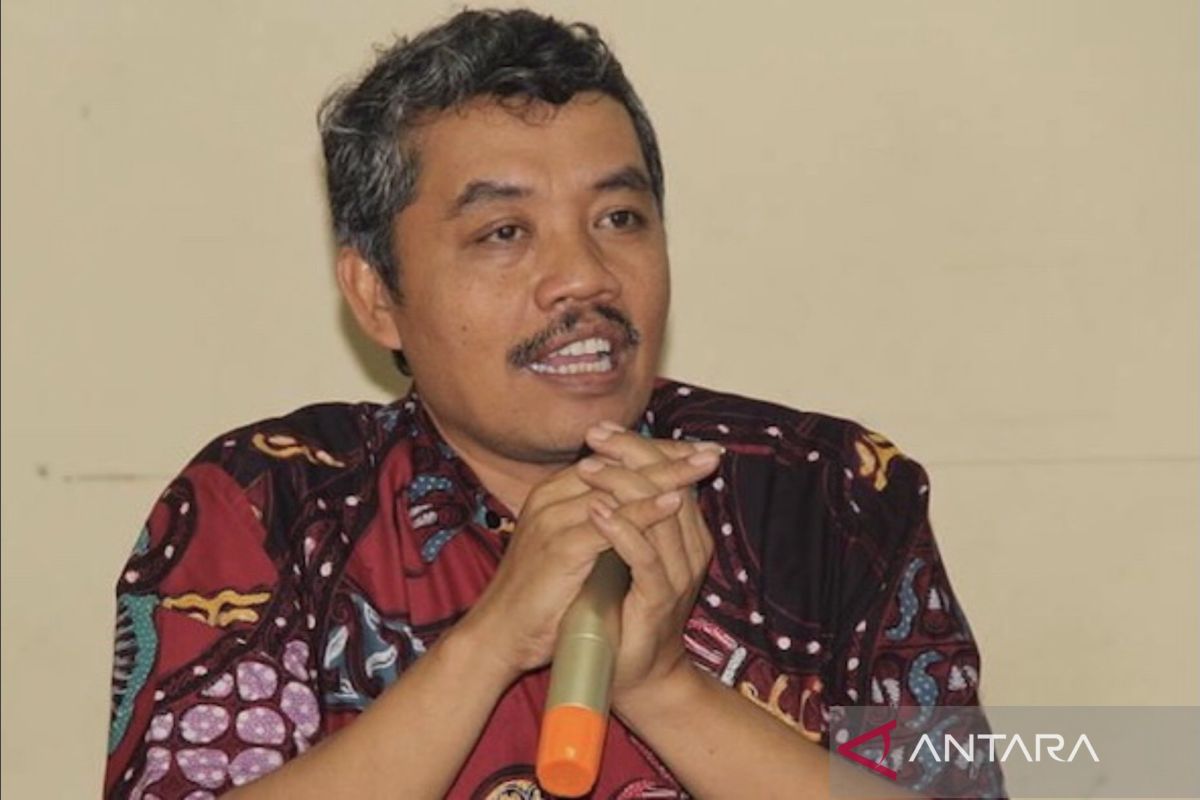
Jakarta (ANTARA) - Professor of the Faculty of Social and Political Sciences (FISIP) at Universitas Muhammadiyah Jakarta (UMJ), Prof Sri Yunanto, believes that the issue of the Free Nutritious Meals (MBG) programme that must be addressed is no longer about whether it will be continued or discontinued.
Through a statement in Jakarta on Saturday, Sri Yunanto said the biggest homework for the Head of the National Nutrition Agency (BGN), Sudaryono, is to improve the management and governance of MBG, especially the control system from the Nutrition Fulfilment Service Units (SPPG) to the food being received by beneficiaries.
“So, now it is not a matter of whether it is continued or not. The policy has been taken. MBG must be made effective and well-targeted as soon as possible,” he said.
According to him, the public does not really want to know how complicated it is for the government to manage tens of thousands of SPPGs. The public wants to see food that is safe, nutritious, on time, in the right quantity, and reaching those in need.
“If this management and control issue can be resolved, it will become a selling point for the government. The public will eventually see that criticism is not being covered up, but is being used as a basis for improving the programme,” he said.
Sri Yunanto also assessed that taking action against employees, including civil servants (ASN) and SPPG staff who violate regulations, is an important part of the improvement. However, such actions must go hand in hand with system improvements so that problems do not keep recurring.
“If there are indications of corruption, it must be investigated. If proven to have committed violations, they should be warned, sanctioned or dismissed in accordance with the provisions. That is part of the punishment. But, at the same time, the management must be improved,” he said.
According to Sri Yunanto, MBG oversight must not be reactive, meaning it should not only be carried out after problems emerge such as suspected poisoning or budget irregularities.
On the contrary, control must be carried out from the beginning of the process, starting from the procurement of food ingredients, the cooking process, hygiene standards, food testing, packaging, delivery, to the food being received by students, all of which must be included in the monitoring system.
With the number of SPPGs already reaching tens of thousands, Sri Yunanto assessed that BGN cannot possibly carry out all oversight centrally. Therefore, the involvement of local governments through an integrated monitoring mechanism is needed.
“The chain of command is very extensive. BGN cannot possibly oversee tens of thousands of SPPGs alone. There must be cooperation with local governments. For example, education agencies, food agencies, and health agencies should participate in monitoring,” he said.
According to Sri Yunanto, local governments also need to have a monitoring mechanism down to the school level. Thus, problems that arise at the SPPG level can be identified earlier and immediately corrected.
He assessed that the use of technology can strengthen the system. BGN needs to have a monitoring centre capable of integrating data on SPPGs, beneficiaries, food production, distribution, as well as reports from schools and local governments.
Sri Yunanto assessed that Sudaryono has sufficient room to carry out improvements because the main objective of the programme is already clear, while the ways to achieve that objective can still be adjusted to conditions on the ground.
“Young people are usually more open to new ideas. The goal must remain, but the ways to achieve it can be flexible according to conditions,” said Sri Yunanto.