
UMJ Launches I-CHIP, Arief Rosyid: A Commitment to Supporting Health Sovereignty
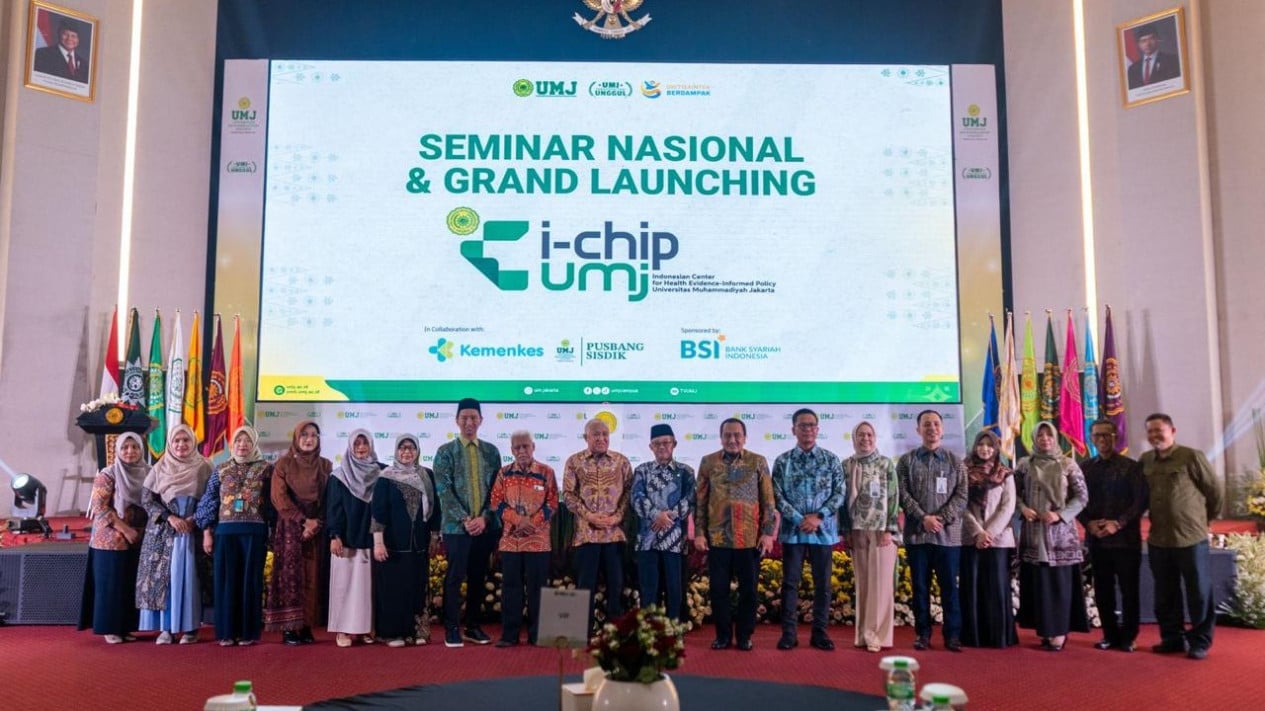
Jakarta, VIVA – Universitas Muhammadiyah Jakarta (UMJ) has officially launched the Indonesian Center for Health Evidence-Informed Policy (I-CHIP) through a Grand Launching and International Seminar held on Tuesday, 15 September 2026.
The establishment of the study centre received backing from several national figures who recognise that Indonesia’s health challenges are increasingly complex and require evidence-based policy, cross-disciplinary collaboration, and the courage to build national health sovereignty.
The Grand Launching and International Seminar was attended by the Minister of Primary and Secondary Education (Mendikdasmen) Abdul Mu’ti, Minister of Health (Menkes) Budi Gunadi Sadikin, Head of BRIN Arif Satria, and Din Syamsuddin.
The presence of these figures underlined the importance of collaboration between government, universities, research institutions and society in shaping the future of Indonesian health policy.
The event was also attended by UMJ Rector Ma’mun Murod, the President Director of BPJS Kesehatan, a professor from Johns Hopkins University, Prof. Abd. Razak Thaha, Head of BRIN’s Health Research Organisation, Head of the Health Development Policy Agency (BKPK) at the Ministry of Health, leaders of Muhammadiyah universities, vice-rectors, deans, academics, researchers, and various health sector stakeholders.
The forum also reaffirmed I-CHIP’s positioning as a meeting point for academics, researchers, government, health insurance providers, universities, and health stakeholders, both at the national and international levels.
Minister of Primary and Secondary Education Abdul Mu’ti paid particular attention to the issue of mental health among the younger generation. According to him, health can no longer be understood solely in its physical dimension.
Mental health and wellbeing have become increasingly important issues in the world of education, especially amid rapid social change and technological development.
Abdul Mu’ti believes I-CHIP can play a strategic role in providing studies and solutions to mental health problems in educational settings. Schools are not merely places where learning takes place, but ecosystems where children grow physically, psychologically, socially and spiritually.
For this reason, stronger synergy is needed between schools, families, universities, government and society. This approach aligns with the Tujuh Kebiasaan Indonesia Hebat (Seven Habits of a Great Indonesia) programme, ranging from waking up early, worship, exercise, healthy eating, a love of learning and community engagement to sleeping on time.