
UMB Develops Waste Management and Local Food Programme in Pondok Kelor Village
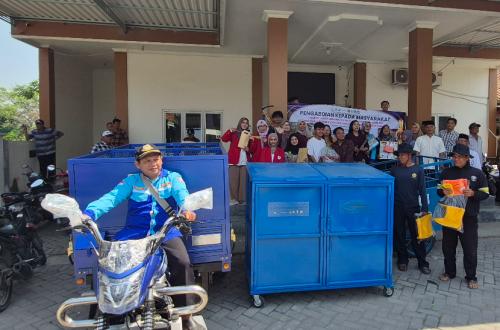
Universitas Mercu Buana (UMB) is developing a community empowerment model in Pondok Kelor village, Sepatan Timur district, Tangerang Regency, through community-based waste management, strengthening local food businesses and a moringa planting movement. The programme aims to tackle the waste problem while reviving moringa plants as the village’s identity.
The programme entered its implementation phase after UMB handed over various Appropriate Technology (Teknologi Tepat Guna, TTG) equipment to the Pondok Kelor village youth organisation (Karang Taruna) and the local food business group under the village-owned enterprise (BUMDes) on Friday (10 July 2026). The handover marked the beginning of an empowerment system prepared through mentoring since April 2026.
Desiana Vidayanti, head of UMB’s Assisted Village Empowerment Programme team, said the technology provided forms part of a system designed to be managed independently by the community.
“Today is not merely an equipment handover, but the start of implementing a system we have built together with the community. We hope waste management becomes better organised, local food businesses grow, and Pondok Kelor’s identity as a moringa village can come back to life,” Desiana said in a statement on Tuesday (14 July 2026).
Pondok Kelor is a rapidly developing peri-urban area that lacks an organised waste management system. Meanwhile, the moringa plants that once characterised the village are increasingly rare and have not been optimally utilised as a food source or economic potential.
To address these issues, the Karang Taruna received community-based waste management technology support alongside mentoring for the moringa planting movement. Meanwhile, the local food business group received production equipment as well as mentoring in business management, financial literacy and product quality improvement.
The programme is run by a multidisciplinary UMB team led by Desiana Vidayanti together with Dewi Murtiningsih, Oties T. Tsarwan and Sri Hesti from Dian Nusantara University (Undira). UMB students are also involved as facilitators in training, mentoring, monitoring and evaluating activities.
Pondok Kelor village head Junaedi said the programme addresses a community need, as the village has never had an integrated waste management system.
“We hope the mentoring from UMB marks the beginning of a system that the community can run independently, so the benefits can be felt over the long term,” Junaedi said.
The Assisted Village Empowerment Programme is designed to run for three years. In the first year, activities focus on building the waste management system, the moringa planting movement and strengthening the local food business group. Subsequent stages are directed at business development and institutional strengthening so the programme can run independently.
Through the programme, UMB hopes Pondok Kelor will not only have a better waste management system but also revive moringa as the village’s identity while strengthening food security and the local economy. This empowerment model is expected to serve as an example for other peri-urban villages facing similar problems.