
Uma Palak Farmers’ Story Draws the Attention of ASCOPE Delegates
Jakarta, CNBC Indonesia — For farmers in the Subak Sembung area of North Denpasar, Bali, water availability during the dry season is a key factor in maintaining agricultural productivity. Solar and micro-hydropower are now helping farmers optimise irrigation while reducing operating costs.
“Before SIUMA, we often faced limited water supplies for irrigating our fields, especially during the dry season. Now, with soil-moisture sensor technology powered by micro-hydropower, we can identify which plots need water and which already have enough. This means water is used more accurately and efficiently, without being wasted,” said Wayan Sukadana, 47, head of the Uma Palak Lestari Joint Business Group (KUB), in an official statement on Thursday (29 October 2026).
The Uma Palak Irrigation Management Energy Supply System (SIUMA) combines a water wheel, or micro-hydropower, with solar panels. It reuses river water to irrigate farmland and supplies energy for farming activities and lighting across 10.26 hectares of rice fields.
Wayan and I Made Darayasa, 62, the Pekaseh, or head of Subak Sembung, have also seen the benefits. Renewable-energy technology is helping farmers address water shortages while reducing high operating costs.
One visible change is in the use of agricultural machinery. Whereas farmers previously relied on diesel tractors to work the land, they are now beginning to use battery-powered electric tractors, which can be recharged using solar and micro-hydropower. The innovation reduces fuel use and enables farmers to charge the tractors themselves without incurring additional electricity costs.
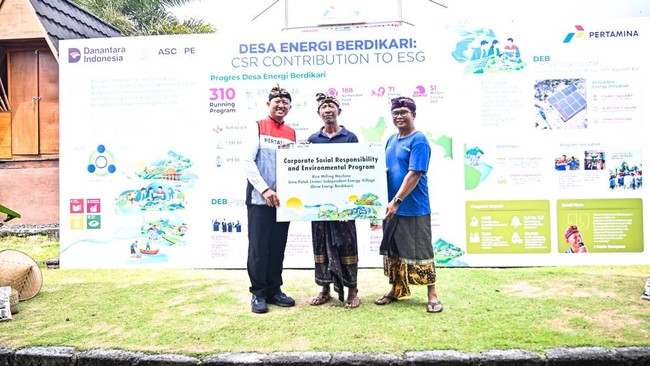
The benefits of renewable energy for Uma Palak Lestari farmers are also being extended. During a visit by the ASCOPE delegation, Pertamina handed over an electric rice mill to the local farming group. With a processing capacity of up to 200 kilograms of paddy an hour, the machine is expected to boost productivity and make it easier for farmers to process their harvest into rice.
The machine is a practical step towards strengthening farmers’ self-reliance—not only in irrigation and land cultivation, but also in post-harvest processing. Electric equipment gives farmers the opportunity to process their harvest more efficiently, add value to their agricultural products and increase the farming group’s income potential.
For the Uma Palak Lestari community, this support is part of an effort to build a more self-reliant agricultural ecosystem. Clean energy helps maintain rice-field productivity while opening up wider economic opportunities for farmers.
Agricultural activities in Subak Sembung are currently managed by 185 farmers and directly benefit more than 400 local residents. Through farming and tourism businesses, the joint business group and local farmers generate more than Rp585 million in annual income.
The economic value of farming is also being increased through the development of a flagship crop, Mentik Susu rice. A premium variety, it commands a high price in the premium market and is known for its low glycaemic index and high fibre content.
Subak Sembung is not focused solely on agriculture; it is also developing as a community activity area and tourist destination. A 2.4-kilometre jogging track running through the rice fields has become an attraction for residents and visitors.
To support these activities, 43 automatic lights powered by SIUMA have been installed in the area, enabling people to remain active after dark. Walking, exercising and buying fresh vegetables directly from farmers all help stimulate the local economy and create additional income opportunities for the farming group through tourism.
The integration of renewable energy, agricultural productivity and community economic empowerment has attracted a visiting delegation from the ASEAN Council on Petroleum (ASCOPE), who toured the Uma Palak Lestari Energy Independent Village (DEB). The delegates saw how clean-energy development can go hand in hand with efforts to strengthen food security and promote economic self-reliance.
Uma Palak Lestari is part of the Energy Independent Village initiative developed by PT Pertamina (Persero). By responding to local needs and potential, the programme promotes renewable energy as a driver of productive activities and a source of sustainable economic benefits for the community.
Pertamina Corporate Secretary Arya Dwi Paramita said the community empowerment model developed at Uma Palak Lestari had received a positive response from ASCOPE delegates. He said the approach could be studied and replicated by national energy companies in neighbouring countries.
“Based on the delegates’ feedback, they said they had never seen a community involvement and development management model like this before. Delegates from Timor-Leste in particular asked for details of the concept and the farmers’ income potential so they could study it,” Arya said.
Nationwide, Pertamina has developed 310 Energy Independent Village sites across Indonesia. Of these, 62 have reached self-sufficiency after around three to five years of mentoring. The achievement forms part of Pertamina’s commitment to promoting clean energy that supports not only the energy transition but also communities’ self-reliance and long-term welfare.
Source: jawawa.id (https://jawawa.id/newsitem/uma-palak-farmers-story-draws-the-attention-of-ascope-delegates-1793260296)
Originally published by CNBC Indonesia (https://www.cnbcindonesia.com/news/20261029140949-4-780589/cerita-petani-uma-palak-menarik-perhatian-delegasi-ascope), translated from Indonesian