
Uma Palak Farmers’ Clean Energy Innovation Draws ASCOPE’s Attention
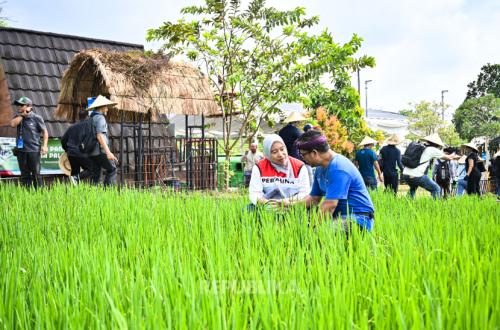
DENPASAR — For farmers in the Subak Sembung area of North Denpasar, Bali, access to water during the dry season is a key factor in maintaining agricultural productivity. Solar and micro-hydro power are now offering a way to optimise irrigation while reducing farming operating costs.
“Before SIUMA was introduced, we often faced limited water supplies for irrigating our fields, particularly during the dry season. Now, with soil-moisture sensor technology powered by micro-hydro electricity, we can identify which plots need water and which already have enough. This means water is used more precisely and efficiently, without being wasted,” said 47-year-old Wayan Sukadana, head of the Uma Palak Lestari Joint Business Group (KUB).
The Uma Palak Irrigation Management Energy Supply System (SIUMA) combines waterwheel, or micro-hydro, technology with solar panels. It allows river water to be reused for agricultural irrigation and supplies energy for farming activities and lighting across 10.26 hectares of rice fields.
Wayan and I Made Darayasa, 62, the Pekaseh, or head of Subak Sembung, have both seen the benefits. Renewable-energy technology is helping farmers address water shortages while cutting high operating costs.
One visible change is in the use of agricultural machinery. Whereas fields were previously cultivated using diesel tractors, farmers are now beginning to use battery-powered electric tractors, which can be recharged using solar and micro-hydro energy. The innovation reduces fuel use and allows farmers to charge the machines independently without additional electricity costs.
The benefits of renewable energy for Uma Palak Lestari farmers are also being expanded. During a visit by an ASCOPE delegation, Pertamina presented the local farming group with an electric rice mill. With a processing capacity of up to 200 kilograms of paddy per hour, the machine is expected to boost productivity and make it easier for farmers to process their harvest into rice.
The machine is a practical step towards strengthening farmers’ self-reliance, not only in irrigation and land preparation but also in post-harvest processing. Electric-powered equipment gives farmers the opportunity to process their harvest more efficiently, increase the added value of agricultural products and improve the income prospects of the farming group.
For the Uma Palak Lestari community, this support forms part of an effort to build a more self-reliant agricultural ecosystem. Clean energy is helping sustain rice-field productivity while creating wider economic opportunities for farmers.
Agricultural activities in Subak Sembung are currently managed by 185 farmers and provide a direct economic impact for more than 400 local residents. Through the development of farming and tourism businesses, the joint business group and local farmers generate more than Rp585 million in annual income.
The increase in agriculture’s economic value is also supported by the development of a flagship crop, Mentik Susu rice. This premium variety commands a high price in the premium market and is known for its low glycaemic index and high fibre content.
Source: jawawa.id (https://jawawa.id/newsitem/uma-palak-farmers-clean-energy-innovation-draws-ascopes-attention-1793249538)
Originally published by Republika (https://esgnow.republika.co.id/berita/tnni3d370/inovasi-energi-bersih-petani-uma-palak-pikat-ascope), translated from Indonesian