
Ulama Became the Main Strength of the Acehnese People Against Dutch Aggression in 1873
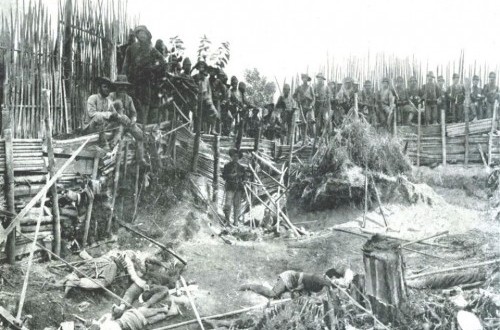
When the Dutch colonial government attempted to subjugate the Sultanate of Aceh Darussalam in 1873, Sultan Mahmud Syah rejected the demand. The Sultan immediately consolidated the strength of the people. In the effort to face colonial aggression, the ulama became one of the main forces because they not only served as religious figures, but also as leaders and war commanders capable of mobilising the resistance of the Acehnese people.
At the end of August 1872, a letter from the Governor-General of the Dutch East Indies reached Sultan Mahmud Syah, the ruler of the Sultanate of Aceh Darussalam. The letter stated that the Dutch wanted Aceh to submit to them. However, Sultan Mahmud Syah rejected the Dutch demand. At the same time, he consolidated the strength of the people, and the mainstay of that consolidation was the strength of the ulama.
Mobilising the strength of the ulama was considered very important because they occupied a dominant position in society. The ulama were regarded by the community not only as pious people of great learning, but also as leaders or war commanders. Within them were the elements of scholars, religious figures, heroes, and an important part of the centre of a power network that was relatively successful in leading society effectively.
As a result of Sultan Mahmud Syah’s rejection of Dutch pressure, on 18 February 1873 the Colonial Minister Van De Putte, on behalf of the Dutch Government in the Netherlands, instructed Governor-General Louden in Batavia that the attack on Aceh should begin immediately, as reported in the book Tokoh Agama Dalam Perjuangan Kemerdekaan 1945-1950 di Aceh by Rusdi Sufi, Muhammad Nasir, and Zulfan, published by the Department of Education and Culture in 1997.
To fulfil this instruction, Louden held a special session of the Dutch East Indies Council to arrange the technical implementation of the attack. The council’s decision was enacted by the Governor-General on 4 March 1873. The decision also appointed the Vice-Chairman of the Dutch East Indies Council, F.N. Nieuwenhuyzen, as government commissioner for Aceh, and he was expected to depart for Aceh on 7 March 1873.
The ships prepared to transport troops and war supplies were the Citadel van Antwerpen, Siak, Goehoorn, and Marnix. The attack was preceded by an exchange of correspondence. Only after the Sultan of Aceh refused to surrender was the attack or war carried out.
The first Dutch attack, led by Major General Kohler, was carried out on 5 April 1873 with the support of 3,200 troops and 168 officers. Dutch forces began landing at Pantai Cermin, Ulee Lheue. Thus, a colonial war was officially begun by the Dutch side.
The war, which lasted approximately 40 years, was, according to Van’t Veer, without equal. In terms of its duration, the war can be compared to the Eighty Years’ War in the Netherlands itself. In terms of the number of people killed, namely more than one hundred thousand lives, the war was a military event without parallel. The Aceh War was for the Netherlands not merely an armed conflict, but also a national, colonial, and international political event.
The war was introduced by the Dutch under the name “Perang Aceh” (the Aceh War), while the Acehnese people knew it as “Perang Belanda” (the Dutch War), or in Acehnese terms, Prang Kaphee Ulanda.
Source: jawawa.id (https://jawawa.id/newsitem/ulama-became-the-main-strength-of-the-acehnese-people-against-dutch-aggression-in-1873-1786521243)
Originally published by Republika (https://khazanah.republika.co.id/berita/tjnb3a483/ulama-jadi-kekuatan-utama-rakyat-aceh-lawan-agresi-belanda-1873), translated from Indonesian