
Ukrainian Kamikaze Robots Enter Russian Lines, Operation Vivaldi Transforms Land Warfare
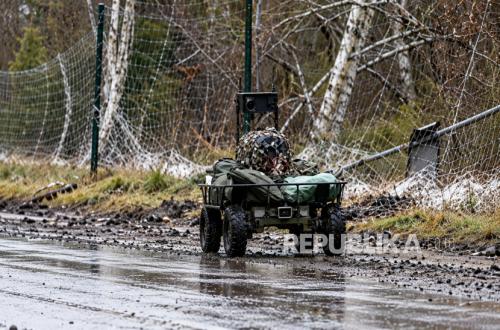
The Russia-Ukraine war has entered a new phase in the use of robotics on the battlefield. Ukraine is no longer relying solely on aerial drones but has begun deploying armed ground robots laden with explosives deep behind Russian positions.
This experiment is part of Operation Vivaldi in the northern Donetsk region. The operation is being conducted by the Third Army Corps of Ukraine, alongside several supporting units, to resist Russian pressure towards the Sloviansk-Kramatorsk area.
Ukrainian President Volodymyr Zelenskyy visited the command post of the Third Army Corps on 30 September 2026. He received direct reports from his commander, Andrii Biletskyi, regarding the three phases or “seasons” of Operation Vivaldi that have taken place.
According to the Ukrainian government, its forces have reclaimed 176 square kilometres of territory under Kyiv’s control since the offensive operation began. This figure is higher than previous reports, which cited 125 square kilometres.
Kyiv also claims that Russian losses during the three phases of Vivaldi reached more than 5,000 personnel killed and wounded. Approximately 250 Russian soldiers are said to have been captured, though these casualty figures have not been independently verified.
The operation is drawing attention due to the way Ukraine integrates aerial drones, ground robots, electronic warfare, artillery, and infantry. In several missions, robots do not move from Ukrainian positions from the start; instead, they are transported across the front lines using heavy bomber drones.
Robots Deployed from the Air
The Third Army Corps stated that heavy drones carry unmanned ground vehicles (UGVs) into Russian-held territory. The robots are then released to continue their journey and attack targets from the ground.
During the second phase of Vivaldi, UGVs were reportedly deployed more than 10 kilometres behind the Russian lines. Biletskyi described this method of deploying ground robots via drones as a world first, although this claim has not been independently verified.
The UGVs used serve several functions. Some carry explosives to perform kamikaze attacks, while other platforms can be used to transport weapons and logistics or perform tasks that previously required soldiers.
The primary goal is not merely to replace soldiers with machines. Ukraine intends to deploy robots in parts of the war that carry an extremely high risk of death before the infantry advances.
The Third Corps describes this principle simply: wars are still won by infantry, but robots are sent first so that the number of soldiers forced to risk their lives can be reduced.
Blinding Russian Eyes
Sending robots far behind enemy lines is not a simple task. Large transport drones can become easy targets if their movements are detected by Russia.
Ukraine, therefore, utilises electronic warfare to disrupt Russian reconnaissance drones. Air defence systems are also deployed to limit the adversary’s ability to monitor attack preparations.
This tactic allows transport drones to approach targets before releasing the ground robots. Once landed, these machines can move towards Russian positions that previously expected the primary threat to come from the air.
The integration of these various systems demonstrates a significant shift in drone warfare. Unmanned vehicles are no longer operating as single weapons but are beginning to function as part of a network connecting sensors, electronic warfare, aerial drones, ground robots, artillery, and humans.
Source: jawawa.id (https://jawawa.id/newsitem/ukrainian-kamikaze-robots-enter-russian-lines-operation-vivaldi-transforms-land-warfare-1791176198)
Originally published by Republika (https://news.republika.co.id/berita/tmf2fp451/robot-kamikaze-ukraina-masuk-garis-rusia-operasi-vivaldi-ubah-perang-darat), translated from Indonesian