
Ukrainian Drones Strike 21 Russian Tankers, Threatening Fuel Supply Lines
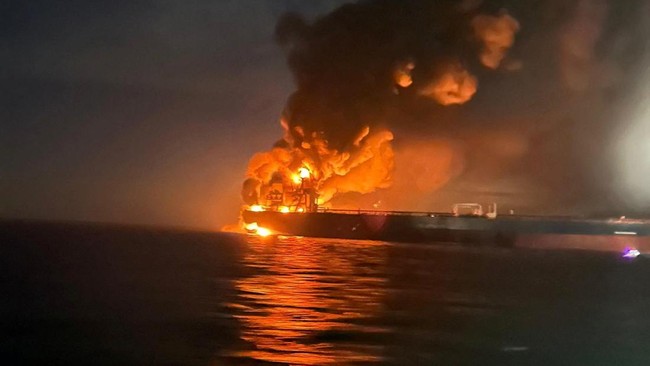
Ukraine’s military has claimed it successfully struck dozens of Russian vessels in the Sea of Azov in a series of overnight drone attacks aimed at disrupting fuel supplies to Russian-occupied territories in Ukraine, including Crimea. The attacks are reportedly part of Kyiv’s efforts to paralyse Moscow’s maritime logistics routes. The Ukrainian military stated on Saturday that it had attacked 21 Russian tankers using drones in the Sea of Azov. In addition to the tankers, Ukraine also claimed to have hit four tugboats, two cargo ships, and a dredging vessel used to support military logistics and port infrastructure. According to the BBC, the Ukrainian military has intensified attacks around Russian-annexed Crimea in recent days. Having previously targeted land logistics routes to the peninsula, Ukraine is now expanding its strikes to sea supply lines. Commander of Ukraine’s Drone Forces Robert Brovdi, known by the callsign Magyar, said at least 36 vessels had been hit and set ablaze in the Sea of Azov over the past four days. According to the Ukrainian military, most of these vessels are part of Russia’s ‘shadow fleet’, a fleet of commercial tankers used to transport oil. However, the exact number of affected ships cannot be independently verified. The BBC noted that some vessels may have been attacked more than once and not all strike claims have been confirmed. The attacks are seen as a blow to Russia’s maritime logistics capability, simultaneously disrupting guaranteed fuel supplies to Crimea. The operation is part of a strategy Ukraine calls a ‘logistics lockdown’, an effort to cut supply routes to and from Russian-occupied Crimea. The port of Kerch in Crimea, which has oil loading facilities, was also targeted by Ukrainian strikes last month. BBC Verify satellite imagery analysis showed a reduction in the number of tankers in the area in the days following the attack. Rostov region governor Yuri Slyusar said two empty tankers were attacked in Taganrog Bay, in the northeastern part of the Sea of Azov, on Wednesday. Although empty, both vessels were reported to still be burning on Thursday. According to Brovdi, two other tankers attacked earlier in the week were each carrying approximately 7,000 tonnes of fuel from the Taganrog area to Crimea. Satellite imagery taken on Wednesday also showed a large plume of smoke from a vessel located about 4.2 kilometres off the coast of Crimea. NASA data indicated a fire at the location had been burning since 6 July, suspected to be linked to the first wave of Ukrainian drone strikes. In the same imagery, around 20 other vessels were seen leaving the Sea of Azov area heading towards the Black Sea. Brovdi named several tankers targeted in the strikes, including Venera-3, Sanar-1, Sanar-17, Klimena, Thetis, Alexey Savrasov, and Penelopa. Additionally, the passenger ferry SKS One and a bulk carrier were also reported hit in the Port of Kerch. The attacks were not confined to the Sea of Azov. Ukraine’s military also released footage of a sea drone strike against the sanctioned tanker Blue, which it said occurred near Yalta, a resort city on the Black Sea in Russian-occupied Crimea, although the exact location could not be confirmed. The wave of attacks on tankers coincided with Ukraine’s ongoing strikes on Russian oil refineries, which have reportedly triggered fuel shortages in various regions, including Moscow and St. Petersburg. Ukrainian President Volodymyr Zelensky has described the strikes on Russian energy facilities as a response to Moscow’s attacks on Ukraine, stating that Russian citizens must ‘feel that it is their country that is waging war’. Meanwhile, US President Donald Trump, during a meeting with Zelensky at the NATO summit in Ankara on Tuesday, described Ukraine’s drone strategy as an escalation, but added that ‘it is also an escalation that can help lead to a resolution’. In recent days, drone attacks on Russian maritime logistics have reportedly become more intensive. Brovdi claimed 12 tankers were attacked in a single night from Wednesday to Thursday. Several pro-war Russian Telegram channels have also criticised the weak protection of Russia’s logistics fleet. The ‘Military Informant’ channel stated that tankers sailing without effective protection were easy targets for Ukrainian drone operators due to a lack of escort from the Russian Black Sea Fleet. ‘The Russian Black Sea Fleet is now shutting itself away in Novorossiysk,’ wrote Mikhail Zvinchuk on the Rybar Telegram channel. The attacks are feared to potentially worsen fuel supply disruptions in Crimea. In late June, Russian President Vladimir Putin estimated Crimea’s fuel needs at around 70,000 tonnes per month and pledged to ensure supplies via land and sea routes. The tankers targeted in the Sea of Azov are suspected to have been carrying much larger quantities of fuel. The BBC also reported that more than 90 per cent of Russian territory is now experiencing fuel restrictions or shortages, while the government has banned diesel exports. Queues of vehicles have begun forming at petrol stations in major cities, and Russian-appointed authorities in Crimea are also facing disruptions to electricity and transport supplies.