
Ukraine Targets Russian Logistics Weakness, Putin Reportedly Concerned About Defeat
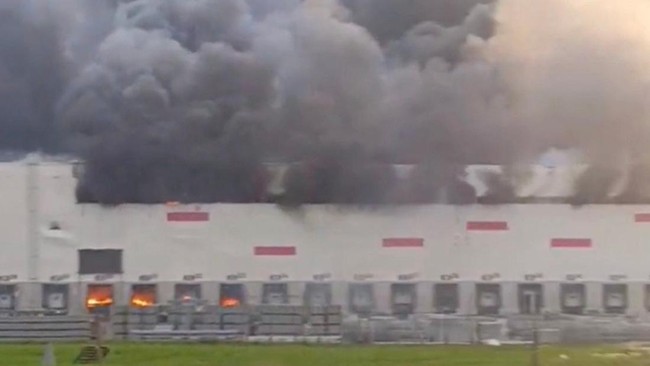
Ukrainian military forces have altered their attack tactics to target key logistics centres in Russia, including the country’s largest e-commerce company, Wildberries. The wave of drone strikes is designed to paralyse supply chains, increase the financial burden on Russian businesses, and force President Vladimir Putin back to the negotiating table after nearly four and a half years of war. Wildberries confirmed it evacuated its warehouse in the city of Ryazan on Wednesday morning after Ukrainian drones struck several industrial facilities. This marks a significant strategic shift for Ukraine, which had previously focused its long-range attacks on Russia’s energy infrastructure. President Volodymyr Zelensky revealed that the targeted warehouses were involved in supplying drone components, navigation equipment, and other military hardware to Russian forces. Wildberries, often compared to the US-based Amazon, is Russia’s largest online retailer and employs around 48,000 people. Two internal sources indicated that the Russian government has acknowledged the need to inject aid funds to support Wildberries’ operations, with state-owned bank VTB expected to play a key role. Meanwhile, Sberbank is reportedly preparing a loan restructuring programme for Wildberries’ vendors to prevent a wave of bankruptcies among small and medium-sized enterprises. Natalya Kovaleva, a researcher with the Russia and Eurasia Programme at Chatham House, explained that Russian businesses have previously absorbed shocks from Western sanctions, tax hikes, internet outages, and fuel shortages. However, the assault on Wildberries represents a new threat designed to raise the cost of war for Russian business owners and ordinary citizens. Kovaleva added that Ukraine hopes that by increasing the financial cost of the war for Russian businesses, internal opposition will grow, potentially forcing Putin to negotiate or at least halt the bombing of Ukrainian cities. Beyond the logistical attacks, analysts assess that the Russian economy is now highly vulnerable to the prospect of comprehensive US sanctions. Elina Ribakova, a senior researcher at the Peterson Institute for International Economics, confirmed that Russia’s economic growth has stagnated at zero per cent due to a decline in industrial and defence sector output. The economic pressure coincides with a meeting between President Zelensky and US President Donald Trump at the Oval Office to discuss licensing the production of Patriot interceptor systems and reactivating diplomatic processes. The meeting occurred as the US Congress began passing new energy sanctions legislation to tighten economic pressure on Moscow. The escalation is further complicated by the interconnected nature of the Russian and Iranian conflicts, following a Ukrainian attack on an Iranian commercial vessel in the Caspian Sea that resulted in a fatality, and Iran’s threats to close the Strait of Hormuz, which could drive up oil prices and provide Russia with additional financial resources to continue the war.