
UKI Hosts International Conference on the Importance of Archipelagic Perspectives
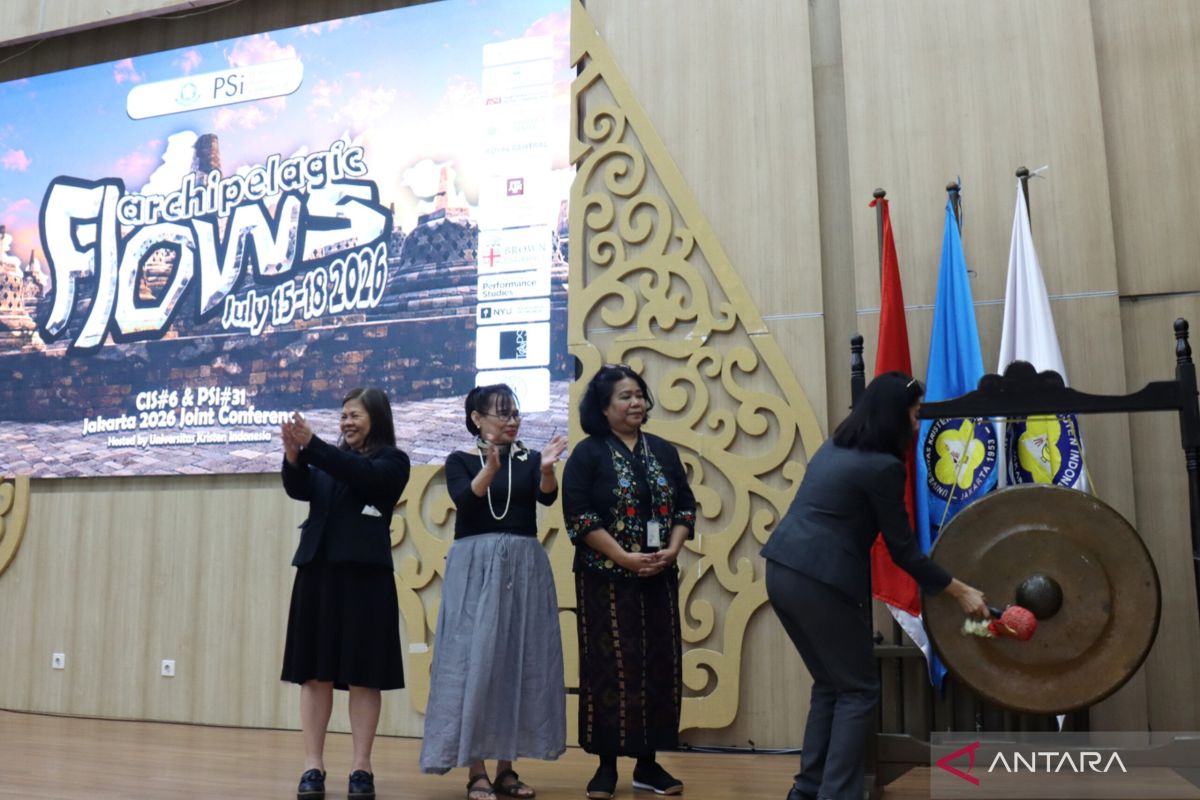
Jakarta (ANTARA) - The English Literature Study Programme of the Faculty of Literature and Languages at Universitas Kristen Indonesia (FSB UKI) held the ‘Archipelagic Flows’ International Conference, discussing the importance of the archipelagic perspective as a foundation for national development.
Dean of FSB UKI Susanne A.H. Sitohang said the success of staging this world-class conference was the result of cooperation among various parties and the full support of the UKI academic community.
‘Through this international conference, every participant can exchange ideas and learn from one another’s differences. I hope this conference can become a small agent of change that leads us towards a better world,’ Susanne said in a written statement in Jakarta on Wednesday.
The discussion took place as UKI hosted the Archipelagic Flows International Conference, a joint conference combining the 6th Critical Island Studies (CIS) and the 31st Performance Studies international (PSi), held on 15-18 July 2026.
Susanne noted that Indonesia is the largest archipelagic nation in the world, comprising more than 17,000 islands and home to more than 700 languages.
Every island in Indonesia possesses cultural wealth with characteristics unique to each region, such as traditional dances, traditional clothing and traditional houses.
‘On this occasion, UKI became a meeting point for more than 350 academics, artists and activists from 35 countries around the world to enrich scholarly study of ecology and the island environment, including the world’s oceans,’ she explained.
‘This international conference brings together academics, experts and practitioners from various interdisciplinary fields to seek solutions to various problems in efforts to preserve the natural environment on planet Earth,’ Maria said.
Among the problems highlighted are indigenous communities in coastal areas being evicted from their homes and the degradation of coral reefs, which impacts marine ecology.
‘Therefore, this international conference underlines the importance of managing the environment, particularly in island regions, as well as the importance of fighting for the rights of coastal communities,’ Maria said.
Meanwhile, FSB UKI academic Veda Sitepu also took part, discussing the economic access rights of women in coastal fishing communities from the perspective of legal justice and gender equality.
‘Fisherwomen play a vital role in sustaining the household and coastal community economy through their involvement in capture fisheries, fish processing, marketing and the distribution of fishery products. However, fisherwomen remain under-recognised as economic actors and continue to be marginalised in fisheries governance,’ Veda explained.
Most of them are still not covered by labour law protection and have not fully benefited from government development programmes.
‘Legal protection for fisherwomen is more formal than substantive. Achieving substantive justice requires affirmative policies and the more effective implementation of gender-responsive legal and regulatory frameworks,’ Veda said.
According to her, the government should revise or issue derivative regulations to explicitly define and recognise fisherwomen as legitimate actors. Such a legal definition must encompass both pre-harvest and post-harvest activities involving women’s key roles.
‘It is important to apply gender mainstreaming in fisheries programmes to ensure that capacity building, financing, insurance and cooperative membership are equally accessible to women,’ she said.