
UKI discusses South Korea's strategy to expand influence in ASEAN
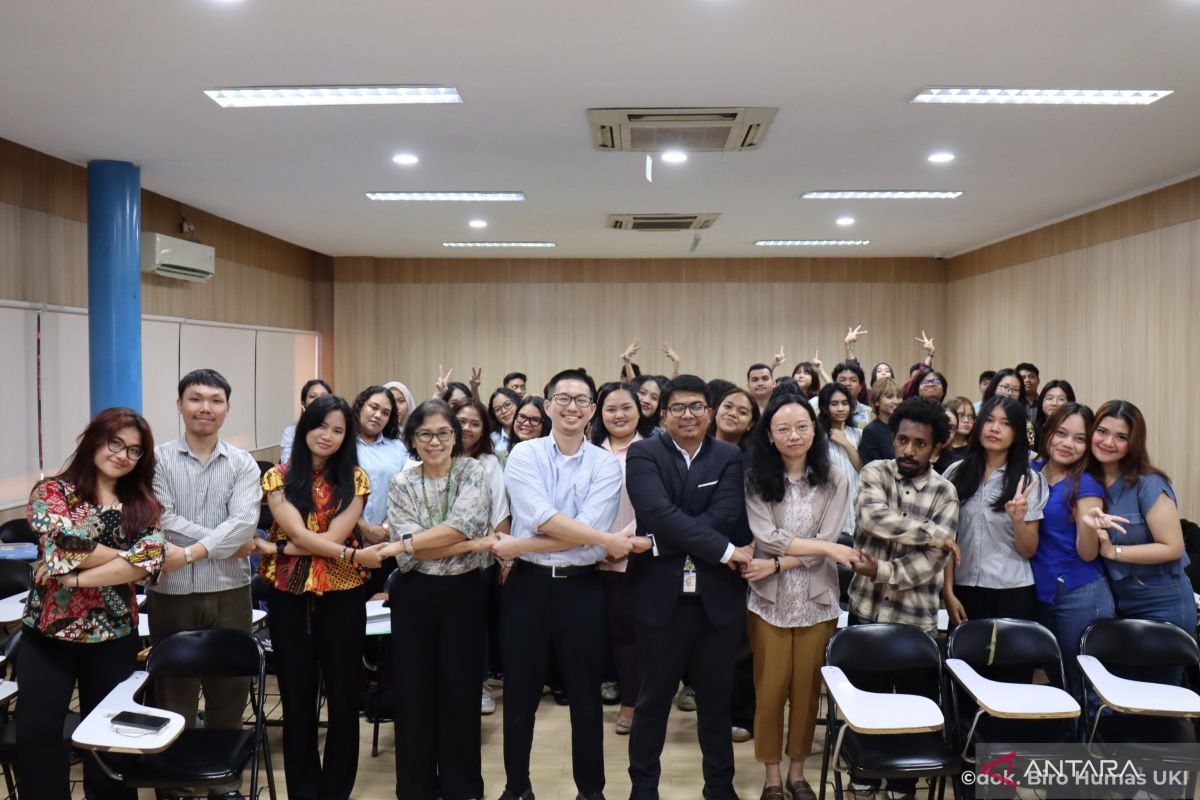
Jakarta (ANTARA) - The Centre for International Economic and Development Studies at the Indonesian Christian University (CIED UKI) discussed South Korea’s strategy to expand geopolitical and geo-economic influence in Southeast Asia. “The discussion highlighted strengthening economic, technological, and people-to-people ties between South Korea and ASEAN nations, particularly Indonesia,” said Darynaufal Mulyaman, an International Relations lecturer at UKI’s Faculty of Social and Political Sciences, in Jakarta on Tuesday. Darynaufal explained that the initiative was strengthened following South Korean President Moon Jae-in’s introduction of the New Southern Policy in 2017. The policy aims to enhance economic, political, and socio-cultural cooperation between South Korea and ASEAN countries, as well as India. He revealed that bilateral trade between South Korea and ASEAN reached $192 billion in 2024, indicating strengthening economic ties between the two sides. “South Korea has successfully established a comprehensive partnership framework with Southern nations,” Darynaufal said. However, he noted that South Korea’s influence in Southeast Asia, particularly Indonesia, still largely relies on the Korean Wave (Hallyu) cultural phenomenon. Therefore, South Korea needs to expand its strategic influence through investments in economic and technology sectors to strengthen its position in Southeast Asia. “South Korea should deepen investments and partnerships with Indonesia, Thailand, the Philippines, and other ASEAN nations,” Darynaufal added. He stated that South Korea has significant opportunities to leverage its strengths in artificial intelligence and semiconductor industries to meet evolving global technology demands. Meanwhile, Han Kyeol Kim, Editor of Southeast Asia Analyst, noted South Korea’s position in the regional geopolitical landscape. South Korea is currently the 15th-largest economy by GDP, though it remains behind China and Japan. According to Han, South Korea has been a full dialogue partner of ASEAN since 1991 and continues to strengthen economic ties with regional countries, including Indonesia. “South Korea is investing in Indonesia in electric vehicles and digital technology,” Han said. He noted that South Korea’s approach to expanding influence in Southeast Asia differs from China’s. While China excels in large-scale infrastructure development, South Korea focuses more on human resource development and technology transfer. South Korean private companies can participate in technology education and community capacity-building across ASEAN nations. Additionally, educational opportunities are seen as a key instrument for strengthening people-to-people connections.