
UKI and BPIP Discuss Strengthening National Ethics through Pancasila Study Centre
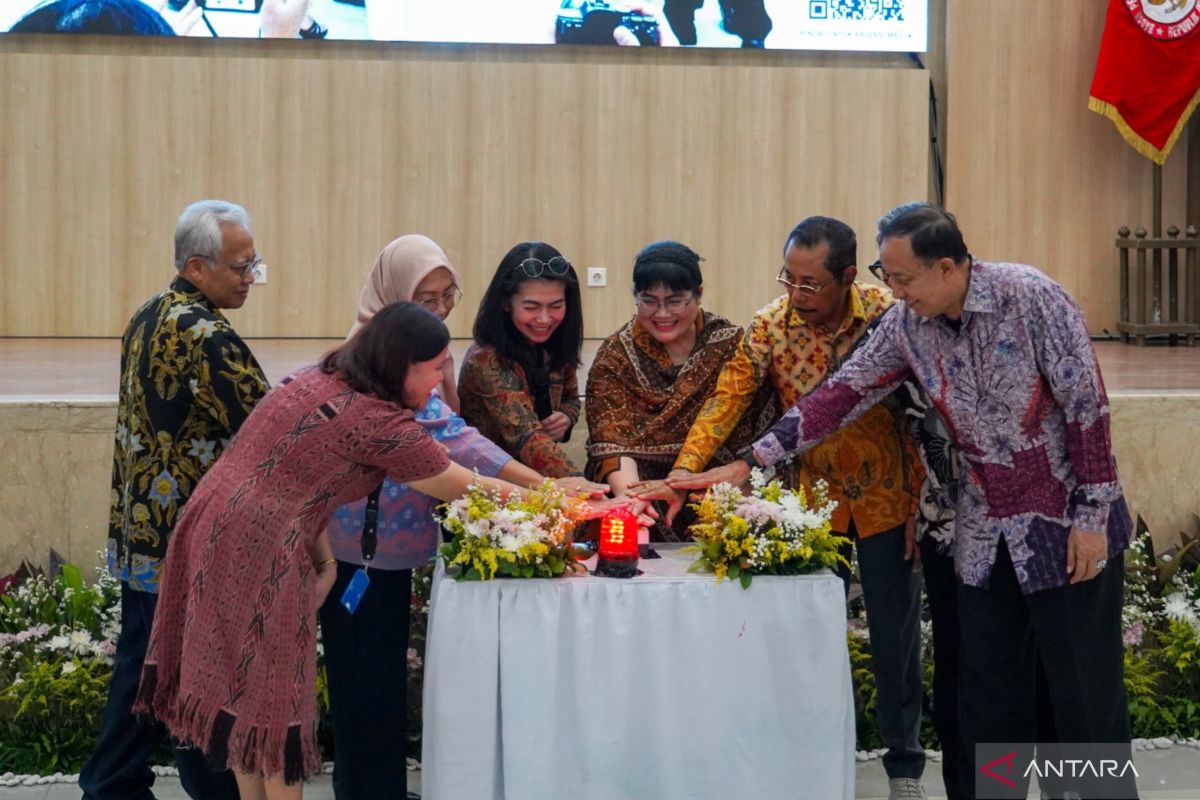
Jakarta (ANTARA) - Universitas Kristen Indonesia (UKI) and the Pancasila Ideology Development Agency (BPIP) have discussed strengthening national ethics in the conduct of government through UKI’s Centre for Pancasila and Constitutional Studies.
“I appreciate UKI hosting an academic forum discussing Pancasila as the fundamental moral source for the conduct of national and state life. Pancasila is the basis of moral ethics in government, constitutional affairs and national governance,” UKI Rector Angel Damayanti said at the university in Cawang, East Jakarta, on Wednesday.
She said that treating Pancasila as an ethical foundation meant all five principles should guide the morality, thinking and conduct of state officials and the public.
Angel also highlighted the complexity of ethical oversight in Indonesia, which involves various institutions with different powers and procedures. The system is not overseen by a single body but is distributed among several institutions, including the Election Organisers’ Honour Council, the Judicial Commission and the Judges’ Honour Council.
“The system must clearly distinguish administrative violations from purely ethical breaches and cases that have entered the domain of criminal law. This requires a rational governance framework and sound institutional communication to safeguard integrity,” Angel said.
BPIP Deputy Head Rima Agristina, meanwhile, drew attention to the challenges state institutions continue to face in enforcing codes of ethics.
She said 2025 data showed that the Judicial Commission had received 2,715 reports and forwarded notifications concerning alleged breaches of judges’ codes of ethics; the Supreme Court had recorded 220 disciplinary sanctions against judicial personnel; and the Election Organisers’ Honour Council (DKPP) had reported issuing decisions in 198 cases.
The figures, she said, underscored the need to assess how effectively Indonesia’s ethics-enforcement system is working.
“Through this academic forum, we hope to identify concrete steps together to enforce ethics in government, among state officials and in the private sector, so that Pancasila is put into practice,” Rima said.
“The term ‘National Ethics Court’ used in this forum is a working title for the study, not an established conclusion. Creating a new institution is not a success if the old problems are simply transferred to it,” she said.
At the same event, UKI Faculty of Law academic and BPIP Constitutional Law Advisory Council member John Pieris emphasised the importance of the draft bill on the Pancasila Ideology Development Agency (RUU BPIP) in strengthening coordination on the promotion of Pancasila ideology in Indonesia.
He said that this work still faced the challenge of fragmented authority across ministries and agencies, which could hamper effective policy implementation.
“This situation directly creates a governance gap between the Constitution’s ideal vision and the implementation of regulations on the ground,” John said.
He hoped the inauguration of UKI’s Centre for Pancasila and Constitutional Studies would enable the institution to expand its academic contribution to discussions on national affairs, constitutional law and the strengthening of Pancasila values.