
UK to Australia Implement Plain Cigarette Packaging Rules, Successful?
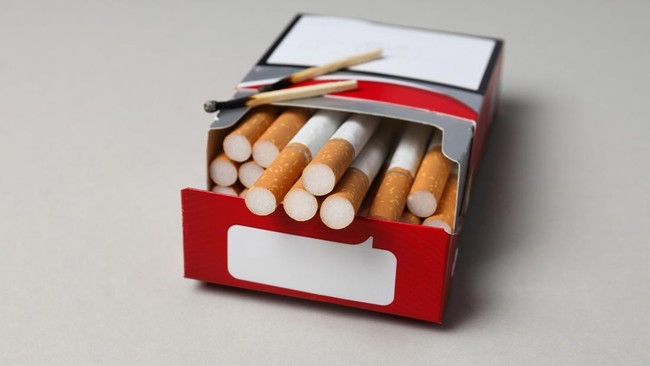
Jakarta, CNBC Indonesia – Commission XI of the House of Representatives (DPR RI) has set out the record of plain cigarette packaging rules in several countries, where the impact of implementation has been decidedly mixed.
Commission XI Chairman Mukhamad Misbakhun cited four countries that have adopted plain packaging: the United Kingdom, Australia, Colombia and New Zealand. In Britain, he said, illicit cigarette smuggling has become increasingly rampant since plain packaging was introduced.
“The first example is the United Kingdom, where manufacturers’ revenues have declined, and worse still, cigarette smuggling has risen, and so has the circulation of illicit cigarettes,” Misbakhun said at the CNBC Indonesia Coffee Morning on Thursday (9/7/2026).
The second example is Colombia, where the policy has forced consumers to spend more on the black market simply to obtain cigarettes bearing original logos.
“In Colombia too, people ended up paying more, because once the packets became plain, people went looking for branded ones,” Misbakhun continued.
In Australia, state revenue has fallen sharply, as contributions from legitimate producers have been outcompeted by the dominance of illicit cigarettes, with the state losing up to AU$1.6 billion per year.
Next is New Zealand, where brand recall plummeted to 17% after plain packaging was introduced, from 28% previously, triggering a price war and a shift in consumption towards cheap cigarettes.
“Then in Australia it is the same. The state’s losses are considerable. New Zealand likewise,” Misbakhun explained.
Therefore, he argued, plain packaging policy is not merely about improving public health; its impact on the cigarette industry and its downstream sectors, including the fate of tobacco farmers, must also be carefully weighed.
“This shows that the cigarette ecosystem is not solely a matter of health. By all means discuss the health aspect, but pay attention to the others as well, because in our lives we must account for the effects on other things, such as the welfare of tobacco farmers and cigarette factory workers,” he said.
Siti Nadia Tarmizi, Director of Prevention and Control of Non-Communicable Diseases at the Health Ministry, explained that the priority of the policy is health. According to her, uniform packaging reduces the appeal of tobacco products such as cigarettes.
She elaborated that if cigarette packaging is made unattractive, it can dampen children’s curiosity to try smoking. The policy’s main aims are protecting children and novice smokers to curb early smoking initiation, deconstructing brand appeal to reduce aesthetic attraction, and ensuring that graphic health warnings remain visually prominent and effective.
She also noted that the policy has been widely adopted around the world. In the ASEAN region, at least four to five countries have already implemented plain packaging.
“Almost all countries have done so. Singapore, which imports cigarettes from Indonesia, and then if we look at Malaysia — in ASEAN at least four to five countries have implemented it. Timor-Leste has not yet, but nearly 90% of its packets carry graphic health warnings,” she said.