
UK Pledges £8.6 Billion for Sixth-Generation Fighter Jet, Racing to Catch US and China
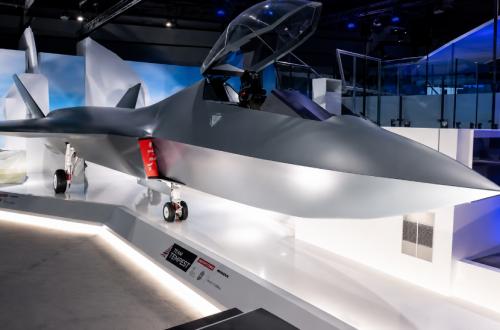
The British government has allocated £8.6 billion, approximately Rp190 trillion, for the next four years to accelerate the development of the Global Combat Air Programme (GCAP), a sixth-generation fighter jet project undertaken jointly with Japan and Italy. The funding commitment was announced by the UK Ministry of Defence in the Defence Investment Plan released on Tuesday. Prime Minister Keir Starmer affirmed that the investment is part of an effort to rebuild the national aerospace industry while ensuring Britain retains a world-class air combat capability. “This sixth-generation stealth fighter will secure our skies for decades to come,” Starmer said during the launch of the defence investment plan on Tuesday, 30 June 2026, as reported by the official UK Government website. The programme will finance the concept and design phase of the aircraft, known in the UK as Tempest, which is projected to replace the Royal Air Force’s Eurofighter Typhoon fleet starting in the second half of the 2030s. During the transition period, the government will also continue to modernise the Typhoon into the 2040s to maintain national air defence before Tempest officially enters service. Beyond the manned aircraft, GCAP is designed to integrate with artificial intelligence-based unmanned aerial systems. Britain is also allocating separate funds to develop Collaborative Combat Aircraft (CCA), autonomous combat drones that will eventually fly alongside manned fighter jets. The £8.6 billion investment is one of the largest budget items in the UK’s defence plan and is expected to sustain thousands of jobs in the aerospace sector. Japan and Italy are also preparing their own investments to support the same project. The scale of the investment also reflects British caution after observing the various obstacles experienced by the Future Combat Air System (FCAS) project owned by France, Germany, and Spain. Over recent years, FCAS has faced numerous problems, ranging from disputes over technology sharing and industrial leadership to political tug-of-war between governments. The various delays are expected to cause the project’s economic value to balloon to more than €100 billion, or approximately Rp1,800 trillion, while eroding the competitiveness of the European defence industry. This experience serves as a warning that developing a sixth-generation fighter jet is an extremely costly project with high technical and political risks.