
UK and EU Begin Post-Brexit Rapprochement Under New PM
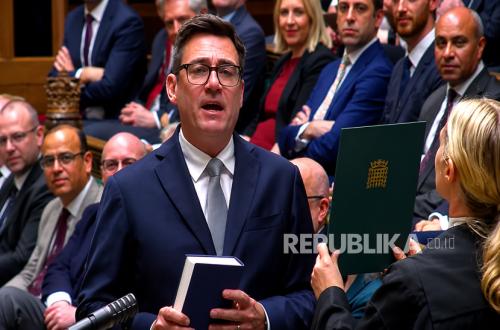
JAKARTA — A decade after the British people voted to leave the European Union, the political winds in London are beginning to change. The British government is not cancelling Brexit, but it is gradually abandoning its confrontational pattern of relations with Brussels. Trade, energy, defence, education and even the mobility of the younger generation are now pushing the two sides back towards one another.
That shift has become one of the major tasks of Britain’s new Prime Minister, Andy Burnham. Since taking over the government on Sunday (19 July 2026), Burnham has spoken with European Commission President Ursula von der Leyen, French President Emmanuel Macron and German Chancellor Friedrich Merz. Von der Leyen said she wanted to strengthen the UK-EU partnership for the sake of the continent’s security and the prosperity of peoples on both sides of the English Channel.
Burnham inherited the relationship-repair agenda pioneered by Keir Starmer’s government. A UK-EU summit had been scheduled for Wednesday (22 July 2026), but was postponed after Starmer announced his resignation. London and Brussels are now preparing a replacement meeting for autumn 2026, although an exact date has not been set, as reported by several European media outlets.
The postponement has not halted technical negotiations. Before the change of government, the UK’s Minister for EU Relations, Nick Thomas-Symonds, said talks on agri-food trade, the linking of carbon trading schemes and youth mobility were in a positive position. According to him, closer ties with the EU had become increasingly important because British and European supply chains remain deeply interconnected.
However, this repair of relations does not amount to Britain rejoining the European Union. Burnham previously made clear he was not proposing that Britain rejoin the bloc. He acknowledged that Brexit had caused losses, but believed reopening the referendum debate would only deepen divisions in society.
London’s strategy is therefore to repair the economic and diplomatic damage caused by Brexit without formally overturning the result of the 23 June 2016 referendum.
From Political Divorce to Strategic Partnership
The foundations of the reset were in fact laid at the first UK-EU summit at Lancaster House, London, on 19 May 2025. At that meeting, the two sides agreed a Security and Defence Partnership, a joint understanding, and a sectoral negotiating agenda covering food, energy, fisheries, steel, security and youth exchanges.
That agreement was regarded as the biggest change in UK-EU relations since Brexit. Reuters at the time described it as the end of the era of the “acrimonious divorce”, particularly amid global trade uncertainty and American demands that Europe shoulder greater responsibility for its own defence.
The UK Parliament’s Business and Trade Committee said the summit had shaped a new framework for strategic partnership. Even so, most of the agreement still consists of political commitments and negotiating agendas, rather than legal treaties that would immediately remove post-Brexit barriers.
In other words, relations have indeed thawed, but the process of repair is not yet complete.