
UIN Yogyakarta Archive Exhibition Recalls Long History of PTAIN Establishment
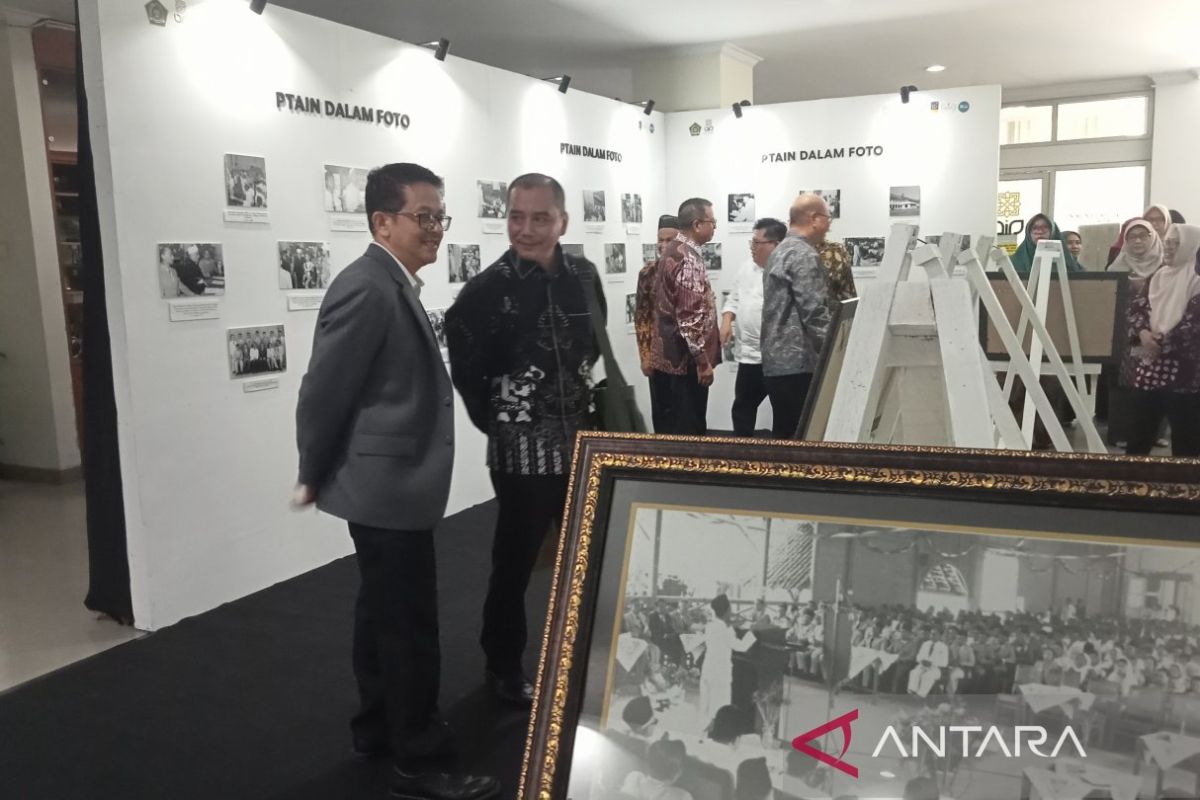
Yogyakarta - The archive exhibition titled “RINTISAN: Unerasable Traces, Across Time 1951–1961: Re-reading the Roots of Identity,” held by UIN Sunan Kalijaga Yogyakarta from 21–26 September 2026, serves as a reminder of the long history behind the establishment of the State Islamic College (PTAIN).
“The theme adopted in this exhibition is very important. Archives remind us of the extraordinary services of the founding fathers of UIN Sunan Kalijaga,” said the Rector of UIN Yogyakarta, Prof. Noorhaidi Hasan, during the opening of the archive exhibition in Yogyakarta on Tuesday.
According to him, two prominent figures who laid the foundation for the development of UIN Sunan Kalijaga were K.H. R. Muhammad Adnan and Muchtar Jahja, both of whom remain deeply embedded in the historical trajectory of the university.
The Rector noted that the exhibition reveals the embryo of Islamic higher education, which began as the Islamic Higher School (STI), continued through the Indonesian Islamic University (UII), and in 1951, the Minister of Religious Affairs, K.H. Wahid Hasyim, signed the charter marking the commencement of PTAIN’s operations.
For the Rector, history is not merely a record of the past, but a foundation that helps the institution understand its direction; without such a foundation, an institution risks losing its orientation amidst changing times.
The exhibition, which presents black-and-white photographs, newspaper clippings, clerical documents, and old books spanning 75 years, illustrates a significant transformation from the humble beginnings of PTAIN to a university with an increasingly broad range of scientific disciplines.
“This development places UIN Sunan Kalijaga on the national and international academic map, without abandoning the historical roots that form its identity,” he said.
The Chairperson of the Archive Exhibition, Wahyu Setianingsih, stated that this exhibition, held in conjunction with the 75th Anniversary (Dies Natalis), is also a form of creativity by archivists to bring documents out of storage so they can speak to today’s generation.
“Archives are not merely piles of stored documents, but a collective memory, a source of knowledge, and a part of institutional identity,” she said.
The exhibition also features documentary videos recording the testimonies of the families of Prof. Muhammad Adnan, Prof. Muchtar Jahja, and Dr. Mohammad Damami, organised into several segments.
“Through these various archives, we invite visitors to look back at how PTAIN was pioneered, how these figures built Islamic higher education, and how that journey became part of the history of UIN Sunan Kalijaga to this day,” she said.
She expressed hope that this exhibition would mark the beginning of a tradition of utilising archives as a source of knowledge and historical learning within the university environment, noting that the awareness of preserving archives must grow alongside the understanding that every document holds a piece of the institution’s memory and identity.
“History is the trace left behind, archives are our way of preserving it, and today’s generation is the link,” she concluded.
Source: jawawa.id (https://jawawa.id/newsitem/uin-yogyakarta-archive-exhibition-recalls-long-history-of-ptain-establishment-1790002862)
Originally published by Antara (Indonesian) (https://www.antaranews.com/berita/5751709/pameran-arsip-uin-yogyakarta-ingatkan-sejarah-panjang-pendirian-ptain), translated from Indonesian