
UIN Jakarta Professor Advocates for Strengthening Constitutional Leadership
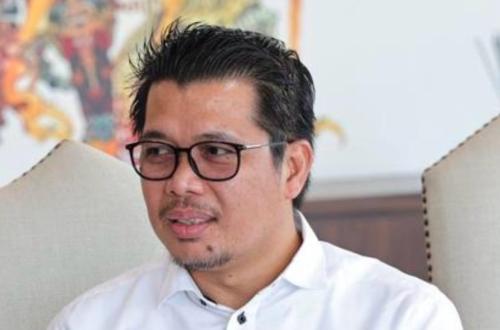
UIN Syarif Hidayatullah Jakarta officially inaugurated Ismail Hasani as a Professor in the field of Constitutional Law during an Open Senate Session on Wednesday (30/09/2026). In his scientific oration, Ismail introduced the idea of constitutional leadership to ensure that the administration of the state and government remains anchored in the constitution.
Ismail was one of 1em13 new professors inaugurated by UIN Jakarta at the Harun Nasution Auditorium, Ciputat, South Tangerang. The ceremony was attended by the Minister of Religious Affairs, Nasaruddin Umar, the Minister of Primary and Secondary Education, Abdul Mu’ti, and the Rector of UIN Syarif Hidayatullah Jakarta, Asep Saepudin Jahar.
In his oration titled “Constitutional Leadership in National and State Life”, Ismail highlighted developments in democracy and the supremacy of law over the last decade. He noted the emergence of phenomena such as ‘vetocracy’, legislative disruption, autocratic legalism, and the judicialisation of authoritarian politics.
“As a manifestation of intellectual affection, scholars of constitutional and state law are required to help ensure the strengthening of constitutional leadership as a solution for nation-building,” he stated in a release received on Thursday (01/10/2026).
According to Ismail, constitutional leadership refers to the administration of the state and government based on the constitution. This concept positions the constitution as both the foundation and the limit for the exercise of power.
“In other words, constitutional leadership places the most ‘supreme’ constitution as the basis for state and government administration, as agreed upon in Articles 1 (2) and (lar) of the 1945 Constitution. The promotion of the idea of ‘constitutional leadership’ aims to ensure that the doctrine of constitutional supremacy, the rule of law, or constitutional democracy does not become a silent doctrine, but operates in real life,” Ismail explained.
Ismail explained that constitutional leadership relies on three groups of actors performing their roles according to their respective capacities and authority: the Constitutional Court (MK), the House of Representatives (DPR) and the President, and academics and society who study constitutional law.
Within this ecosystem, the President must consider the constitutionality of policies to be implemented, while the DPR must consider the constitutionality of laws being formed. Meanwhile, the courts provide constitutional court judgments when a matter is brought to the judicial process.
According to Ismail, the academic community plays a role through ‘academic-constitutional judgment’. While academic assessments lack the institutional coercive power of court rulings, they rely on the strength of argumentation and scientific integrity.
“This is where constitutional law holds a unique position. Constitutional law is tasked with providing ‘academic-constitutional judgment’ on all topical issues through a constitutional lens. The product of ‘academic-constitutional judgment’ does not have institutional coercive power. Its strength lies in the quality of argumentation, depth of analysis, methodological consistency, and scientific integrity,” he elaborated.
Ismail noted that academic-constitutional judgment serves at least three functions in constitutional leadership: critical, corrective, and constructive. Academic spaces can test decisions or policies from the perspective of constitutional theory and principles.
According to Ismail, constitutional leadership ultimately requires the ability of political actors to act through political judgment, the ability to limit power through constitutional court judgment, and the ability to reflect on the actions of power through academic-constitutional judgment.
“Nurturing and imagining the future of constitutional leadership involves organising how every power holder understands and uses their authority. Among the three, a constitutional ecosystem is required that allows ‘judicial judgment’, ‘political judgment’, and ‘academic-constitutional judgment’ to test and strengthen one another. This is where the meaning of ‘constitutional leadership’ finds its relevance; it is not leadership over the constitution, but leadership that is subject to, limited by, and directed by the constitution,” he concluded.
In addition to teaching at the Faculty of Sharia and Law at UIN Syarif Hidayatullah Jakarta, Ismail serves as the Chairperson of the Board of the Setara Institute and has been a Special Staff member to the Minister of Higher Education, Science, and Technology since February 2025. He completed his doctoral programme at Gadjah Mada University in 2019 with a dissertation on the constitutional review of regional regulations.
Ismail’s career has also been closely linked to research and advocacy. He has served as a researcher and advocacy team member for the Indonesian Legal Aid and Human Rights Foundation (PBHI), was part of the Assistance Team for the Munir Fact-Finding Team, and was a co-founder of the Setara Institute.
Source: jawawa.id (https://jawawa.id/newsitem/uin-jakarta-professor-advocates-for-strengthening-constitutional-leadership-1790870059)
Originally published by Republika (https://news.republika.co.id/berita/tm8gio416/guru-besar-uin-jakarta-dorong-penguatan-kepemimpinan-konstitusi), translated from Indonesian