
UI Transforms to Become an 'Entrepreneurial University'
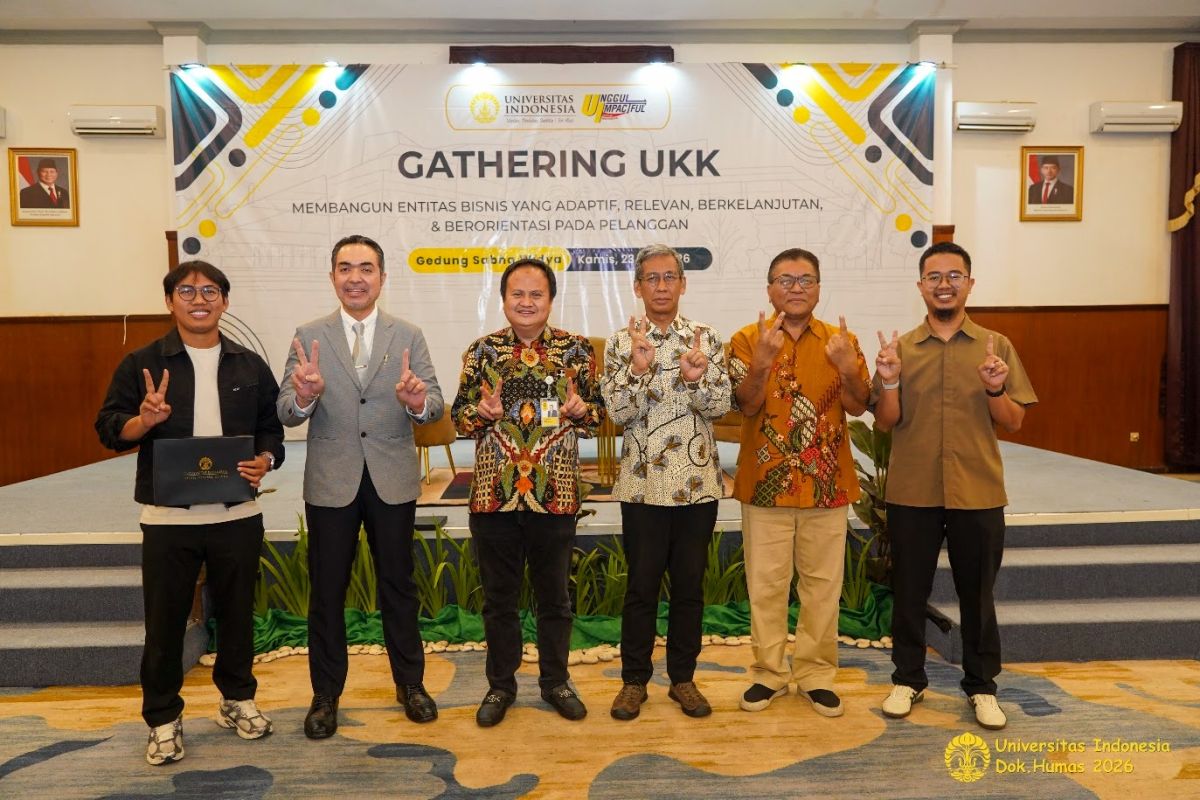
Depok (ANTARA) - Budi Wiweko, Head of the Entrepreneurship and Inter-Institutional Relations Agency at Universitas Indonesia (UI), said the transformation is part of efforts to build an entrepreneurial university grounded in the knowledge-based economy.
“Transformation requires a supportive ecosystem, ranging from strengthening the quality of education, laboratories, and research groups to governance that is simple, adaptive, and integrated. At the same time, cross-unit collaboration, digital transformation, and strengthening the institution’s reputation are key factors in boosting UI’s global competitiveness,” Budi Wiweko said at the UI campus in Depok on Friday.
According to him, the university’s main strength lies in its ability to turn knowledge into impactful solutions.
“Research must not stop at academic publication. Research findings need to be downstreamed into innovations that can be patented, commercialised, and utilised by society and industry,” he said.
Therefore, every UI service and business unit must be built on academic excellence so that it has differentiation and competitiveness.
Under this approach, academic and business activities are no longer viewed as two separate things.
Research findings are expected to develop into prototypes, products, services, and technologies that can be used by industry and society.
As such, the success of research is measured not only by scholarly output, but also by the economic and social impact it generates.
He also stressed the importance of building an ecosystem that allows lecturers to act as both academics and innovators. Downstreaming research results is one way to strengthen academic reputation while creating sustainability for the university.
Improvements will focus on strengthening administration, tax compliance, an integrated accounting system, and enhancing human resource capacity.
These steps are expected to create more accountable governance and support the sustainable management of business units.
He said that going forward, UI will develop a business ecosystem that is increasingly close to research activity.
Various services, such as training, consulting, assessment, and product development, will be directed to support the downstreaming of research results, opening new revenue streams while broadening the use of innovations produced by the academic community.
Through strengthening the synergy between academia, research, innovation, and business governance, UI continues to build its foundation as an entrepreneurial university that creates value for society.