
UI Student Develops Model for Determining EV Charging Station Locations
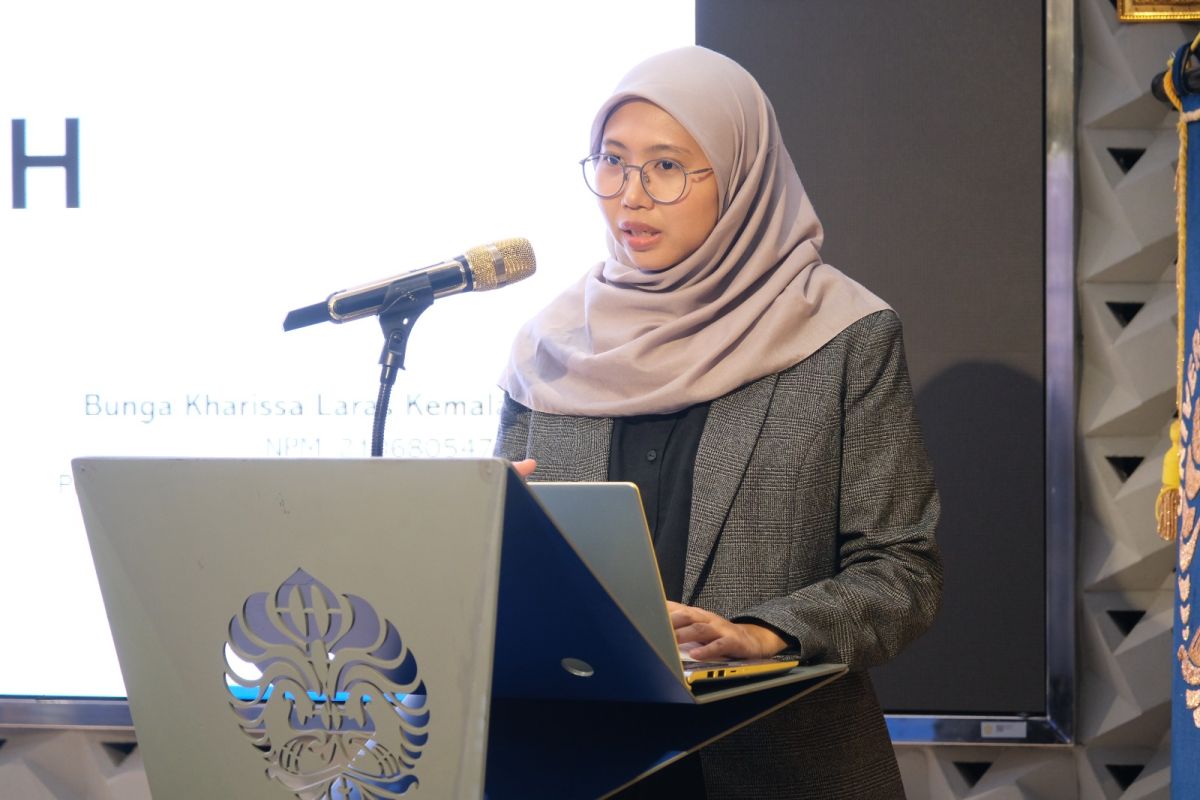
Depok (ANTARA) - Bunga Kharissa Laras Kemala, a doctoral student from the Department of Industrial Engineering, Faculty of Engineering, University of Indonesia (FTUI), has formulated a planning model for the location of Public Electric Vehicle Charging Stations (SPKLU) that combines predictions of electric vehicle adoption and user behaviour.
“Unlike conventional approaches that generally only consider current conditions, this research accounts for the spatial and temporal development of electric vehicle adoption, as well as the vehicle usage patterns of the community,” she stated at the UI Campus in Depok, West Java, on Friday.
With this approach, she noted, the planning of charging infrastructure can be carried out more adaptively to changing future needs.
Through her dissertation titled “Development of a Location Planning Model for Public Electric Vehicle Charging Stations: A Multi-Stage Approach Based on Adoption Prediction and User Behaviour Modelling,” she developed a four-stage framework to support SPKLU location planning.
The framework combines predictions of Battery Electric Vehicle (BEV) growth, analysis of user travel behaviour, simulation of charging demand, and the long-term optimisation of SPKLU locations.
The prediction results are then integrated with user travel behaviour surveys and developed through agent-based simulation to estimate charging needs based on location, time, and user travel characteristics.
Subsequently, an optimisation model is used to determine SPKLU locations capable of providing optimal service coverage while minimising the distance users must travel to access charging facilities.
Through the model she formulated, Bunga demonstrated that SPKLU planning cannot rely solely on current conditions. Predictions of electric vehicle growth and user behaviour must be considered simultaneously to ensure that the development of charging infrastructure is more precisely targeted.
The model can also be used to map current SPKLU needs while projecting future infrastructure requirements, serving as a consideration for drafting strategies to develop the electric vehicle ecosystem in Indonesia.
She explained that the research was motivated by the importance of ensuring that SPKLU development can accurately keep pace with the growth of electric vehicles.
“The availability of charging infrastructure is one of the factors influencing public comfort and confidence in using electric vehicles. Through this model, I hope that SPKLU planning can be more precisely targeted and serve as a reference for stakeholders in developing electric vehicle infrastructure,” she said.