
UI researchers discover microbe with potential for industry and health
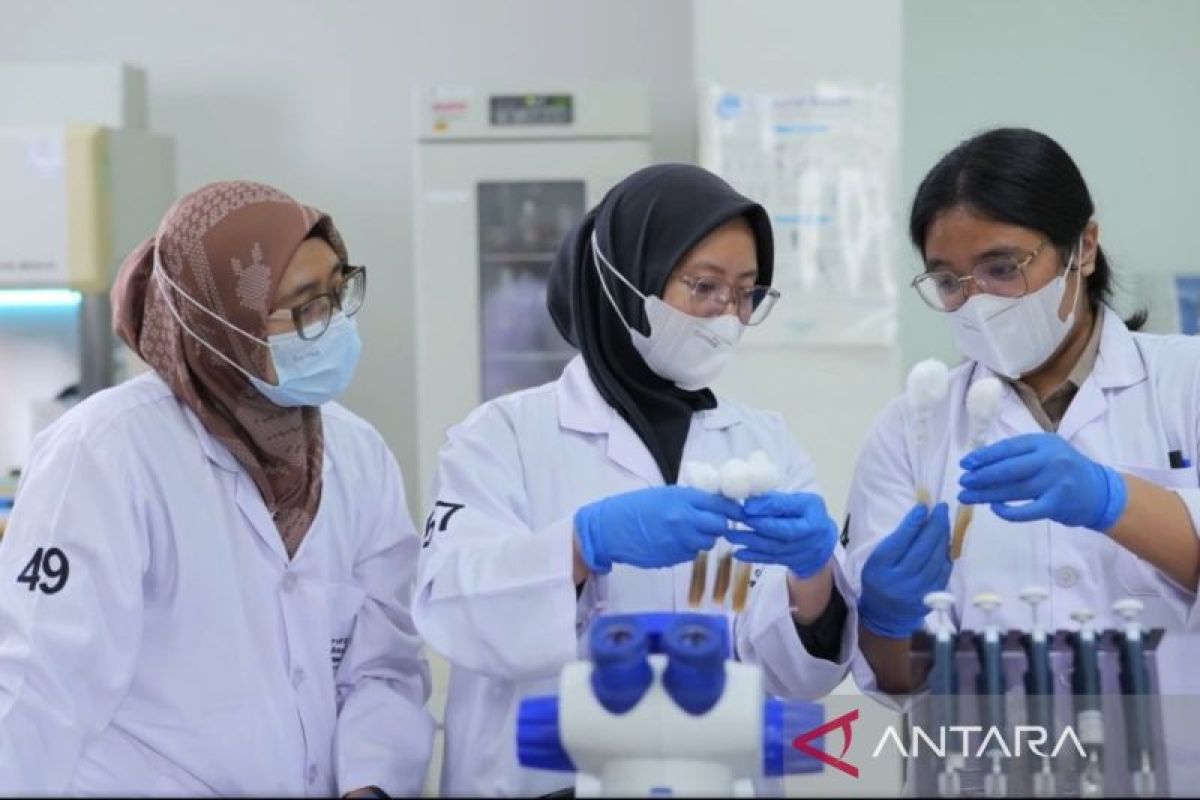
Depok – A team from the Faculty of Mathematics and Natural Sciences (FMIPA UI) at Universitas Indonesia has identified a new species of thermophilic bacterium capable of surviving at temperatures approaching boiling point (100°C), with potential applications in industry and health.
The discovery of Thermus javaensis sp. nov. shows that Indonesia’s geothermal ecosystems are biodiversity hotspots harbouring vast microbial diversity that has not yet been fully elucidated scientifically. The species was described in the International Journal of Systematic and Evolutionary Microbiology (2026, 76:007136). It is the first Thermus species described from an Indonesian geothermal region, with the epithet ‘javaensis’ referring to Java Island, where the bacterium was first found.
The study involved international collaborators Yasunori Ichihashi, PhD, and Shuhei Yabe, PhD, from RIKEN, and Prof. Song-Gun Kim, PhD, from KRIBB, South Korea. Thermus javaensis was isolated from leaf litter around the Cisolok geyser, where temperatures reach boiling (100°C). To thrive in such environments, the microorganism must possess biological adaptation capabilities not found in most other life forms, and it is known to grow at 45–80°C with an optimum of 60–65°C.
Morphologically, the bacterium is yellow-pigmented, rod-shaped, and possesses a unique structure called rotund bodies, a circular form rarely observed in members of the genus Thermus. The presence of this structure attracted researchers because it has also been observed in Thermus aquaticus, the well-known bacterium that yields the Taq polymerase used in PCR — a cornerstone technology in disease diagnosis and modern molecular biology.
The research journey spans more than a decade. Exploration of microorganisms in the Cisolok geyser area began in 2012, with sampling for this species conducted in 2015. Identification took years, involving microbial isolation, genetic analyses, whole genome sequencing (WGS), and biochemical and microscopic characterisation at the UI campus and in various international partner laboratories. One of the major challenges, according to the researchers, was keeping thermophilic bacterial cultures alive during the study, as these organisms require high temperatures and specialised media to grow optimally.
The designation of Thermus javaensis as a new species was achieved through a polyphasic approach combining genetic, physiological, biochemical, and chemotaxonomic analyses. The analyses show the bacterium differs significantly from its closest species at both genomic and other biological characteristics. These differences confirm that the microorganism is not merely a variant but a new species hitherto undescribed in scientific literature. With this discovery, the number of species in the genus Thermus has risen to 26 since the genus was first described in 1969.
Beyond basic microbiology, Thermus javaensis is considered to hold substantial potential for biotechnology. Genomic analyses indicate the bacterium could produce thermostable enzymes that withstand high temperatures and could be used in high-temperature industrial processes. The researchers also detected indications of novel terpenoid secondary metabolites with potential development into antibacterial, antifungal, anti-inflammatory, and other bioactive compounds. “This finding opens up further opportunities in biotechnology, particularly thermophilic microorganisms with potential for high-value industrial applications,” said Prof. Wellyzar Sjamsuridzal.
Indonesia still harbours many microbes yet to be known. The FMIPA UI team regards Indonesia’s geothermal regions as a ‘mining’ ground of microbial biodiversity that has not been extensively explored. At present, researchers have confirmed two additional candidate bacterial species from the Cisolok geyser region that are being prepared for scientific publication. Future research will focus on thermophilic enzymes, protective cell pigments, and active compounds with potential applications in health, industry and sustainable biotechnology.