
UI Researcher Develops Method to Strengthen Nuclear Reactor Safety
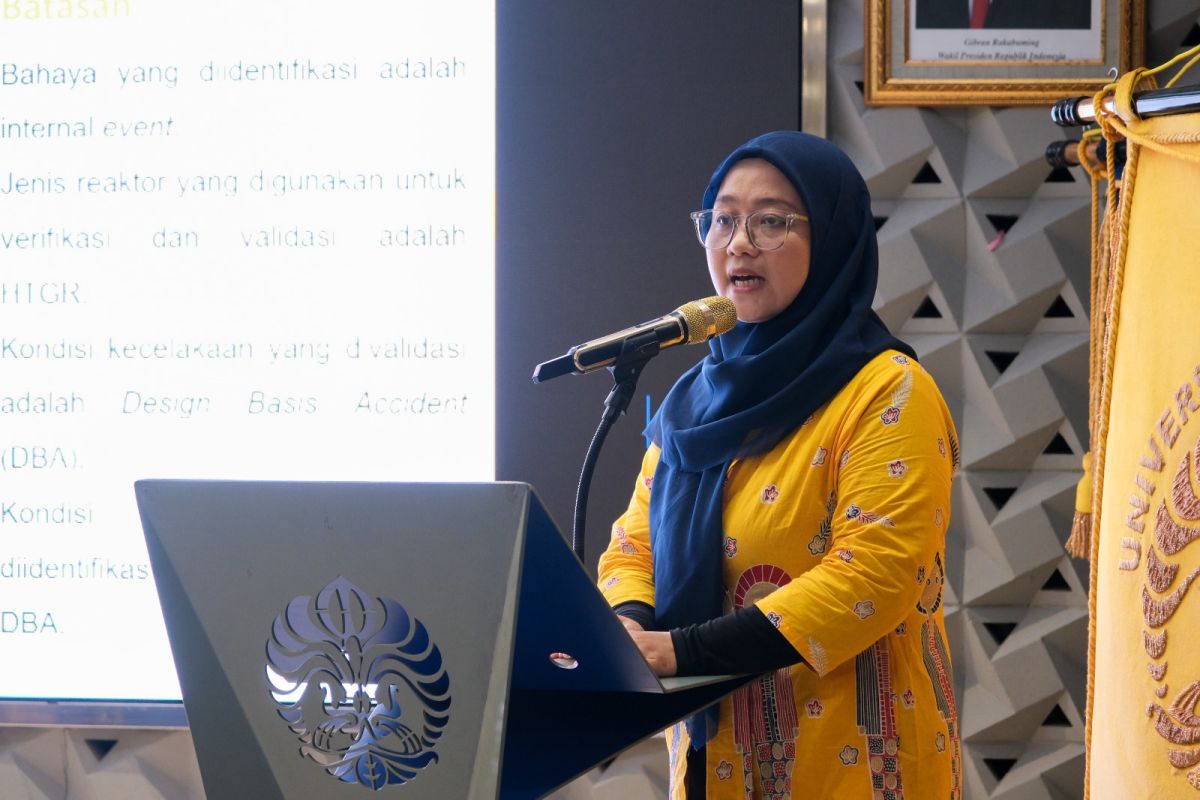
Depok (ANTARA) - Dr Ratih Luhuring Tyas of the Chemical Engineering Department at the University of Indonesia’s Faculty of Engineering (FTUI) has successfully developed a more comprehensive safety analysis method for nuclear reactors.
She presented the innovation in her dissertation entitled “Development of an Initiating Event (IE) Identification Method for Safety Analysis of Nuclear Power Plants”, which introduced a method named ILDFM (Integrated Logic Deviation Failure Method).
The Dean of FTUI, Kemas M. Ridwan Kurniawan, in a statement on Saturday, expressed high appreciation for this scientific contribution.
“This research provides an important contribution to the development of nuclear safety analysis methods, particularly in identifying risks from the early stages of reactor system design and operation,” he said.
The ILDFM method demonstrates that research at FTUI is not only academically robust but also relevant to strategic technological needs and the improvement of safety standards.
Unlike conventional approaches that generally focus only on technical machine problems, the ILDFM method combines three key elements: system logic analysis, operational deviations, and potential equipment failures.
Through this combination, ILDFM is able to map a greater number of risk scenarios, including anticipating human error and internal hazards such as fire. This comprehensive approach is in line with the recommendations of the International Atomic Energy Agency (IAEA).
The reliability of the method has been tested using data from the international reference reactor (HTR-10) and applied to the design of the national PeLUIt-40 reactor, which is based on High Temperature Gas-cooled Reactor (HTGR) technology.
The test results proved that ILDFM is capable of identifying risks more broadly, thereby providing a stronger foundation for reactor safety.
For the wider public, the issue of nuclear energy often raises concerns, particularly regarding the risk of leaks or fatal accidents.
This is where Dr Ratih’s findings become crucial, as the ILDFM method functions as a “layered protection system” ensuring that future nuclear power plants are designed without safety gaps, whether from technological malfunction or human negligence.
With its ability to detect and prevent accident risks from the initial design stage, this method represents a genuine effort to provide real assurance of safety to the public.
Furthermore, in terms of long-term benefits, society can enjoy a supply of clean, cheap and efficient electricity and energy without having to worry about the safety of their lives and environment.