
UI Research: Rp2,000-Rp20,000 Banknotes Displaced by QRIS and E-Wallets
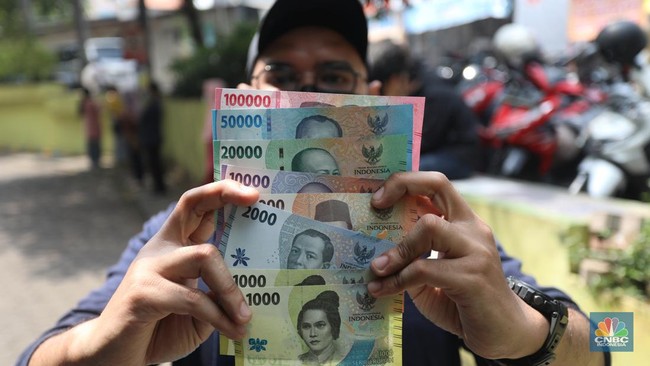
The use of cash in Indonesia is beginning to be eroded by the rapid growth of digital transactions through electronic money, QRIS, and digital wallets (e-wallets). This finding was revealed in research by the Institute for Economic and Social Research at the Faculty of Economics and Business, University of Indonesia (LPEM FEB UI), titled ‘How E-Money is Changing the Demand for Cash in Indonesia: Economic Modelling’.
In the study, LPEM FEB UI found that the use of currency, particularly small to medium denominations, has declined significantly as the public increasingly adopts digital payment instruments. ‘We examined heterogeneity across various banknote denominations to identify the underlying mechanisms. The strongest substitution effect was observed in small to medium denomination banknotes, specifically the Rp2,000 to Rp20,000 notes,’ the research team, led by Jahen F. Rezki, stated.
According to the study, these denominations are typically used for daily transactions such as transport, food purchases, online delivery services, and small retail payments. However, the emergence of electronic money and QRIS-based payments has gradually replaced their function.
The impact of payment digitalisation on larger denomination banknotes is relatively limited. The research shows that Rp50,000 and Rp100,000 notes are still widely used for high-value transactions or held as precautionary savings by the public. ‘Conversely, the displacement effect is weaker for high-denomination banknotes (Rp50,000 and Rp100,000), which are more likely to be held for precautionary motives or used in large and informal transactions,’ the report noted.
A similar pattern was observed for coins. Researchers found no significant evidence that coins are being abandoned by the public. ‘We also did not find a statistically significant substitution effect for coin denominations, which remain important for very low-value transactions and for providing change,’ the report continued.
LPEM FEB assessed that the shift from cash to digital payments carries important consequences for monetary authorities. Changes in public transaction patterns could affect the demand for currency and the management of the money supply in the economy. Nevertheless, the study noted that the debate over the future of cash continues. On one hand, digital payments have proven capable of replacing cash for daily transactions. On the other, physical money still plays a crucial role in certain transactions, especially those of very low value. ‘From a behavioural perspective, this phenomenon proves that electronic money has successfully displaced cash for daily spending, but has yet to significantly touch micro-transactions of very low value,’ LPEM FEB concluded.