
UI Professor: Tunas Regulation Protects Children in Digital Space - Parents' Moment
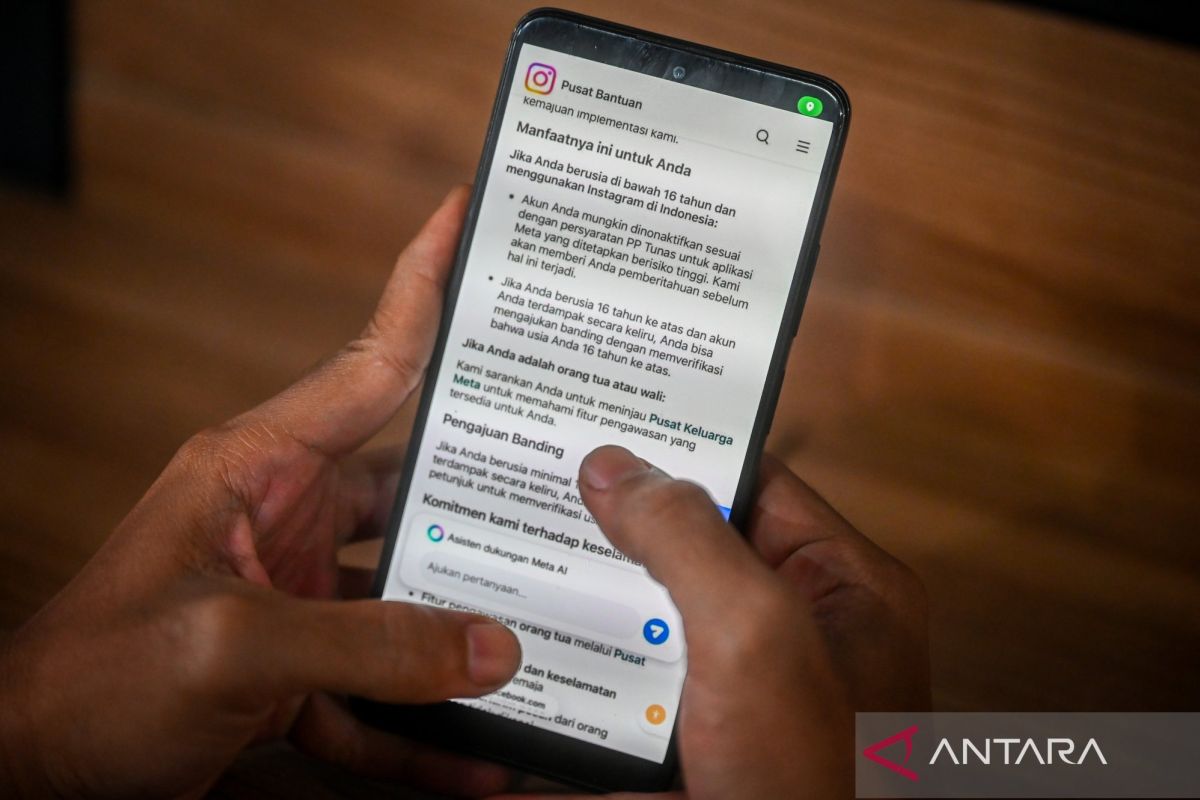
Jakarta (ANTARA) - The Government Regulation on the Governance of Electronic Systems for Child Protection (PP Tunas), implemented by the Ministry of Communication and Digital Affairs, is believed by a professor from the University of Indonesia to be a positive step in strengthening child protection in the digital space, as well as an opportunity for parents.
Permanent Professor of the Faculty of Psychology at the University of Indonesia, Prof Dr Rose Mini Agoes Salim, interviewed in Jakarta on Friday, stated that the presence of PP Tunas helps to curb children’s access to digital platforms, thereby giving parents space to prepare their children to use technology more wisely.
This is considered very important following the intense exposure to digital media that is difficult for families to control without regulatory support from the state.
Nevertheless, the Chair of the Teacher and Student Effectiveness Research Group at the UI Faculty of Psychology also revealed that the main challenge that needs to be addressed lies in the readiness of parents, many of whom still have limitations in digital literacy when accompanying their children.
According to her, this situation makes children often more understanding of technology than their parents, so supervision of digital activities has not yet run optimally.
“PP Tunas only helps to temporarily stop children from having personal accounts. But, if the child is clever and the parents don’t understand this, they can use the parents’ account or someone else’s account. That’s the danger. Therefore, what needs to move more is the parents and the people around the child - teachers,” she said.
Bunda Romy, as Rose is affectionately known on campus, encourages massive socialisation or assistance to families from government institutions or involving their strategic partners to maximise the benefits of PP Tunas.
According to her, in this regard, parents need to be given educational reinforcement so that they can later teach their children how to be disciplined in using gadgets for social media and online games to avoid addiction.
In addition, socialisation and assistance also determine how parents teach children not to spread personal data as vigilance against potential crimes in the digital space.
“Yes, definitely. Parents can’t fight the onslaught of social media, online games, and so on, that’s why PP Tunas helps to brake it. But, if the child is not prepared. After 16 years, the child may still not be wise. Easily influenced by people approaching them in the virtual world, because there are so many online predators, and they always move slowly and gradually,” she said.
She is optimistic that with a combination of regulation and increased family digital literacy, PP Tunas has the potential to become an effective instrument in protecting children while preparing them to become wiser technology users - using it as a tool that benefits the environment.
Government Regulation Number 17/2025 on the Protection of the Governance of Electronic Systems in Child Protection or PP Tunas officially took effect after being issued by President Prabowo Subianto on 28 March 2026.
The regulation is expected to protect children from potential threats in the digital space, such as cyberbullying, digital fraud, to exposure to negative content, such as pornography and content featuring violence.
Meanwhile, the technical rules for implementing PP Tunas are contained in the Minister of Communication and Digital Affairs Regulation Number 9/2026.