
UI Professor Rates Indonesia's Investment Climate at Its Worst
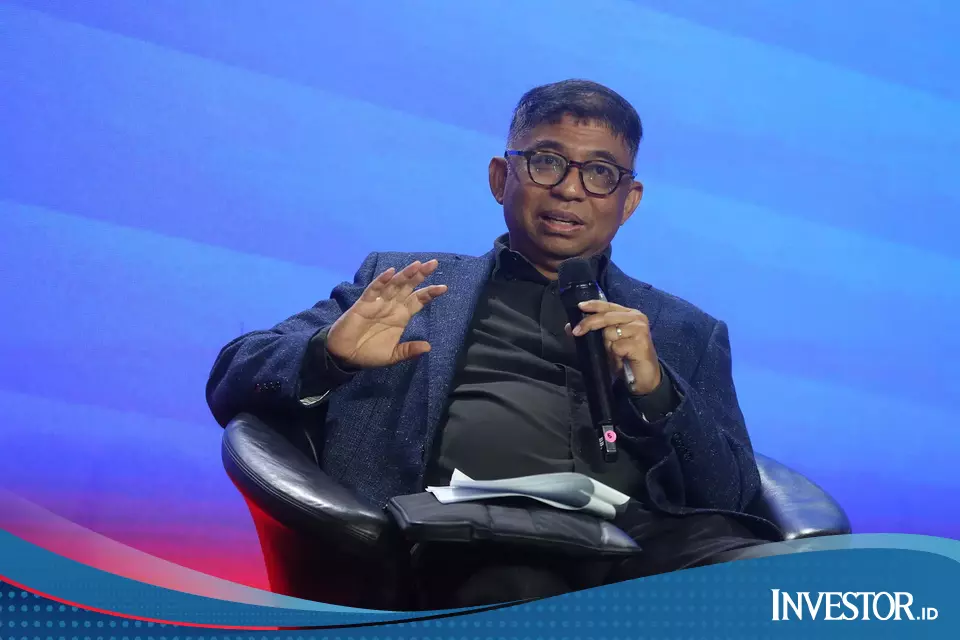
Indonesia’s investment climate has received a harsh assessment from the Chairman of the Board of Professors at the Faculty of Economics and Business, University of Indonesia (FEB UI), Prof. Mohamad Ikhsan. On a scale of 1 to 10, he gave a score of only 2, even calling the condition the worst throughout his observation of investment issues in Indonesia.
The assessment was delivered by Ikhsan during the Suar Forum 2026 discussion themed ‘Navigating Challenges Creating Opportunity Together’ at BSD City, Tangerang, on Friday (21/8/2026). He said his assessment was based on long experience working and being involved in economic and investment issues across governments.
‘I have been involved in investment issues for quite a long time and have worked across governments,’ said Ikhsan. According to him, since returning from completing his education abroad, he has assisted various administrations, from before the era of President Abdurrahman Wahid to subsequent governments.
The problems faced from one administration to another, he said, are relatively the same, namely how to reduce the cost of doing business, build trust, and make investors willing to invest capital. However, based on his observations, current conditions have actually regressed.
‘To be honest with all of you, based on my observation, this is the worst condition, the most severe, throughout my observation,’ Ikhsan stressed.
He acknowledged that the assessment could be seen as subjective because he is not in the current government. However, Ikhsan stood by his conclusion. ‘If it is then said that I am biased because I am not in the current government, okay, you’ve got it. But based on my observation, the condition is even worse than several previous government periods,’ he said.
Ironically, the poor assessment is not because Indonesia lacks potential. Ikhsan actually acknowledged that Indonesia has very large economic capital and has historically demonstrated the ability to sustain long-term growth.
He referred to a Growth Commission study around 2008–2009 which involved Nobel laureate Michael Spence. The study, according to Ikhsan, placed Indonesia as one of about 13 countries in the world capable of sustaining high growth in the long term.
‘Indonesia is very potential,’ he said. However, that potential has not been fully translated into performance. ‘The potential is there, but the gap between potential and realisation is getting bigger.’
According to Ikhsan, one of the fundamental problems lies in trust and credibility. Yet, these two factors are important capital for making investors dare to make long-term decisions.
Ikhsan also paid special attention to the credibility and transparency of economic data. According to him, economic figures must truly be able to describe the actual conditions so that they can serve as a basis for decision-making by the government and business actors.
‘There are figures that, when looked at, must be questioned again: do these figures truly describe reality?’ he said.
Problems will arise when data drifts further from actual conditions. The debate then only revolves around which figures are correct, while substantive issues remain unresolved.
Therefore, Ikhsan emphasised the importance of transparency so that data can be tested and compared with other indicators. ‘So that the figures can be trusted, transparency is the key,’ he stressed.
Another factor that according to Ikhsan determines the quality of investment is competition. Healthy competition will encourage companies to improve efficiency while also improving the quality of goods and services to consumers. ‘If we want to increase the quality of investment, we have to compete,’ he said.
Conversely, if the space for competition that has been formed is narrowed again, consumers lose choice and the incentive for business actors to improve efficiency also decreases. Therefore, Ikhsan asserted, ‘If we want to improve the quality of investment, competition must not be reduced.’
With great economic potential, Indonesia’s challenge according to Ikhsan is no longer proving that the country is attractive for investment. The more fundamental issue is narrowing the gap between potential and realisation through restoring trust, improving credibility and transparency, and maintaining competition.
Source: jawawa.id (https://jawawa.id/newsitem/ui-professor-rates-indonesias-investment-climate-at-its-worst-1787377816)
Originally published by investor.id (https://investor.id/macroeconomy/451224/guru-besar-ui-nilai-iklim-investasi-ri-di-titik-terburuk), translated from Indonesian