
UI Professor Highlights Kerry Riza Case, Says Prosecutors Failed to Prove Criminal Elements
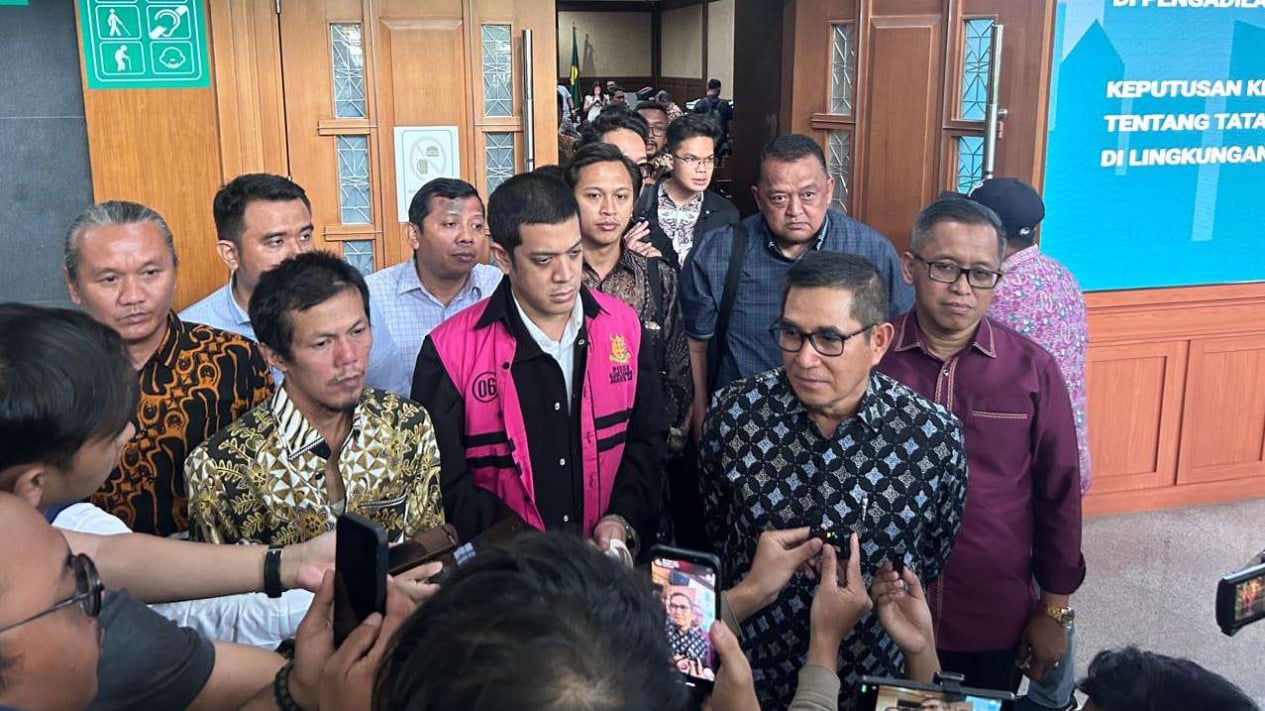
University of Indonesia (UI) criminal law professor Topo Santoso argues that the alleged corruption case involving oil and refinery product management with defendant Muhammad Kerry Adrianto Riza, beneficial owner of PT Orbit Terminal Merak, should not be forced into criminal corruption charges if the elements of the crime are not proven.
Moreover, Topo believes Kerry Riza should be acquitted as prosecutors failed to prove the criminal elements and causality between the defendant’s actions and state losses.
Topo made these remarks during a dissemination event examining the ruling on the alleged oil management corruption case titled ‘Untangling the Boundaries of Criminal Corruption in Business Decisions’, organised by the UI’s Law Procedure and Judicial System Research Institute at the UI campus in Depok on Tuesday, 26 May 2026.
Topo Santoso noted that the case involving Kerry Riza highlights the close intersection between criminal law and business practices.
He stressed that the business world has its own principles, customs, methods, and mechanisms for resolving operational issues. Therefore, Topo cautioned that all business disputes should not automatically be criminalised as corruption cases.
‘The problem arises when all business issues are dragged into the realm of criminal corruption. This is highly dangerous, especially when law enforcement agencies are given targets to handle a certain number of corruption cases,’ he said.
Business disputes inherently have their own resolution mechanisms through administrative instruments, contracts, civil law, or other sectoral mechanisms. Therefore, business failures or losses cannot automatically be criminalised.
‘In business contexts, contracts form the primary basis of legal relations. Operational issues, breach of contract, or failure to meet business targets do not necessarily constitute criminal corruption,’ Topo said.
He emphasised that business disputes are better resolved through civil law. Not all business losses or failures can automatically be criminalised. He also highlighted the importance of applying the business judgment rule when assessing directors’ or business actors’ decisions.
‘Business decisions that result in company losses do not automatically become criminal acts. Profits and losses are inherent to business operations, and business losses are not always synonymous with crime,’ he added.