
UI Professor Calls for Vape Ban, Citing Public Health Risks
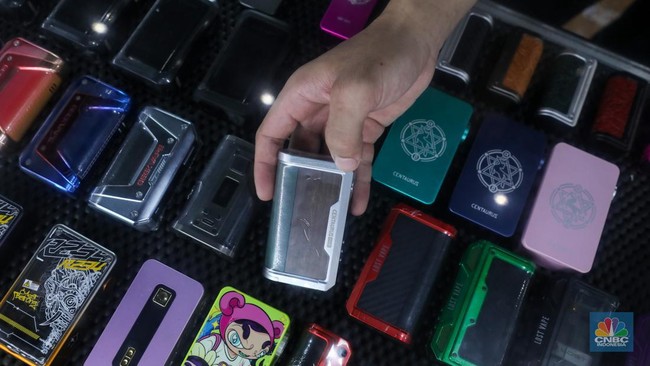
Jakarta, CNBC Indonesia – University of Indonesia (UI) Faculty of Public Health professor Hasbullah Thabrany has urged the Indonesian Ulema Council (MUI) to clearly declare electronic cigarettes, or vapes, haram. He said a clear fatwa was needed as both a moral guide and a way to protect the public from greater harm.
Hasbullah made the remarks at a focus group discussion (FGD) on issues relating to vapes and e-cigarettes, held by the MUI Fatwa Commission in Cikini, Central Jakarta, on Tuesday (3 November 2026).
Addressing clerics and other participants, he presented his views from the perspectives of public health and Islamic law. Hasbullah stressed that Islamic rulings are not determined by the economic value of a product. He cited alcohol and pork, which remain forbidden despite the large sums of money circulating in their markets. The prohibition has not, however, automatically eliminated their industries; Indonesia still has an alcohol industry.
“In my view, the ruling [that it is haram] should remain firm. If it is Islamic law, then if alcohol is haram, it is haram. The industry still exists here,” Hasbullah said.
He said religious rulings should therefore be made independently for the benefit of the community. Enforcement and oversight, meanwhile, are the responsibility of the government and law enforcement agencies.
Hasbullah also compared Indonesia’s regulation of vapes with that of the United States. Vapes are not fully banned there, but their distribution is closely monitored by the US Food and Drug Administration (FDA).
He questioned whether Indonesian authorities could provide oversight that strict. Without robust supervision, he said, there would be many opportunities for vapes to circulate illicitly. A clear ban would therefore be safer than simply imposing restrictions.
“The question is whether our police and law enforcement agencies have the same capacity as those in America to oversee it that strictly. If not, there will be many loopholes,” he said.
He emphasised that prevention should be a priority, in line with the principle of hifzh an-nafs, or protecting life, in maqashid syariah (the objectives of Islamic law).
He said this was also consistent with preventive medicine. Hasbullah then referred to the story of the Prophet Moses and Khidr in verses 60–82 of Surah Al-Kahf. In the story, Khidr takes actions that appear harmful, such as making a hole in a boat, in order to prevent greater harm.
“Which is more beneficial for the community, and which causes more harm?” Hasbullah said.
He believes religious rules should prioritise protecting the health of the nation’s younger generation from the dangers of e-cigarettes.
The FGD is part of the MUI Fatwa Commission’s review of the religious ruling on e-cigarettes. Input from speakers will be discussed further before the commission issues an official position.
“The Fatwa Commission is specifically following up by conducting an in-depth examination of vapes from various perspectives,” said MUI Fatwa Division chairman Professor KH Asrorun Ni’am Sholeh.
Ni’am said the commission had not set a target date for issuing a fatwa. However, because e-cigarettes had become an urgent social issue, deliberations on a vape fatwa had been made a priority and would be expedited.
After the FGD, experts and representatives of organisations will submit written recommendations. The MUI Fatwa Commission will then proceed with religious study and intensive deliberations before drafting a fatwa. The draft will subsequently be presented to a Fatwa Commission session for adoption.
Previously, the third national Ijtima of the Ulema Fatwa Commission, held in Padang Panjang, West Sumatra, in 2009, discussed the ruling on smoking.
The clerics agreed at the time that views differed over whether smoking was makruh (discouraged) or haram. They also ruled that smoking was haram in public places, for children, for pregnant women and for MUI administrators.
Source: jawawa.id (https://jawawa.id/newsitem/ui-professor-calls-for-vape-ban-citing-public-health-risks-1794102644)
Originally published by CNBC Indonesia (https://www.cnbcindonesia.com/lifestyle/20261107220927-33-783221/guru-besar-ui-minta-vape-diharamkan-ini-alasannya), translated from Indonesian