
UI presents utilisation of rice husk waste for electric car battery materials
The University of Indonesia (UI) is developing rice husk waste as a material for electric vehicle batteries, as part of the university’s commitment to producing innovations to face global challenges.
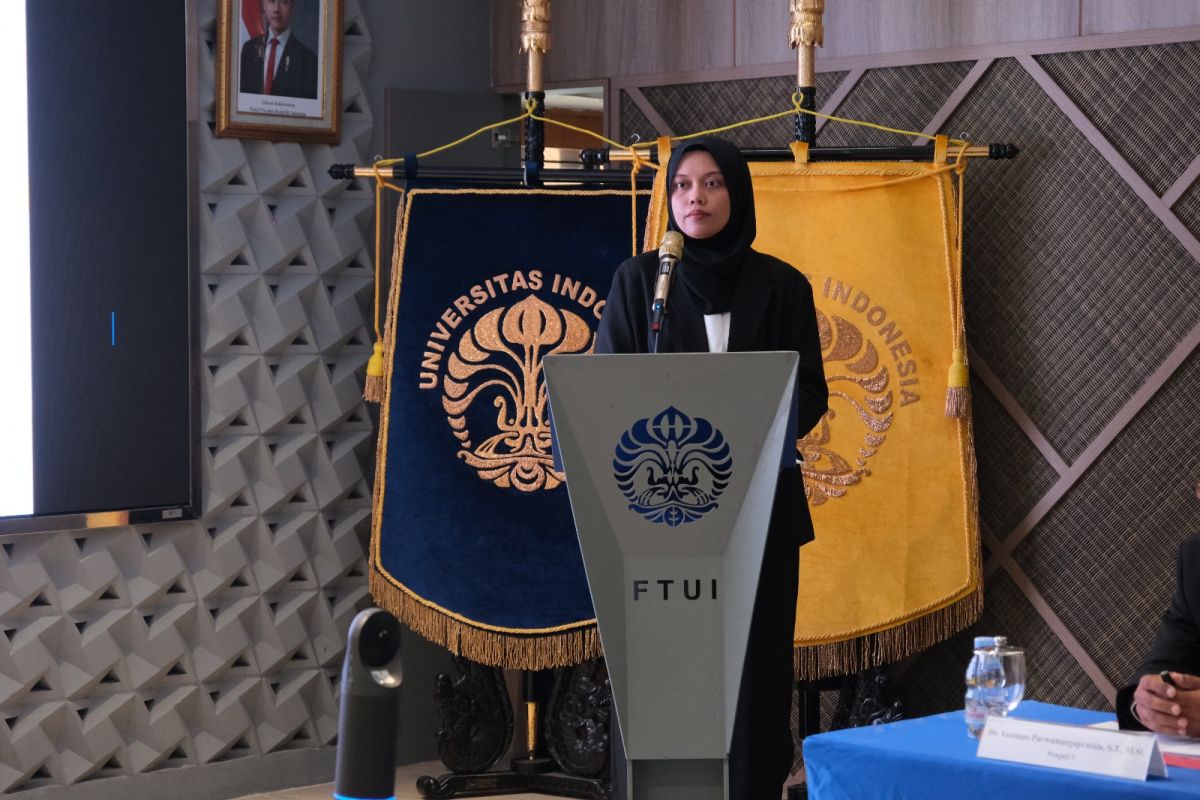
Through a dissertation titled “Utilization of Rice Husk as a Source of Carbon and Silica to Modify Sodium-Doped NMC811 as a Lithium-Ion Battery Cathode”, Fiona Angellinnov, a graduate of the Doctoral Programme of the Department of Metallurgical and Materials Engineering at the Faculty of Engineering (FTUI), presented the potential of rice husk waste as a raw material for electric vehicle battery components.
Speaking at the UI Depok campus on Tuesday, Fiona offered an innovative approach by using rice husks as a source of carbon and silica to improve the performance of lithium-ion battery cathodes. This finding opens opportunities for the use of local resources to support the strengthening of the national battery industry and a sustainable energy transition.
Through this research, rice husks are processed into silica and carbon materials used to modify NMC811 (Lithium Nickel Manganese Cobalt Oxide) cathodes doped with sodium. She stated that this material engineering has been proven to increase the structural stability and electrochemical performance of the cathode, potentially producing batteries that are more efficient, durable, and environmentally friendly.
The Dean of FTUI, Prof. Kemas Ridwan Kurniawan, emphasised that Fiona’s achievement demonstrates the direction of FTUI research, which is not only oriented towards academic excellence but also towards providing real solutions to global challenges. This finding confirms that agricultural waste not only possesses new economic value but also has the potential to become part of future energy technology solutions.
Through innovation based on local resources, UI continues to encourage research that supports the agenda of sustainability, downstreaming, and energy transition in Indonesia and the world.