
UI Patriot Expedition Team Develops Solar Power and Biogas in Teluk Wondama
Jakarta (ANTARA) – The Ministry of Transmigration, through the University of Indonesia (UI) Patriot Expedition Team (TEP), is developing the use of solar panels and biogas in the Teluk Wondama transmigration area of West Papua to strengthen the community’s energy independence.
Trevino Aristarkus Pakasi, a supervisor of the UI team in Teluk Wondama, said renewable energy was part of a Planetary Health approach integrating public health, environmental conservation and local economic development.
“Energy is the foundation; food systems and the local economy are the channels for intervention, while public health and environmental health are the outcomes being assessed,” Trevino said in an official statement received in Jakarta on Saturday.
In Werianggi village, solar panels installed at the village hall are helping extend the hours for which electricity is available, allowing residents to use the facility for longer than before.
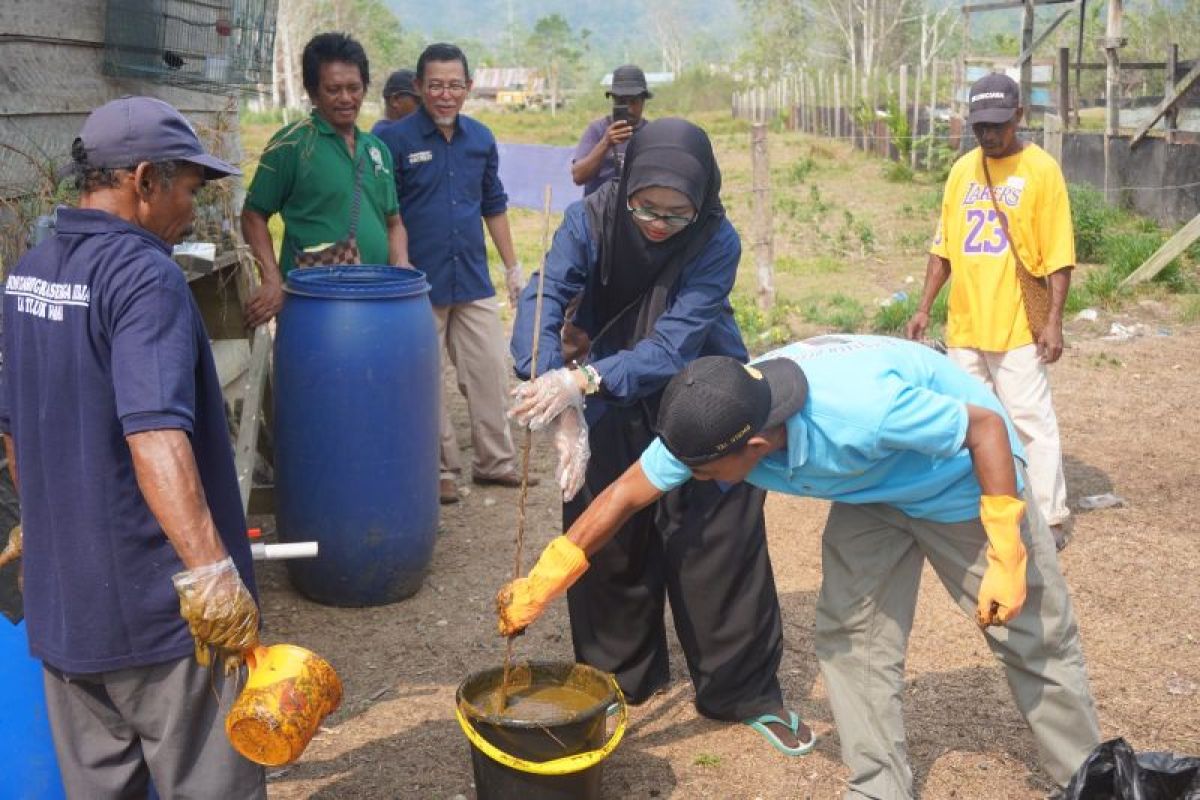
The UI team has also provided training in converting cow manure into biogas as an alternative energy source for cooking.
The energy development programme in the Werianggi–Werabur area is coordinated by Ardiyansyah and his team, with the aims of providing 24-hour electricity and increasing the use of environmentally friendly energy.
Obeth O, a resident who took part in the training, said it had given the community new knowledge about turning livestock waste into fuel.
“The biogas training using cow manure is useful for the community. This is the first time such training has been held, and we have learnt that cow manure can produce gas for cooking,” Obeth said.
Alongside energy provision, the UI team is developing digital health services by training health workers in electronic medical records at the Nikiwar and Windesi community health centres.
Siti Harlina, a health worker at Windesi Community Health Centre, said the training had improved her understanding of how technology can be used in healthcare.
“After taking part in this training, I feel it has been very helpful. It was clear, easy to understand and highly relevant to the work at the health centre,” she said.
In early October 2026, the UI team also trained around 20 health workers in Teluk Wondama to use electronic medical records to support data recording and make patient referrals between health facilities easier.
Healthcare development is also being expanded through the establishment of community health volunteers and the use of digital record-keeping that can be used when an internet connection is unavailable.
In the economic sector, the UI team is also developing the use of local food sources, such as sago and tubers, and processing agricultural produce to increase its value for residents.
One initiative provides support for nutmeg processing, including the use of by-products to create goods with economic value.
Trevino said energy, healthcare and local economic development needed to advance alongside forest conservation, as forests provide food and clean water and sustain the lives of local communities.
“A healthy forest is home to all living things and provides food, clean air, oxygen and clean water,” he said.
Nationally, in July 2026 the Ministry of Transmigration deployed 1,476 participants in 246 TEP teams to 53 transmigration areas to conduct research, provide assistance and develop local economic potential.
Clean energy development in Teluk Wondama is also in line with government policy to expand the use of solar power plants, particularly to strengthen electricity supplies in remote areas.
President Prabowo Subianto has previously proposed developing one-megawatt solar power plants in every village with sufficient land, as part of efforts to strengthen national energy independence.
On 25 August 2026, the government launched a programme to develop 100 gigawatt-peak (GWp) of solar power capacity. The initial phase comprises 14 projects with a combined capacity of 5.3 GWp across six provinces.
By combining renewable energy development with healthcare services and stronger local economies, the UI team aims to make the Werianggi–Werabur transmigration area more self-reliant while safeguarding the environment.
Source: jawawa.id (https://jawawa.id/newsitem/ui-patriot-expedition-team-develops-solar-power-and-biogas-in-teluk-wondama-1793440378)
Originally published by Antara (Indonesian) (https://www.antaranews.com/berita/5823623/tep-ui-kementrans-kembangkan-panel-surya-dan-biogas-di-teluk-wondama), translated from Indonesian