
UI Patriot Expedition Holds Discussion on Customary and Positive Law in Werianggi–Werabur
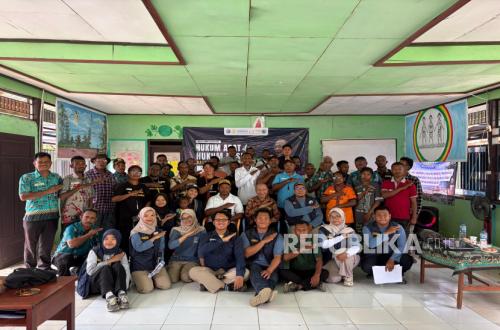
The University of Indonesia (UI) Patriot Expedition held a discussion and workshop titled “Customary Law and Positive Law within the Indonesian Framework” in Werianggi Village, Nikiwar District, Teluk Wondama Regency, West Papua, on 9–10 September 2026. Organised by Team 4 of the UI Patriot Expedition, the event focused on the theme “Exploring, Understanding, and Strengthening the Law Living within the Community.”
The activity served as a meeting point between academic knowledge and community experience in understanding the laws prevalent in society. On the first day, participants were divided into groups to discuss various themes regarding customary law, ranging from kinship relations, etiquette, and marriage to land clearing, rights over land and natural resources, and the relationship between customary law and state law. The discussions were conducted participatively using flipcharts and sticky notes, where participants shared their experiences and knowledge regarding customary practices, which were then discussed collectively before being presented to the group.
The discussions revealed that customary law in Weriability covers much more than just land; it permeates various aspects of community life. Customary law regulates kinship, etiquette, marriage, land clearing, rituals, cultural objects, and the resolution of social issues. For instance, the community recognises specific rules in relationships between family members, the violation of which can result in customary fines. In land clearing, there are customary processions that must be performed before land can be cultivated, while in marriage, there is a customary obligation involving the presentation of traditional hanging plates as a form of respect to the bride’s family.
The discussion also uncovered that most customary laws in Werianggi are still passed down orally. Although not all have been formalised in writing, the community understands the rules and sanctions through intergenerational inheritance. When violations occur, matters are first discussed with the tribal chief or customary leaders before being escalated to the village or district government. Regarding the development of customary institutions, authority that previously rested heavily with tribal chiefs is now also exercised through the Kuweta Customary Union, which comprises three main clans: the Werianggi, Kurube, and Tatiorim clans.
Community members also stated that the relationship between customary law and state law can function side-by-side. In land matters, for example, the community emphasised the importance of respecting clan rights. If customary land is used for development purposes, a fair and transparent compensation or indemnity mechanism is required. Regarding environmental protection, the community cited cooperation between indigenous peoples, the police, and other parties in guarding forest areas.
On the second day, the programme began with the presentation of the results from the first day’s group discussions. This was followed by a keynote presentation by Prof. Dr. Melkias Hetharia, S.H., M.A., M.Hum., Professor of Philosophy of Law and Human Rights at Cenderawasih University.
Prof. Melkias opened his presentation by asking the participants why state law is referred to as “positive law.” He explained that positive law is law that has been formalised or established by the state, is written, and is legally binding within a specific space and time. Through this question, he encouraged participants to understand the differing characters between positive law and customary law.
He subsequently positioned the community as a vital source of knowledge regarding customary law. According to Prof. Melkias, academic understanding of customary law is theoretical, whereas the community, which practices these customs daily, possesses practical experience of how such laws live and function in their lives.
He noted that customary law existed long before the birth of Indonesia’s positive law. In Papua, customary law also holds strong social and religiomagical values. The existence of customary law communities has received constitutional recognition through Article 18B, paragraph (2) of the 1945 Constitution. Therefore, customary law and state law should not be viewed as two opposing forces, but should instead function according to their respective roles and proportions.
Source: jawawa.id (https://jawawa.id/newsitem/ui-patriot-expedition-holds-discussion-on-customary-and-positive-law-in-werianggi-werabur-1790171699)
Originally published by Republika (https://news.republika.co.id/berita/tltcek451/ekspedisi-patriot-ui-gelar-diskusi-hukum-adat-dan-hukum-positif-di-kt-werianggiwerabur), translated from Indonesian