
UI Nature Lovers Explore Eastern Indonesia to Boost Village Economy and Tourism
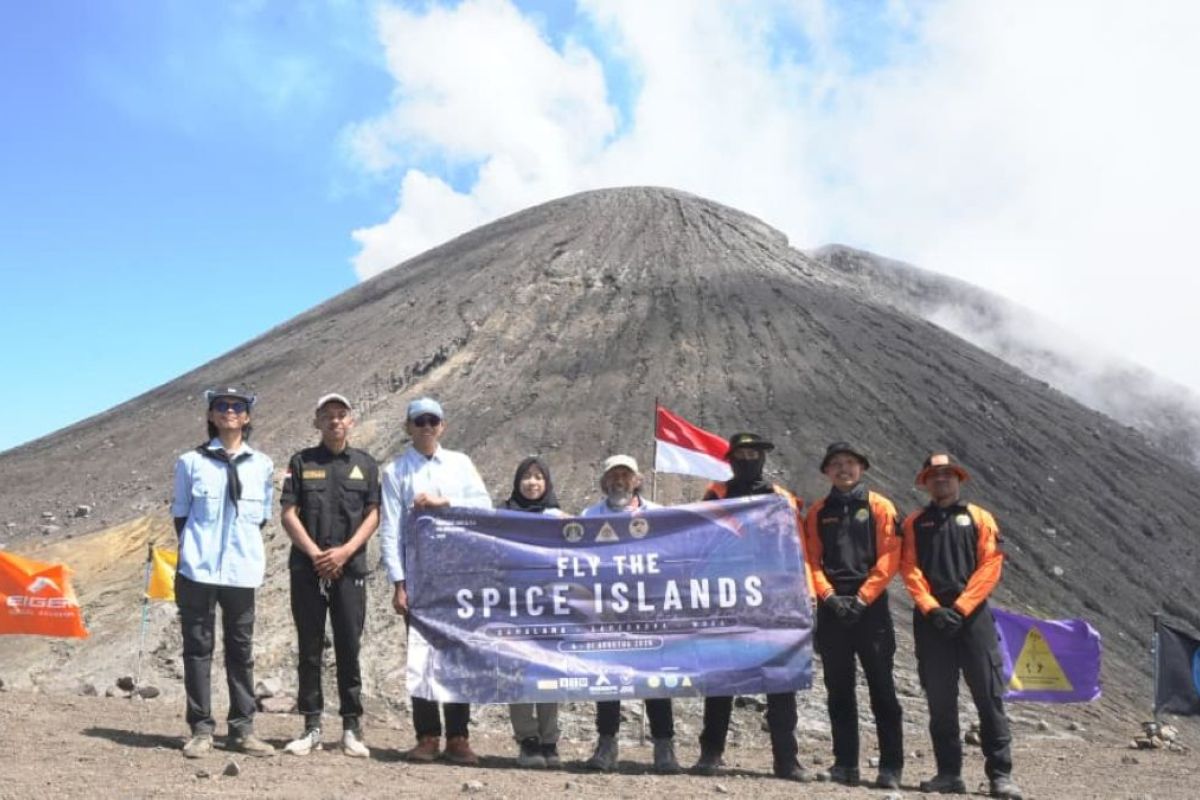
The University of Indonesia’s nature lovers group, Mapala UI, is exploring eastern Indonesia to help build village economies and develop tourism. The initiative is divided into two programmes: the ‘Fly The Spice Islands’ paragliding expedition in North Maluku, involving 10 participants, and a community service programme through the Universitas Indonesia Membangun Nusa (UIMN) scheme in Central Maluku, involving 11 people. ‘These two programmes represent the adventurous spirit of youth as well as a tangible contribution from students to society,’ said Mapala UI Chairperson Salman Muzhaffar in a statement received in Jakarta on Thursday.
The ‘Fly The Spice Islands’ expedition traces the historic Spice Route in North Maluku, a region once central to the global spice trade. The flight path crosses three strategic mountains: Gamalama, Gamkonora, and Woka, spanning the islands of Ternate, Halmahera, and Tidore. Supported by the Presidential Special Envoy for Tourism, the expedition aims to provide policy recommendations for developing adventure tourism, specifically paragliding, and to produce a documentary film to promote this niche sector. The activity is expected to highlight these mountains and pave the way for more paragliding enthusiasts to launch from these spots in the future.
Beyond exploration, Mapala UI is fulfilling the university’s ‘Tri Dharma’ obligation of community service through the UIMN 2026 programme in Wailulu Village, West Seram Utara District, Central Maluku. ‘As students, we have responsibilities both inside and outside the classroom, one of which is to make an impact on Indonesian society,’ said UIMN 2026 Project Officer Nivand. ‘That is why UIMN exists as a platform for community service, with the goal of adding value to local commodities to increase local economic income.’
Wailulu Village, the programme’s target community, has a significant coconut harvest potential, with yields reaching up to 30 tonnes. However, this potential is not matched by adequate selling prices. Villagers have traditionally processed coconuts into copra, a commodity with a low and fluctuating market price heavily dependent on middlemen. This inconsistency leaves coconut farmers with uncertain incomes from season to season. To address this gap, the UIMN 2026 programme introduced a new commodity variation: processing raw coconuts into coconut flour, which has a higher selling value and broader market opportunities than copra.
The programme is designed in stages, starting with socialising the product innovation, followed by hands-on practice in processing coconuts into flour, demonstrations on turning the flour into ready-to-consume food products, and finally, establishing a community working group and handing over production assets to the villagers. This approach ensures the sustainability of the business long after the programme concludes. The initiative targets three groups simultaneously: coconut farmers as raw material suppliers, community members involved in the production process, and local micro, small, and medium enterprises (MSMEs) who will market the processed products. The ultimate goal is not merely a transfer of skills, but to build a stable and sustainable foundation for the village economy.