
UI Introduces Sundanese-Language Snakes and Ladders for Health Education Innovation
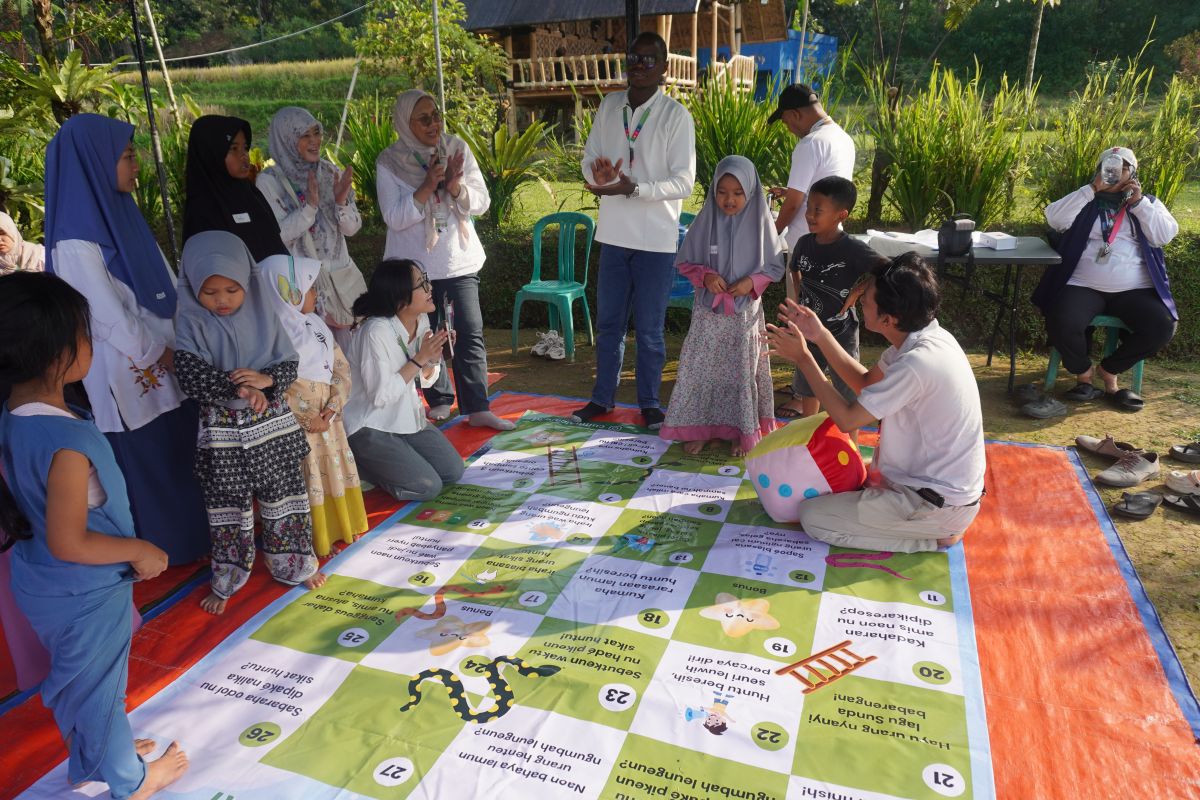
Jakarta (ANTARA) - The University of Indonesia has introduced a culture-based innovation for Clean and Healthy Living Behaviour (PHBS) education through a snakes and ladders game in Sundanese, as part of a community service initiative titled ‘Empowering Children’s Health Literacy in Indigenous Community’.
The Chair of the Ethno-Nursing and Cultural Care Research Cluster at the University of Indonesia’s Faculty of Nursing, Professor Enie Novieastari, stated that the programme, which took place on 12–13 June 2026 in Kampung Parakanceuri, Kiarapedes District, Purwakarta Regency, West Java, involved international students from nine countries. The initiative aims to learn and collaborate with indigenous communities to enhance children’s health literacy.
“Every square on the game board contains health messages delivered in the Sundanese language, allowing children to learn through a language familiar to their daily lives,” said Enlo, who led the programme, when confirmed in Jakarta on Sunday.
She explained that the use of culture-based media is part of the ethno-nursing and cultural care approach developed by the University of Indonesia’s Faculty of Nursing. According to her, health messages are more effective and easily accepted when delivered through enjoyable media that is closely connected to community life.
“The Sundanese-language snakes and ladders game serves as a way to integrate health promotion with the preservation of local culture. At the same time, international students also learn that culture is an essential component of providing health services and education,” she said.
She noted that this activity reflects the Faculty of Nursing’s commitment to developing nursing education that is humanist, inclusive, and globally oriented through culture-based community service.
The collaboration between academics, students, international students, and indigenous communities demonstrates that preserving local culture can serve as an effective medium for increasing health literacy while strengthening cross-cultural learning.
“Children love educational events like this. They are happy because they can learn together. It is even more exciting when there are people from abroad, allowing them to learn a bit of English,” she added.
Md Sajib Raihan, an international student from Bangladesh, shared his impressions after participating in the activity. He described the experience as authentic, educational, and novel.
“In addition to teaching, catching fish in the local pond, sharing delicious traditional foods, and immersing myself in the rich Sundanese culture through its history, dances, songs, and traditional instruments made me feel at home,” he said.