
UI Engages International Students in Health Education Through Sundanese Snakes and Ladders
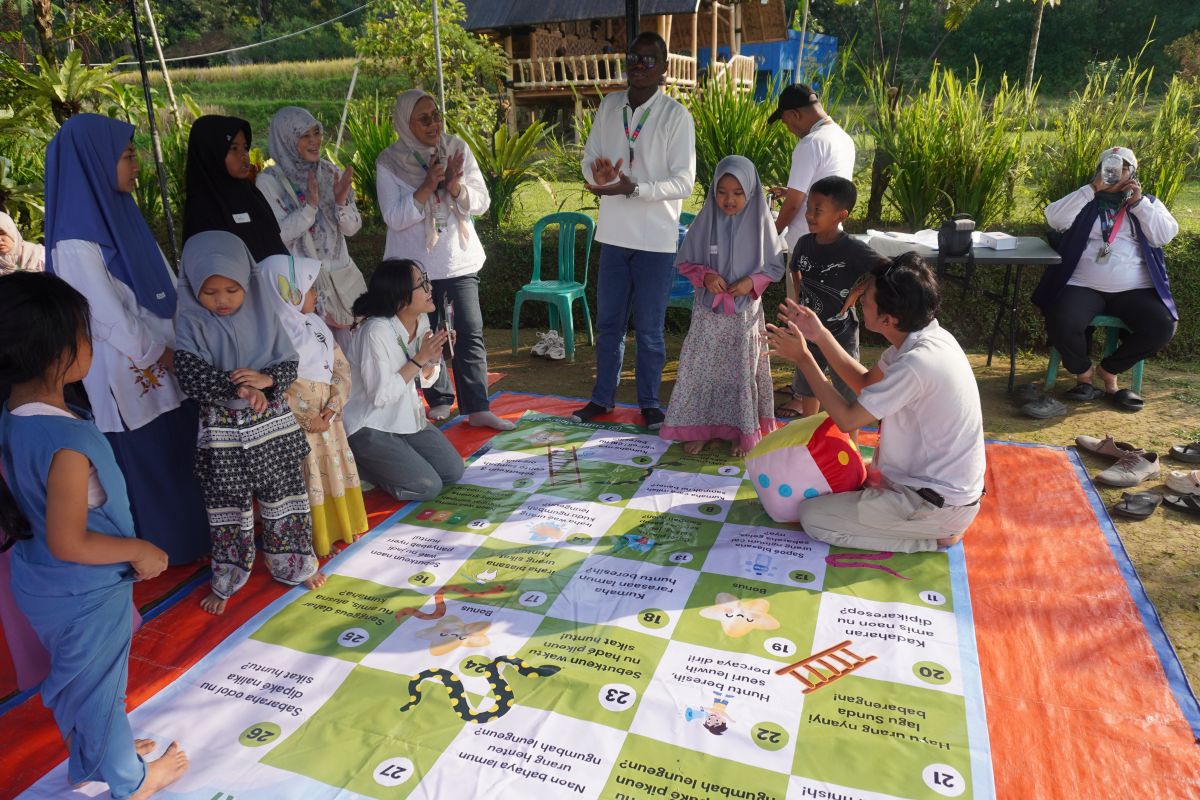
The Faculty of Nursing at the University of Indonesia (FIK UI) has introduced a health education innovation rooted in local wisdom through the medium of a Sundanese-language snakes and ladders game. This initiative was part of a community service programme titled ‘Empowering Children’s Health Literacy in Indigenous Community’, held in Parakanceuri Village, Kiarapedes District, Purwakarta Regency, West Java. The collaborative activity, which took place in mid-June 2026, was led directly by the Head of the Ethno-Nursing and Cultural Care Research Cluster at FIK UI, Prof. Dr. Enie Novieastari, S.Kp., MSN. The agenda uniquely involved 15 international students from nine countries, namely Bangladesh, Pakistan, India, Thailand, Zimbabwe, Tanzania, Gambia, Nigeria, and Timor-Leste. Prof. Enie Novieastari explained that the use of instruments based on the local language is a real-world implementation of transcultural nursing science. ‘Health messages are more easily accepted when delivered through media that are close to the community’s daily life. The Sundanese-language snakes and ladders game is one way to integrate health promotion with the preservation of local culture,’ she stated in a written release on Friday. Unlike conventional one-way clinical socialisation, the snakes and ladders board was modified so that each square contained instructive narratives in refined Sundanese. Through this play-based learning method, the indigenous children of Parakanceuri were invited to understand and directly practice crucial points of Clean and Healthy Living Behaviour (PHBS). The educational materials included hygienic six-step handwashing practices in accordance with standards from the Ministry of Health and the World Health Organization (WHO), as well as education on proper periodic tooth brushing. Additionally, the children were taught techniques for sorting organic and inorganic waste from an early age, interspersed with interactive sessions introducing basic English vocabulary alongside the international student companions during the game. Beyond the mission of restoring health literacy, the international students also had the opportunity for cultural immersion to experience the pulse of agrarian Sundanese life firsthand. They were invited to participate in a series of communal traditions, such as ngagebyok (catching fish in a pond traditionally without tools), enjoying local culinary arts, learning traditional musical instruments, and taking part in the tutunggulan procession—a post-harvest tradition of pounding rice in a mortar that is rich in historical value. Md. Sajib Raihan, an international student from Bangladesh, admitted that this field experience provided a profound educational perspective beyond formal lecture halls. ‘Besides teaching, the activities of catching fish in the local pond, enjoying delicious traditional food, and delving into the richness of Sundanese culture through its history, dances, songs, and traditional musical instruments made me feel at home. As an international student, this authentic cultural exchange was not only refreshing but also highly educational,’ he remarked. Through this integrated programme, FIK UI reaffirmed its commitment to developing an inclusive, humanistic, and globally oriented nursing education model, while proving that the preservation of regional cultural identity can serve as an effective catalyst for improving public health standards.