
UI Economist Says Free Nutritious Meals Programme Drives Agricultural Sector Growth
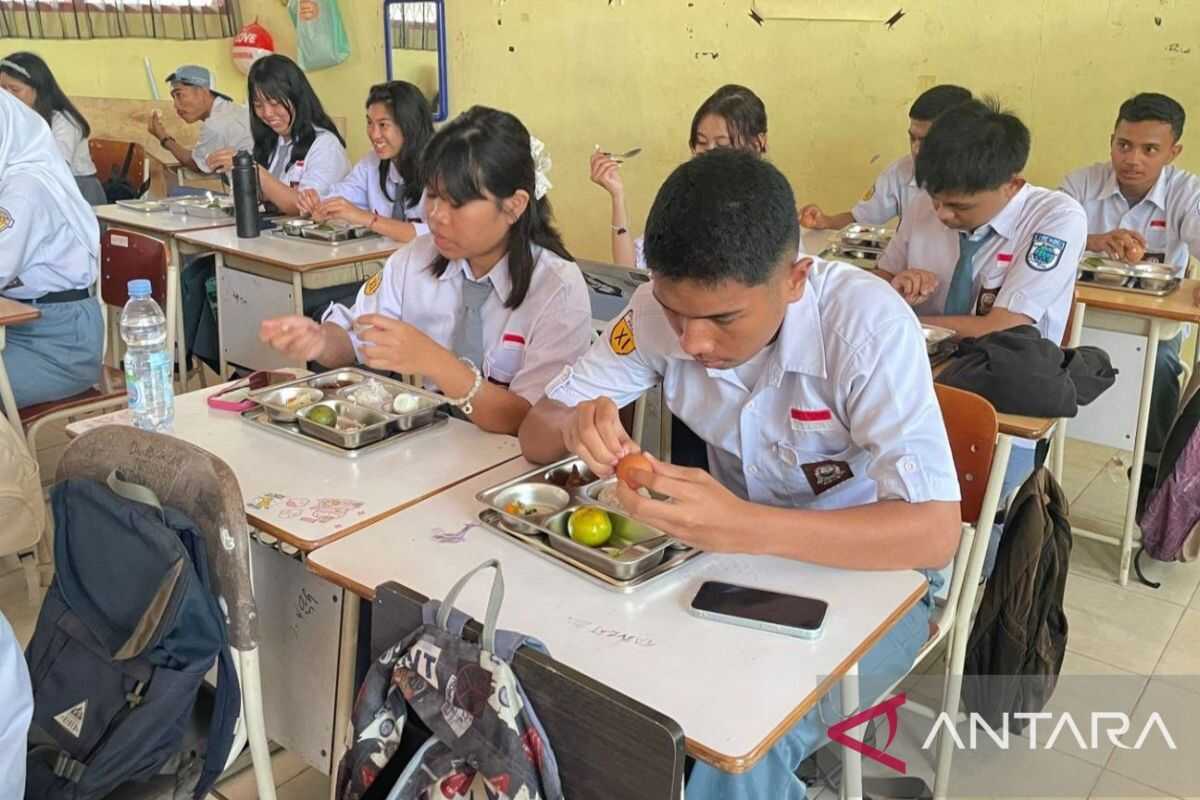
Jakarta (ANTARA) — University of Indonesia (UI) economist Fithra Faisal Hastiadi has revealed that the government’s Free Nutritious Meals (MBG) programme is helping to drive growth in the agricultural sector by creating a more inclusive economic ecosystem.
He noted that in the fourth quarter of 2025, national economic growth reached 5.39 per cent year-on-year at the macro level, with one of the key drivers being Gross Fixed Capital Formation (GFCF), which grew by 6.12 per cent year-on-year.
“If we look more closely at economic performance, we can see that the agricultural sector grew by 5.33 per cent because its products are being absorbed by the Nutritional Fulfilment Service Units (SPPG),” he said in a statement in Jakarta on Saturday.
According to Fithra, SPPG managing partners and entrepreneurs have begun investing in upstream MBG products such as agriculture and livestock farming, making the surge in agricultural sector growth a natural consequence of the programme’s positive impact.
“Agricultural sector growth last year was in fact the highest in several years,” he said.
He explained that agricultural sector growth reached 5.33 per cent in 2025, compared with just 0.68 per cent in 2024 and 1.31 per cent in 2023.
Fithra added that investment in the upstream sector is regarded as a long-term solution to ensure that food requirements for the MBG programme do not disrupt price stability in general markets, whilst simultaneously strengthening national food security through increased production capacity among local farmers.
Beyond its impact on the agricultural sector, whose products are directly absorbed by the MBG programme, one of the most tangible short-term effects has been the enhancement of the value chain at the micro, small and medium enterprise (MSME) level, as well as encouraging the active participation of women in both formal and informal sectors.
“The MBG programme is far more inclusive when we consider its investment pattern. Women’s participation has become more visible because in the culinary sector, women tend to play a dominant role. This provides real economic opportunities for them,” he said.
The number of Nutritional Fulfilment Service Units (SPPG) continues to grow, with 23,000 units established as of 20 February. An estimated 1.4 million workers have been directly absorbed into the kitchens preparing MBG meals.
According to internal data from the National Nutrition Agency, approximately 55 per cent of SPPG kitchen workers are women, meaning that some 770,000 workers absorbed by the MBG programme are female.
Moreover, according to Fithra, the active participation of women in SPPG also contributes to economic empowerment. The MBG programme opens new employment opportunities, particularly for women, and contributes to increased household income.
Based on a survey by the Research Institute of Socio-Economic Development (RISED) of 1,800 parents, the MBG programme was found to have a positive impact on household budget efficiency.
RISED researcher M. Fajar Rakhmadi reported that 36 per cent of respondents noted a reduction in daily expenditure, primarily due to decreased costs for packed lunches and children’s pocket money.
Although 63 per cent of families reported savings of less than 10 per cent of total monthly spending, the presence of MBG was considered effective in maintaining the stability of routine household expenditure.
Support for the continuation of the MBG programme, according to Fajar, reached 81 per cent among parents from vulnerable households. Parents do not merely view MBG as an economic benefit but also as a programme that provides security and comfort.
Furthermore, the nutritional standards provided by MBG were rated very highly by parents, with 72 per cent of those surveyed agreeing that their children now consume nutritious food more regularly since receiving MBG meals.