
UI Anthropologist: Police Involvement in Food Security is Acceleration, Not Intervention
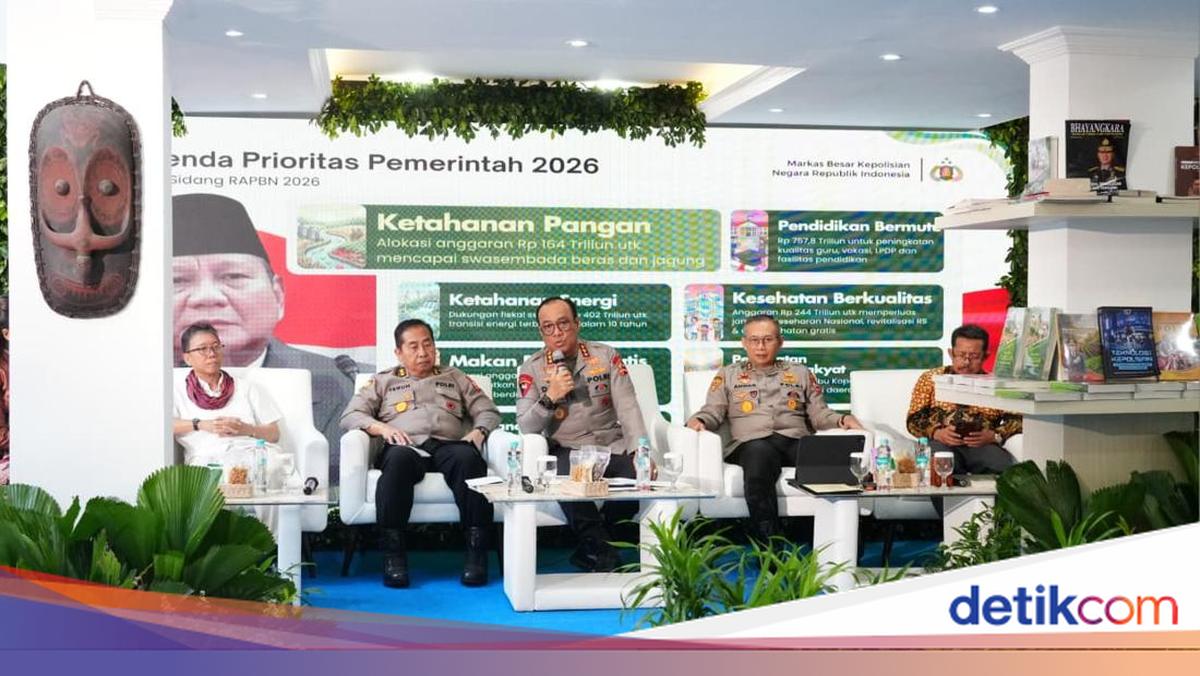
Professor Semiarto Aji Purimanto, a Professor of Anthropology at the University of Indonesia (UI), has addressed the frequent questioning regarding the Indonesian National Police’s (Polri) involvement in food issues.
“In this regard, food security has entered a context that is a concern for Polri. Why must Polri enter the food issue? Generally, food is a private or domestic matter, so it should not be a state concern. However, there is a condition that compels Polri to step in,” said Semiarto.
He made these remarks during a book review for ‘Mengawal Pangan Menuai Aman’ (Guarding Food, Reaping Safety). The event took place at the Police Studies Centre of the Police Science Institute (STIK-PTIK) in Kebayoran Baru, South Jakarta, on Wednesday (24/6/2026).
“I stated that this is not a matter of intervention or meddling in the food sector. Rather, it is an effort to accelerate a specific part of the technical development process in the field of agriculture,” Semiarto continued.
He assessed that the book, authored by Deputy Chief of Police Commissioner General Dedi Prasetyo, Assistant Chief of Police for Human Resources Inspector General Anwar, and Inspector General Susilo Teguh Raharjo, is an attempt to redefine the concept of security, which has traditionally been identified with law enforcement and public order. Through this study, food security is positioned as a dimension of security that requires attention.
“In the academic world, there is the jargon ‘publish or perish’. If we do not publish our ideas, we will disappear. For me, the launch of this book serves as a statement that Polri also possesses academic ideas worthy of being presented to the public,” said Semiarto.
“This book provides the academic justification for why Polri is entering the food issue. It is not about intervention or taking over the role of other parties, but about how Polri helps accelerate the development process in certain sectors deemed strategic,” he added.
Furthermore, he believes that discussions regarding food security should not stop at the issue of food production. In his view, the issue needs to be placed within a broader framework, namely rural transformation and the improvement of village community welfare. He cited rice as a commodity that serves as the backbone of national food security, yet the need to keep rice prices affordable for the public limits the potential for increasing farmers’ welfare.
“If we talk about rice farmers, economically they are often in a difficult position because commodity prices are expected to remain low to stay affordable for the public. Therefore, there need to be alternative commodities with higher economic value so that villagers have the motivation to remain and thrive in the village,” he said.
He noted that commodities such as maize and various other strategic commodities could be options to increase the income of rural communities. In doing so, villages would not only function as centres for basic food production but also as new hubs for economic growth.
He expressed hope that Polri’s involvement in food security programmes could encourage the production of more high-value commodities by rural communities. Such a move is seen as having the potential to strengthen the local economy while simultaneously increasing farmers’ welfare.
“We hope that villages will not only be producers of rice but also producers of strategic commodities capable of improving community welfare. In that context, Polri can play a role as a party that encourages and motivates the community to develop,” he said.
On the other hand, he assessed that Polri’s role will continue to evolve following the changing needs of society. While in the past, security was primarily understood as protection against physical disturbances and criminality, the definition is now expanding to encompass various aspects of community life.
He noted that the food issue is one example of how the concept of security evolves alongside the changing times and the challenges faced by the nation.
“The definition of security continues to expand over time. Hopefully, Polri remains faithful to being an institution that serves the needs of the community in accordance with the challenges of the era,” he concluded.
Source: jawawa.id (https://jawawa.id/newsitem/ui-anthropologist-police-involvement-in-food-security-is-acceleration-not-intervention-1782309274)
Originally published by detikcom (https://news.detik.com/berita/d-8545944/antropolog-ui-ketahanan-pangan-polri-bukan-intervensi-tapi-akselerasi), translated from Indonesian