
UI and South Korean Students Develop Waste Management System for Rusunawa
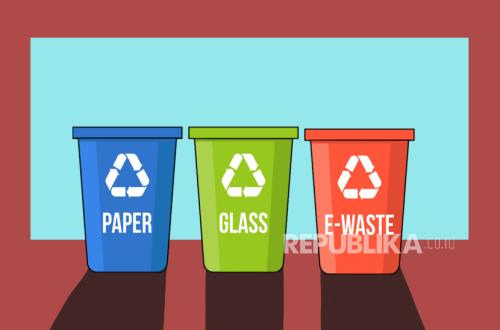
Universitas Indonesia (UI) together with students from several universities in South Korea have developed a community-based waste management system at the KS Tubun Rusunawa in West Jakarta. The programme aims to strengthen waste sorting culture while encouraging sustainable waste management in vertical housing areas.
According to a press release received on Friday (26/6/2026), the programme was initiated by UI’s Directorate of Community Service and Social Innovation (DPIS) and involved the Korea-Indonesia Connection (KIC) FISIP UI, the Ink & Talk Community, and the Karang Taruna of Rusunawa KS Tubun. The activity was led by a lecturer from the Department of Social Welfare at FISIP UI, Getar Hati, who also serves as Programme Director of Korea-Indonesia Connection FISIP UI.
The programme was designed based on initial assessments showing that household waste management at Rusunawa KS Tubun was still dominated by disposal without sorting, even though residents had access to waste collection services. On the other hand, the high level of community participation in various joint activities was seen as an asset for building a community-based waste management system.
Through a participatory approach, the implementation team held a series of activities, including discussions on waste management systems in South Korea, basic English and Korean language training, international networking development, and the formulation of a waste management system for vertical housing.
Youth members of Karang Taruna received training on leadership, cross-cultural communication, and sustainable waste management so they could become agents of change in their neighbourhoods.
The international collaboration involved students from Busan University of Foreign Studies, Hankuk University of Foreign Studies, Chung-Ang University, and Seoul National University. They shared experiences on household waste sorting systems, urban environmental management, and sustainability practices implemented in South Korea.
The programme also included training on organic waste processing through Black Soldier Fly (BSF) larvae cultivation. Residents were encouraged to turn organic waste into a resource with practical value while reducing the volume of waste sent to final disposal sites.
Following the implementation phase, the team conducted monitoring and evaluation to measure changes in community knowledge, attitudes, and behaviour in managing waste. The evaluation results are expected to serve as a basis for refining the community-based waste management model that can be applied in other vertical housing areas in Jakarta.
The implementation team hopes that this collaboration between the community, universities, and international partners can strengthen Indonesia-South Korea cooperation in developing urban environmental solutions while promoting more sustainable waste management.