
UI Academic Utilises Seaweed Agar to Strengthen Bone Implants
For a long time, metal-based bone implants have been commonly used for bone fixation; however, they possess limitations such as the risk of stress shielding, potential corrosion, and the necessity of a second surgery to remove the implant after healing.
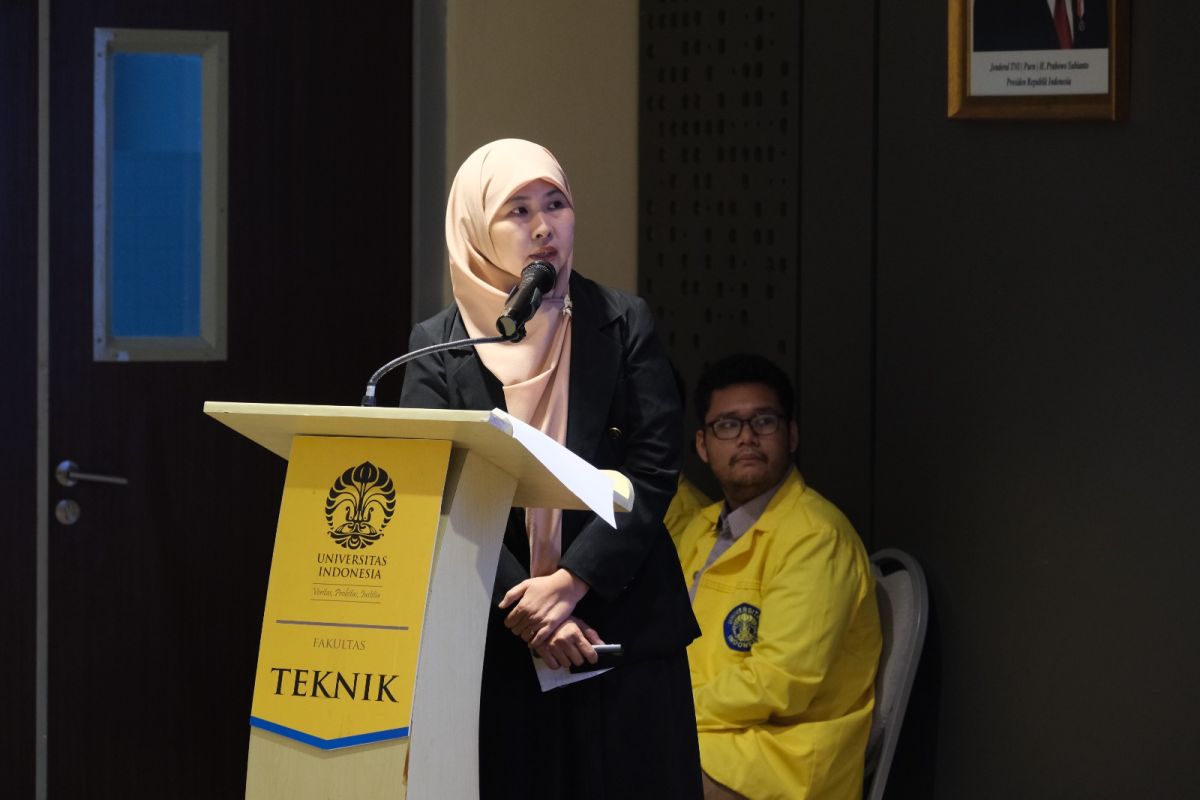
Depok (ANTARA) - Dina Fransiska, a doctoral student in the Department of Metallurgy and Materials Engineering at the University of Singapore (FTUI), has successfully processed agar from the red seaweed Gracilaria sp. into a reinforcing material for biodegradable bone implants.
This innovation was presented by Dina in her dissertation titled “Renewable Agar Grafting through Dielectric Barrier Discharge Plasma as a Functional Additive in Biodegradable Implants”.
“Traditionally, metal-based bone implants are commonly used for bone fixation, but they have limitations such as the risk of stress shielding, potential corrosion, and the need for a second operation to remove the implant after healing,” said Dina Fransiska at the UI Depok Campus on Thursday.
In her research, Dina, who is also a researcher at the National Research and Innovation Agency (BRIN), addressed the challenges of developing bone implant materials that are safe, strong, and capable of decomposing naturally after fulfilling their function.
“One promising material candidate is Poly L-Lactic Acid (PLLA) because it possesses biocompatible and biodegradable properties. However, PLLA has a surface that tends to be hydrophobic, whereas natural fillers like agar are more hydrophilic. These differing characteristics make it difficult for the two materials to mix and form a strong interfacial bond,” she explained.
To address this issue, Dina utilised agar from the red seaweed Gracilaria sp., which is abundant in Indonesian waters. The agar was modified using Dielectric Barrier Discharge (DBD) plasma technology, a surface modification method that allows for the grafting of alkyl groups without the use of commercial chemical compatibilising agents.
This process produces Alkyl-grafted Agar (AgA) with a more hydrophobic surface character, making it compatible with PLLA.
The research was conducted through a series of experiments, ranging from the optimisation of plasma conditions, the use of AgA as a filler in PLLA biocomposites, testing AgA as a compatibilising agent in PLLA/microcrystalline cellulose and PLLA/agar-agar systems, to the evaluation of castor oil as a plasticizer to increase the material’s flexibility.
The addition of castor oil was also proven to increase the flexibility of the material, while the use of modified agar strengthened the bond between the natural material and the biodegradable polymer.
These findings open up opportunities for the development of renewable biomaterials based on Indonesia’s marine resources, while demonstrating how simple food ingredients can be processed into functional components for healthcare applications.
Nevertheless, this research is still in the stage of material development and characterisation.